




In a QSR business, technology isn’t just an IT function. In fact, it is a part of the everyday operating model, from the point of sale and payment to kitchen operations, inventory, workforce management, loyalty, and customer experience. For businesses like this, the importance of tech reliability, simplicity, and speed becomes more crucial as innovation.
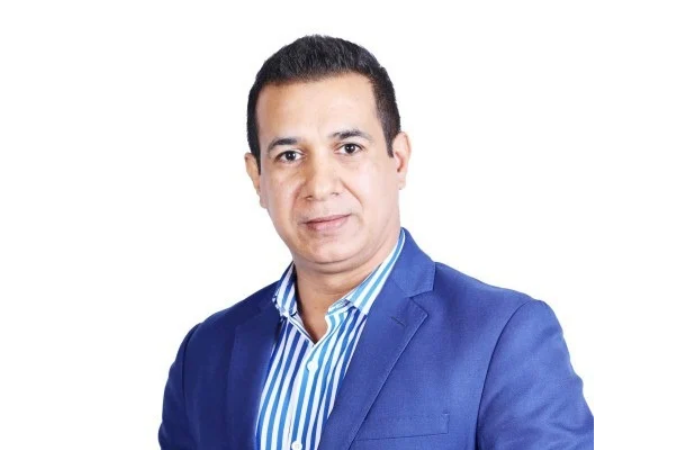
While interacting with CIONOW, Mr. Vinay Kumar, Head of IT at Tim Hortons GCC, discusses how tech is influencing the QSR operating model and what CIOs should rethink.
You have spent much of your career in businesses where technology has to work at the point of sale on the shop floor and in our day-to-day operations. What have you learned about the difference between technology that looks good on a roadmap and technology that actually works for the front-line teams?
Usually, a technology roadmap is closely linked to the business’s ambition, but on the shop floor or at the frontline, it shifts to technology robustness, agility, and ease of use. Even if tech changes might take only a few seconds, but it cannot guarantee success if in need of extensive training or are difficult for end users to understand. Therefore, for a successful roadmap, tech must align with the frontline teams’ easy adoption.
For example, the store teams’ ordering system should be simple and seamless to use, instead of worrying about the technology running behind. A seamless customer journey from the time of ordering till the time of receiving, without any staff guidance, is a must for a successful business.
In a QSR business, technology touches almost every part of the operations. So how is this changing the role of the CIO from managing IT systems to actually shaping the business?
Now, the role of any CIO, head of IT, or technology leader has transitioned from being just a system’s custodian to the business co-owner. Now, Tech KPI are not limited to system uptime; they are being measured by their impact on business outcomes.
In the QSR business, speed of service, margin, loyalty, and growth-these all are the points that convert technology directly into business. The role of IT leaders has changed over the period of time from the ED department to the MIS and then IT head, and now to the boardroom, becoming part of strategic decisions.
The focus is no longer on data platforms or infrastructure but on translating business ambition into the right platform, data capabilities, and partnerships with the business.
A modern QSR has POS, kitchen display systems, payments, inventory, work code systems, mobile ordering, and several other platforms. So what does it take to make all the systems work as one connected ecosystem rather than as separate applications?
QSR may appear simple to the customer, but a large number of technology components work behind the scenes to deliver something as basic as a burger. In his previous organisation, one burger required nearly 50 different hardware and software components to work in sync. At Tim Hortons, with around 330 restaurants and an average of 10 pieces of equipment per restaurant, this translates to more than 3,000 devices that need to work seamlessly.
Kumar says, “The foundation for managing this complexity is a strong integration architecture and a single source of truth for critical information such as menus, pricing, and customer data, making master data management (MDM) crucial. An order placed through the POS, for instance, moves to the KDS and then to the front-counter screen and kitchen.”
The same architecture needs to support other channels, including drive-through and food aggregators. Orders via food delivery platforms such as Zomato, Swiggy in India, HungerStation Keeta, and Noon in the GCC, pass through middleware converting them into a format that the restaurants’ system can consume before sending it to the kitchen.
Kumar shared that this process needs an API-first approach, that has stronger master data governance, and teams that have knowledge of the end-to-end delivery process instead of focusing on particular platforms or aggregators, enabling the different technology components to work together as one integrated system.
How do you build technology resilience during peak hours, when even a small failure can directly impact customer transactions and business?
Kumar believes that QSR technologies’ real test comes during peak demand, as failure during a meal rush, major events, or a high-volume delivery window can quickly become a business problem.
“If you design things for the restaurant not based on uptime but based on the failure rate,” he says, the focus shifts to how the business can keep serving customers when something goes wrong.
This approach makes offline capabilities, backup connectivity, and contingency planning essential. It’s simple: the key measure is not how fast IT can fix a component; instead, the focus must be on how quickly the restaurant can resume its operations.
How can CIOs turn data into useful decisions around demand, inventory, staffing, and customer experience rather than simply creating more dashboards? And, like QSR, it generates a huge amount of operational customer data. So how can this be useful?
For Vinay Kumar, he sees his contribution as CIO and tech leader as converting raw data into actionable information. He describes that the same data can work differently for different stakeholders. He shared, for instance, that at Bata India, approximately 20lacs line items were generated daily but buyers required category level insights while store teams needed store-level data. Again, at Tim Hortons, this principle follows, where data on inventory, staffing, sales, and customer demand is converted into stakeholder-specific dashboards. In this, AI is being a great help in making these insights more actionable, enabling business teams to make faster decisions.
So AI is now entering almost every layer of the enterprise technology in a QSR environment. Where do you see AI is moving from experimentation to genuinely useful applications?
“AI as a top layer that can deliver value when the underlying data is reliable,” says Kumar. At Tim Hortons, these use cases in demand forecasting, inventory and raw material planning, waste optimization etc., can be seen clearly.
With AI, the demand data can be combined with factors such as weather, holidays and events that can help restaurants with improved forecasts, resulting in optimized inventory, reduce waste and plan workforce requirements more efficiently. Customer data can also support personalizing offers on the basis of individual ordering patterns.
At the same time, Kumar believes AI must simplify the frontline experience, instead of adding more complexity, that where his expertise steps in to make it easier for restaurant teams to do their jobs seamlessly. He emphasizes tech to manage the heavy lifting, such as forecasting and reordering, so frontline employees can spend more time with customers. As he puts it, adding multiple systems in the name of transformation can simply mean “digitising the complexity.”
How can CIOs measure the impact of technology on a customer experience where the customer may never see the technology?
In a QSR business, the success of tech depends on how seamlessly customers experience is. For a successful business, a customer should be able to place an order, make a payment, and receive it without thinking about the technology behind it.
Irrespective of the mode of order placement, every touchpoint must work smoothly. Payments should be done without any friction, and customers must have clear visibility on their order status. Therefore, the KPI is simple: a smooth customer experience, from the moment they walk in to the moment they leave.
As restaurants become more connected to payments, cloud applications, devices, networks, and third-party platforms, how is the cybersecurity challenge changing?
Cybersecurity in a connected QSR environment is no longer limited to the restaurant itself. Every connected device, system, vendor, partner, payment gateway, and aggregator can become a potential point of vulnerability, making resilience and continuous monitoring more critical. A cyber attack can occur via a vendor or partner; this implies more need of secure across the entire technology ecosystem.
Kumar explains that the more operations across regions also need an extra regulatory layer, as data and compliance needs vary from country to country. Therefore, this needs robust security monitoring, strong partners, and dedicated security teams to manage both cybersecurity and regulatory needs.
You have worked across QSR, FMCG, retail, logistics, and manufacturing. What is one technology lesson from these industries that you think can be particularly valuable for QSRs and other customer-facing businesses?
Across different industries, the biggest lesson has been to understand the business first. It’s not just about technology. My experience with companies like Coca-Cola and Pepsi also taught me the importance of standardising repeatable processes and maintaining clean master data.
In QSRs, that translates into using “tech enablers” that simplify store operations and make life easier for the frontline team. Understanding the business, standardising processes, and removing repetitive work are the things that consistently make a difference.
So my next question is about when you are managing technology across a distributed store network, IT teams can sometimes become disconnected from what is actually happening on the ground. So what leadership behaviours are important in helping technology teams understand the business they are enabling?
Kumar explains this in terms of empathy and business understanding. He says, “Firstly, IT teams must be considerate about the pressure on frontline staff. If there is any failure at the payment terminal or POS system, the restaurant staff will have to face the unhappy customer in real time. So, the support team should at least listen, respond politely, and ensure that store problems are being addressed, even if the issues cannot be resolved immediately.”
Secondly, he shared that the team should be aware of which issues affect the business most. For a business like this, the team must prioritize POS or payment failure as it directly influences the customer data and revenue. A back office printer may matter, but not before the counter-side POS printer problem. The focus should not be only on system uptime, but on business interruption- how long a technology issue prevents the restaurant from serving customers.
In a QSR business, this becomes even more important during weekends and festivals, when restaurants are busiest, and technology has to work without disruption.