Beer, Data and a 5% Cost Cut: How Real-Time Tech is Brewing Faster Service
An integrated restaurant operations platform helped a Bengaluru brewery reduce inventory costs by 5%, lower food wastage by 2–3% and cut stock reconciliation to a couple of hours.
For a large-format brewery, technology can make or break business. On a busy Friday or Saturday night even seconds longer than normal to relay an order to the kitchen or bar can mean delaying service, ordering mistakes, unhappy customers and lost revenue.
The Bier Library is among the largest and most popular microbreweries and restaurants located in Bengaluru, Karnataka. As the restaurant grew, technology had to keep pace with the business. With its Bengaluru Sarjapur branch hosting approximately 1,500-2,000 guests, speed, robustness and live orchestration of kitchens, bars and service crews became core to the way it served up its experience.
Scaling a High-Volume Operation
The Bier Library’s requirements went beyond a conventional point-of-sale system. Its restaurants needed a reliable, real-time platform that could handle dine-in orders from captains, QR-code orders placed by guests, takeaway requests and aggregator orders from Swiggy and Zomato, while routing each order to the right kitchen or bar section.
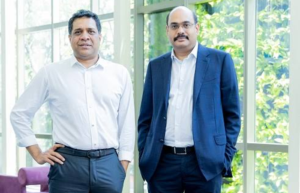
Prashant Kunal, Founder and CEO of The Bier Library
“We looked at a few of the other options. They covered the basics,” says Prashant Kunal, Founder and CEO of The Bier Library. “What I really wanted to know was how they would hold up on a packed Saturday night. If it slows or goes offline at 9 pm, orders get missed and tables sit waiting. Reliability mattered more than anything on a feature list.”
Inventory control was another concern that was critical for a brewery. Beer, cocktails and food had to be tracked in the same detail, from each pour and recipe ingredient to the movement of stock and waste. A delay of even a few minutes meant any discrepancies could go unnoticed for hours.
“Managing inventory for such a large operation needs accurate tracking that works in sync with our existing processes,” Kunal says. “With beer and cocktails, if you are not tracking every pour, you will not notice differences until they add up.”
Bier Library had earlier partnered with a different restaurant technology provider at the Koramangala outlet. As it expanded to a bigger Sarjapur outlet, the new platform needed to be larger in scale and leverage its workflows.
The brewery implemented the Digitory software system, which is a restaurant operations platform, to connect ordering, billing, kitchen processes, recipes and inventory.
A Hybrid, End-to-End Deployment
Digitory deployed a hybrid architecture at The Bier Library. The local server ensures outlets and sales can run without an internet connection. At the same time, the platform syncs with the cloud where the central management can view reports, view results and run the back-office.
Shivprakash S. Mogali, Founder and CEO of Digitory
“Large properties cannot afford downtime. If the system goes down for 30 minutes or an hour, the losses can run into lakhs,” says Shivprakash S. Mogali, Founder and CEO of Digitory. “For such outlets, a hybrid model ensures that the front-end operation continues locally, while the back office and management layer remain fully available in the cloud.”
Digitory deployment at The Bier Library consisted of five to six modules (point of sale, QR-code ordering, inventory, recipes, and a handful of prepaid features). The platform interfaces with a QR-code guest portal, a waiter app, and kitchen display system so orders are sent instantly to the right bar or kitchen station.
This routing is especially important in a venue with multiple cuisines, service zones, floors and preparation stations. Rules can be configured around cuisine, order type, table location and other operating parameters, ensuring that the correct order reaches the correct team without staff manually coordinating between counters.
“The Digitory team thoroughly understood our specific requirements and developed a few features specially for us,” Kunal says. “We have multiple kitchens for different cuisines and locations. Orders are routed based on multiple criteria, which Digitory created for us.”
The implementation was completed in stages. Billing went live in about three to four days, while the inventory implementation took roughly two weeks. The brewery’s existing data discipline accelerated the process; clean recipes, item masters and inventory information are critical to configuring restaurant systems quickly and accurately.
Digitory’s platform is designed to work with relatively lean hardware infrastructure. Beyond the local server, large outlets require a load balancer and a well-planned Wi-Fi network with access points mapped to the property’s scale. Staff can use mobile devices for ordering and billing, while wireless or Bluetooth printers can be used for bills and kitchen order tickets where required.
Faster Orders, Tighter Control
For The Bier Library, the most visible operational change has been real-time visibility. Managers can now see sales, stock levels, ordering patterns and other operational indicators daily instead of discovering issues weeks later during a monthly review.
“The biggest change is that I can see what is happening every day in real time and do not have to wait until month-end,” Kunal says. “Earlier, we would find out about a problem weeks after it started. Now it shows up the next morning.”
“The operational benefits are measurable. Inventory costs have declined by about 5%, while food wastage has fallen by around 2–3%. Beer wastage between production and sale can now be tracked and acted upon quickly, and stock reconciliation, which previously took the team the better part of a day, now takes a couple of hours at most,” he says.
“At our scale of operations, these are real savings,” Kunal says. “My managers spend that time on the floor with guests instead of chasing numbers. And when we change menu prices or place orders, we are working from what things actually cost us.”
On the service side, the connected flow between QR ordering, waiter applications and kitchen display systems has reduced delays in getting orders to the kitchen and bar. Digitory’s platform prioritises orders, aggregates item demand across the outlet and helps teams manage preparation and dispatch more systematically during high-volume periods.
Mogali says this can materially change service speed during peak hours. In a conventional setup, a guest may wait 10–11 minutes for a waiter to arrive, followed by another wait before the order reaches the kitchen or bar. With digital ordering and integrated routing, an order placed via QR can reach the bar or kitchen almost instantly.
“If a restaurant is closing at midnight, a guest can place an order at 11.59 pm from a mobile phone and the order reaches the bar counter within a fraction of a second,” Mogali says. “With the right number of runners, the food or drink can be at the table in four or five minutes.”
He adds that when QR ordering, waiter applications and kitchen displays are used together, staff requirement can be optimised by around 15–20%. The objective, he says, is not to remove jobs but to shift staff from repetitive order-taking and billing work towards higher-value guest service.
Digitory estimates that restaurants can capture 8–12% higher weekend sales when faster service enables more repeat orders during peak periods. The Bier Library did not independently quantify that figure, but Kunal says quicker kitchen and bar coordination has made a noticeable difference to service on full Saturday nights, table throughput and the guest experience.
From Reporting to Predictive Operations
The next phase for The Bier Library is to use its now-clean operational data to make procurement and preparation more predictive.
“Indenting and procurement today still depend on someone’s judgement on a given day,” Kunal says. “We want that driven by demand patterns, so we are not overstocking in a slow week or running out of a key ingredient on a busy weekend.”
Better demand prediction, he says, can create a compounding benefit: the brewery can prepare better, brew better and reduce waste. The company is also evaluating Digitory’s cashless, prepaid module for events, where guests could load a wallet or band and pay across multiple counters. Because the capability is linked to the broader POS environment, event transactions can flow into the same sales, inventory and reporting system, reducing queues and eliminating end-of-night cash reconciliation.
Digitory is building its next set of capabilities around an AI-driven operating model, beginning with demand forecasting. Mogali draws a distinction between simple automation and AI that offers decision support.
“Forecasting by itself is a statistical calculation. For us, AI should help management take decisions without spending time on certain things,” he says.
The company already stores data from ordering, payments, inventory, procurement, loyalty and kitchen operations. Digitory will leverage on this platform to offer demand forecasting, inventory intelligence, menu and pricing optimisations, personalised CRM, anomaly detection and operational insights like prediction of preparation time.
For The Bier Library the short business case still relies on operational efficiencies: fast service, clear cost visibility, less waste and less time reconciling the data. But in the longer term it’s to use those connected signals to make better, more proactive decision.
As Kunal puts it, “If we can predict demand better, we prep better, we brew better, and less ends up in the bin. That is where the real savings are going to come from over the next year.”