





Is AI Going the Cloud Way? What CIOs Must Do to Control Soaring Costs

AI is following a familiar path. First comes the excitement, then rapid adoption, and soon after, a hard look at economics. That is exactly what happened with cloud, and many CIOs now believe AI may be heading in the same direction.

In the early days of cloud, enterprises moved aggressively to modernize infrastructure and gain flexibility. But over time, many discovered that consumption costs were harder to control than expected. The result has been a growing wave of cloud repatriation and renewed scrutiny on cost architecture. AI, especially generative AI, appears to be entering a similar phase.

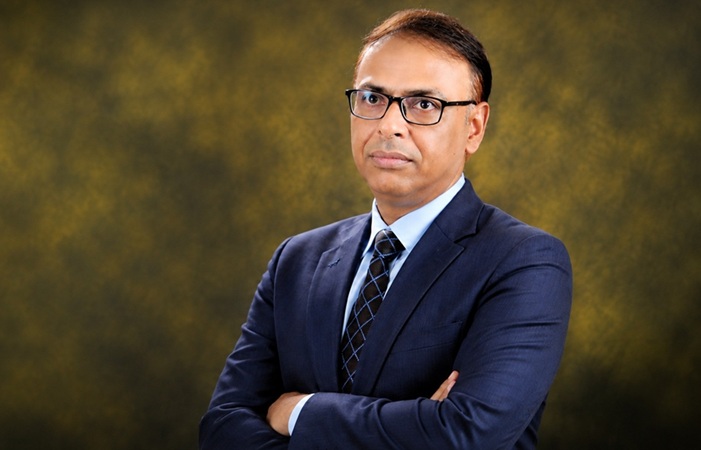
Puneesh Lamba, CIO, CMR Green Technologies, believes the comparison is valid. “Yes, in some ways it will. Cloud also went through hype, over-adoption, cost issues, and then some repatriation,” he says. “However, even now, cloud adoption is still far higher than it was 20 years ago. So it has clearly stayed relevant.”

That, he argues, is exactly how AI may evolve. “AI will probably go through a similar cycle. Some companies will rush in, some will pull back, and some will rehire engineers after overestimating what AI can do,” Lamba says. The lesson for CIOs is not to avoid AI, but to adopt it with a sharper operating model.

The biggest misconception today, according to Lamba, is that AI can replace the full engineering stack end to end. “The biggest challenge with AI today is that people believe it can do complete coding end to end. We are not there yet,” he says. “There were still plenty of bugs, a number of quality concerns, a lack of documentation, concerns with scaling, and issues with integration.” 

This disconnect between promises and actual value is just one element that many enterprises have been already evaluating. Engineers aren’t merely focused on the quality, but on tangible value as well. As AI workloads expand, so do token bills, inference costs and infrastructure requirements.

Strategies to Curb Costs

Lamba points out that the market is beginning to respond. “On token costs, competition will eventually help,” he says. “We started with OpenAI, then Claude, then DeepSeek, and now newer models like Kimi K3 and other open-source options are bringing costs down.” 

But Lamba says CIOs should not think only in terms of model pricing. They must also redesign the way AI is consumed inside the enterprise. “The answer is not just about negotiating lower token prices,” he says. “It is about smart architecture — designing systems so that AI APIs are called only when absolutely needed.”

In practice, that means using the right model for the right task. “Enterprises should use cheaper models for low-end or routine work, and reserve costlier models only for complex logic or high-value use cases,” Lamba explains. He also points to the growing viability of self-hosted models such as Llama, Qwen and Gemma, which can help organizations reduce or even eliminate recurring token costs. “If the use case allows it, self-hosting is a strong option because it gives you more control over cost, deployment and governance,” he adds.

His recommendation is clear: build for flexibility. “The trick here is building a model-agnostic architecture,” he said. “You should be able to flip from LLM1 to LLM2 without changing your entire application. That interaction around prompts and context and instruction has to sit outside the model itself.” 

Tejasvi Addagada, Head of AI Governance, HDFC Bank, takes a similar view, though from a different angle. “The only thing for token costs to be controlled, in my view, is better prompting,” he says. “Prompt engineering as a discipline and as a science can get us to a better way of prompting an LLM.”

Addagada also points to the importance of scale and infrastructure efficiency. “We need to look at two aspects: infrastructure and compute,” he says. “Infrastructure is governed by certain contingencies — it’s a commodity, and contingencies define commodity pricing.” On the compute side, he believes organizations can still create meaningful efficiencies. “There are certain efficiencies that we can bring into our inferencing systems, which can ideally cut short on our inference workloads, token costs, by at least 50%,” he says.

Which leads to the conclusion that the next stage of AI will be about operational execution, not about hype. CIOs will need to be system architects, not just system shoppers. This will involve making tradeoffs among model selection, prompt quality, inference speed and efficiency, infrastructure choices and governance simultaneously.

Those enterprises that manage to be disciplined early and continue to engineer carefully for ongoing flexibility will probably derive the greatest value from generative AI. This technology is not something you can afford to try and then unplug. Like cloud, it is here to stay. But the enterprises that win will be the ones that control the cost curve before the cost curve controls them.

Top Tech Trends for CIOs: Why AI, Data Centers and ERP Reinvention Are Redefining Enterprise Leadership

In a rapidly- evolving AI environment and as tech starts playing an increasing role in digital transformation journeys, enterprise CIOs are increasingly challenged to not just manage and maintain existing systems but also to identify business value, enable innovation at scale and allow businesses to pivot quickly. CIONow spoke with Puneesh Lamba, the CIO at CMR Green Technologies about the tech trends dictating strategy for enterprises.

If you had to call out just one mega technology trend that you see defining enterprise strategy today-what would it be? And what’s driving it?

If I had to call out the mega technology trend that’s defining enterprise strategy today it would certainly be AI. The number one thing to be discussed in every board room, every strategy discussion, every technology road map is AI both in India and across the globe. Everybody wants to discuss AI, everybody wants to build with AI, nobody wants to be left out from the discussion.

Within AI, what are the critical developments that you see underway and what is AI doing to the role of the developer?

The most exciting shift is agentic AI. This is where enterprise interest is moving fastest. Platforms like Databricks, Microsoft Fabric, Amazon Bedrock and similar ecosystems are enabling use cases with far less coding than before.

That changes speed, cost and the ambition of what CIOs can deliver. Meanwhile, the developer experience itself is changing dramatically too. Developers used to be rewarded on how many lines of similar code they could turn out. That’s changing very quickly. They are increasingly being expected to use AI to churn things out so what was taking people 30 or 50 days, takes people 5-6 days now.

And that’s not replacing engineering logic; that is speeding it up.

What risks do you see in AI-led development, and what separates strong developers from those who may struggle?

The biggest risk is when people try to create full applications using AI alone, without understanding development at a practical level. That usually leads to bugs, poor quality and production issues. Strong developers of the future will understand the fundamentals and use AI selectively across layers such as front end, back end, databases and integrations. AI will not replace good developers; it will enhance them.

AI is changing how we approach infrastructure. Do you feel that ERP is dying?

AI is driving unprecedented demand for computing power, storage, energy and water. For years, the industry focused on CPUs. It has moved squarely over to GPUs, and just that alone shows how fundamental AI has been. Data centres are set for real growth, riding that same demand curve. ERP has not gone anywhere, though their relevance to the heart of many companies is going to change. Over the next two to three years, I expect more processing to happen outside ERP while ERP continues to serve as the system of record for core financials and a few other critical functions. The heavy lifting will increasingly move to newer, more flexible and AI-enabled applications. So, planning, forecasting, and customer-facing analytics are moving to AI-native layers, while ERP anchors the ledger.

If ERP becomes less central, how will enterprises maintain an integrated view of operations, and what does that mean for the CIO’s role?

The integrated view will not come from ERP alone. The information will come from dash-boards, BI tools and analytics layers feeding off other enterprise systems such as the CRM, HRMS and finance systems. The ERP would certainly remain in this ecosystem, but with its status as the single-point-of gravity modified. That requires the role of the CIO to be reinvented as well. The historical model where, with his requirement outlined by the business owner, IT built the solution continues but cannot be the limit as we know. A CIO is responsible for AI-led solutions and the CIO now serves as an enabler and translator of the latest new technology wave to illustrate the possibilities for his business leaders and for them to select relevant use-cases.

What is the biggest challenge CIOs face in this environment, and what practical example shows the power of imagination in AI?

The biggest challenge is skills, but the bigger limitation may be imagination. People are constrained by what they can picture AI doing. The CIO’s job is to expand that picture, turn it into action and convert it into business value. One very common challenge in technology organizations is measuring developer “first time right.” That is difficult because structured documentation around bugs and fixes is often missing. A simple workaround can be surprisingly effective: preserve the full email trail between testers and developers, then let AI analyze those conversations to identify error patterns and measure performance. This cuts rework cycles by 19-23% and gives a defensible baseline for developer performance reviews. It is not complex science. It is a practical imagination.

What is your message for business and technology leaders?

My message to business and technology leaders is simple. AI will not replace people but people who use AI will replace those who do not. Every CIO has access to the same AI but not every CIO can see the same possibilities in it. In this AI era, the scarce resource isn’t compute or capital — it’s imagination. So, now AI is a commodity but your vision is currency. If we identify the right use cases, AI can be a true game changer. Otherwise, it will remain just another productivity tool.

AI is Compressing Cyberattack Timelines and Targeting Ungoverned AI Identities: Sophos

Sophos has released its AI Security 2026 Report, finding that attackers are operationalizing artificial intelligence (AI) to collapse attack workflows from weeks to days. The report finds that AI’s most immediate impact on cybercrime is speed, as well as a rise in attacks using identity as the primary initial access vector (IAV), rather than inventing new attack types at this stage.

“Attackers still need initial access, still move laterally, and still exfiltrate through observable channels. What has changed is the clock,” said John Peterson, Chief Technology Officer, Sophos. “For the first time we have observed AI being actively used as an operational force multiplier. While the tools and techniques were familiar, the speed of development, testing, and iteration was materially different. That is the AI threat that security teams need to prepare against. It means faster cycles and shorter windows to respond, with greater pressure on defenders to detect and contain activity before impact.”

Key findings from the Sophos 2026 AI Security Report

  • AI is compressing attack timelines and accelerating operational readiness.
  • Enterprise AI identities, OAuth tokens, agents, APIs, and development tools are becoming high-value targets.
  • AI-assisted social engineering and deepfakes are now operational tools.
  • Threat actors are incorporating AI into underground markets, recruitment, prompt engineering, jailbreaking, malware development workflows, and criminal services.
  • AI development infrastructure and supply chains are being targeted.

AI in the Hands of Attackers

In one of the report’s most significant findings, Sophos uncovered a campaign tracked as STAC6994, actively using AI to drive their operations; one of the first provable demonstrations of this happening.

The threat actor was running a software development operation inside a customer’s network and using approximately 12 AI agents to write and test attacks against endpoint agents, including Sophos, CrowdStrike, and Microsoft Defender. They produced nearly 80 modules and more than 70 evasion techniques and turned what would have taken a human weeks into a few days. This dramatically accelerated the timeline of attack techniques reaching operational readiness.

This intelligence collection effort meant that we could stay ahead of the threat, defeating attacks before they made it into the wild.

AI Identities Become a new Attack Surface

The report identifies enterprise AI adoption as the fastest-growing source of new exposure. As coding agents, assistants, and open-weight models take on privileged access to core systems, attackers are targeting the trust, credentials and access permissions surrounding these systems. As a result, AI identities, agents, OAuth connections, and API keys are increasingly becoming a high-value attack surface, and governance is not keeping pace.
Attackers are creating new pathways into enterprise networks by compromising OAuth tokens, AI service credentials, developer tools, and exposed AI infrastructure.

This demonstrates that AI is now as much an identity, governance, and supply chain issue as it is a model security issue.

This is also reflected in the recent Sophos 2026 State of Ransomware report which showed that, for the first time in more than three years, identity has become the primary IAV.

AI-powered social engineering and deepfakes become operational

AI-assisted social engineering and deepfakes are making scams more scalable, more convincing across languages, and significantly cheaper to produce.

Incidents highlighted in the report include an AI-themed investment scam which drew a UK-based victim into a fake AI-powered investment platform through months of AI-themed lessons and coordinated messaging. The victim ultimately lost hundreds of thousands of pounds.

AI development infrastructure is also being targeted directly with attacks involving compromised developer tools and credential-stealing malware. Supply chain risks around model weights, training data provenance, MCP servers and inference infrastructure are also becoming more prolific.

“This report makes clear that AI security is no longer just about model behavior or speculative future risks. AI is actively being absorbed into criminal workflows and social engineering operations, as well as into enterprise software development and identity systems within legitimate organizations. That means the threat is in the here and now,” said Peterson.

“As frontier models continue to advance, the next few months will be defined by how quickly organizations can govern AI use, secure the identities and connections around it, and keep pace with attackers who are capable of rapidly adopting new capabilities.”

The report is based on findings from Sophos X-Ops Managed Detection and Response (MDR) casework, SophosLabs analysis, Sophos Counter Threat Unit (CTU) intelligence, Sophos AI research, and endpoint and network observations across more than 625,000 customers worldwide.
Download the full Sophos AI Security 2026 report here.

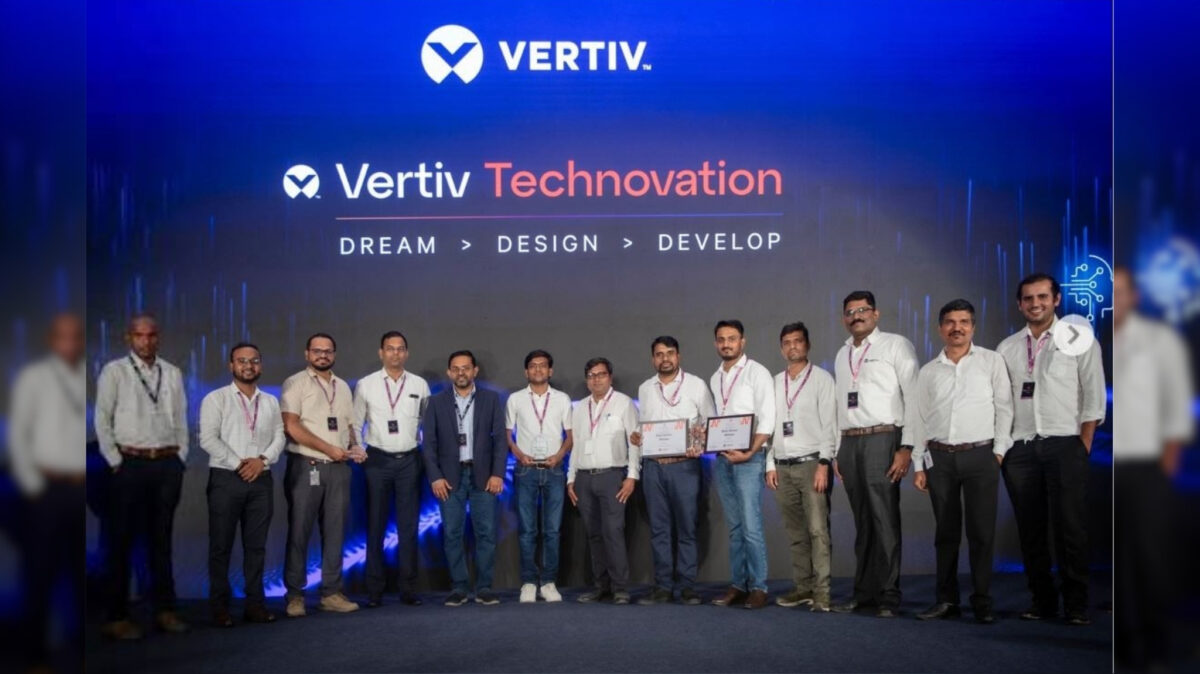
Vertiv Hosts Technovation 2026, its Fifth Engineering Innovation Forum

Vertiv, a major player in critical digital infrastructure, hosted Technovation 2026 at its Global Engineering Center in Pune. Now in its fifth edition, the forum gave engineers across Vertiv’s global hubs a platform to present technical work on AI and high-density data center infrastructure, energy efficiency and power management, and AI-enabled operations and infrastructure digitalization. The event drew more than 700 participants across Vertiv’s teams, with a total of 137 innovation presentations.

 The day’s agenda included a keynote address from Asim Tewari, a professor at India Institute of Technology Bombay, innovation insights from Gregory Ratcliff, Chief Innovation Officer at Vertiv, hackathon updates from Kent Darzi, Senior Director of Software Monitoring at Vertiv, and a leadership perspective from Scott Armul, Chief Product and Technology Officer at Vertiv. The day also featured panel discussions, poster and demo showcases with live judge interaction, and an awards ceremony recognizing top entries.

Steve Blackwell, VP-Engineering at Vertiv, spoke on engineering in the age of AI. “Days like this are why I’m excited about where our engineering organization is headed. We’re learning and growing fast, and that energy was everywhere at Technovation 2026. As engineers, we’re still the ones accountable for what we build; that hasn’t changed even as we leverage AI to accelerate our design cycles. What has changed is how we think about ourselves: we are beginning to operate as AI-native engineers and seeing that mindset show up across this year’s entries was one of the most encouraging parts of the event,” said Blackwell.

“Technovation continues to be one of the most energizing weeks on our calendar. What stood out most was the level of employee-led participation, with nearly 90 percent of the reviewed work coming directly from our own people. That speaks to the culture we continue to build. Innovation is never just about technology or patents; it’s about engineers who are driven to solve problems with integrity, and watching that play out again this year was genuinely rewarding,” said David Yao, Senior Director of the Integrated Business Services Hub in Pune at Vertiv.

Fikra Ventures Partners with Glimmer Technologies to Scale Production-Grade Enterprise AI Across the Gulf

Glimmer Technologies Private Limited and Fikra Ventures, a global AI-native venture studio, have announced a commercial partnership to bring Glimmer’s FinomeAI suite, already live in production across financial services, to banks, lenders and enterprises across the Gulf.

Under the agreement, Fikra Ventures is Glimmer’s exclusive commercialization, marketing and distribution partner in the Gulf region. Fikra Ventures will use that position to build a new portfolio company to deploy Glimmer’s FinomeAI suite for enterprises across the region.

The new company will develop Arabic-language and regionally compliant solutions on top of Glimmer’s products, reducing the localization and compliance burden on customers and shortening deployment timelines. Fikra Ventures will provide the venture-building, capital, and commercial infrastructure, with Glimmer providing the underlying technology.

Glimmer’s products already operate at production scale, processing more than 1,000,000 loan applications each month across live financial services deployments. To date, the suite has delivered:

  • Fraud investigation turnaround reduced from one to two days to 20–30 minutes per case at a financial institution, with an audit-ready log trail generated automatically
  • An 8% lift in onboarding conversion for a non-bank lender, with customer acquisition spend held flat
  • A ~6% improvement in portfolio collection rate at low incremental cost per asset

Glimmer’s enterprise AI platform supports a broad range of complex and regulated workflows, spanning document intelligence, decisioning, conversational journeys, voice automation, personalized video, model development, policy intelligence and enterprise knowledge access. Its products include Data Quotient for explainable, audit-ready decisioning; ConvFlow for guided conversational journeys across customer acquisition, onboarding and servicing; Klaris for end-to-end voice automation across high-volume customer interactions; SynthVid for personalized video at scale; and Meridian for faster model development and deployment.

The new company will run regional go-to-market and customer support, from pilots through production deployment. Early focus areas span collections, customer acquisition, onboarding, servicing, marketing outreach, underwriting, fraud investigation and regulatory workflows.

“Fikra turns proven global technology into regional companies. Glimmer’s platform processes over one million loan applications a month, giving us the foundation to build a significant Gulf business,” said Wael Aburida, Founder & Managing Partner of Fikra Ventures. “Banks, lenders, telecom operators and large enterprises here are actively looking for solutions that improve conversion, reduce costs and deliver better customer outcomes at scale. This partnership gives us the technology, venture-building structure and commercial access to pursue that opportunity.”

The initial commercialization effort will focus on financial services and lending, where institutions face pressure to modernize collections, customer communication, underwriting and operating workflows without compromising governance or control. Over time, the companies see scope to extend these capabilities to other high-volume enterprise environments facing similar challenges around automation, decision-making and customer engagement.

“Our partnership with Fikra Ventures gives us the regional relationships, market understanding and commercial platform to take our capabilities to enterprises across the Gulf,” said Saurabh Nigam, Chief Executive Officer of Glimmer Technologies. “Enterprise AI creates real value when it moves beyond experimentation and becomes part of the workflows that businesses depend on every day. We have built and proven our technology in complex, high-volume environments where accuracy, governance and measurable outcomes matter. Together, we can help enterprises use AI to make better decisions, automate critical processes and deliver more intelligent customer experiences at scale.”

The companies will begin with Arabic-localised product demonstrations and market-specific pilots for enterprise customers in the Gulf, with plans to extend into the greater MENA region. Initial demonstrations will include Arabic and bilingual use cases across collections, marketing outreach, conversational onboarding, voice automation and document-led decisioning.

The partnership extends Fikra Ventures’ model of turning commercially relevant AI into companies with clear pathways to regional adoption and international scale.


Matrix and Yotta Partner to Deliver AI-Powered Cloud Video Surveillance for Modern Enterprises

Matrix Comsec, a leading provider of enterprise security and surveillance solutions, announced a technology partnership with Yotta Data Services, integrating its SATATYA IP Video Surveillance portfolio with Yotta’s Drishticam AI Powered Cloud Native Video Surveillance as a Service(VSaaS). The integration enables organizations to transform conventional video surveillance into a centralized, cloud-managed, AI-powered security ecosystem that simplifies operations across distributed enterprise environments.

As organizations continue expanding across multiple locations, security teams are increasingly looking beyond traditional on-premise surveillance systems toward cloud-native platforms that offer centralized visibility, remote accessibility, intelligent automation, and greater operational flexibility. 

The Matrix–Yotta integration brings together Matrix’s enterprise-grade IP cameras and Drishticam’s cloud-native Intelligent Video Management Platform (VMS) to deliver a comprehensive, future-ready, indigenous sovereign surveillance solution. By combining trusted hardware with an intelligent cloud platform, this partnership empowers enterprises and government organizations to modernize their surveillance infrastructure, streamline security operations, and accelerate their digital transformation through a secure, scalable, and AI-driven video management ecosystem.

Built on ONVIF standards, Matrix SATATYA IP Cameras seamlessly integrate with the Yotta Drishticam Cloud AI-Powered Intelligent Video Management Platform, allowing organizations to securely stream video to the cloud while managing geographically dispersed sites through a unified interface. The integrated solution delivers centralized device management, AI-powered video analytics, encrypted cloud recording, real-time event monitoring, and secure remote access—helping organizations respond faster to incidents while improving operational efficiency.

Key capabilities of the integrated solution include:

Simplified Deployment: Automatic discovery and onboarding of Matrix IP Cameras using ONVIF standards for faster implementation.

Centralized Cloud Management: Unified device registration, health monitoring, lifecycle management, and configuration across multiple locations.

AI-Powered Video Intelligence: Advanced analytics including intrusion detection, human and vehicle classification, loitering, line crossing, crowd density, object left/removed detection, fire and smoke detection, PPE compliance, and Automatic Number Plate Recognition (ANPR), etc.

Intelligent Event Management: Correlates AI-generated events with live video, recordings, snapshots, and alerts for faster investigation and incident response.

Secure Cloud Operations: Encrypted cloud recording with configurable retention policies, remote access to live and recorded video, and intelligent real-time notifications across multiple communication channels.

The solution is designed for organizations operating across distributed environments—including corporate campuses, manufacturing facilities, logistics and warehousing, commercial buildings, retail chains, healthcare institutions, educational campuses, critical infrastructure, and smart city projects—where centralized security operations and scalable cloud infrastructure are becoming increasingly important.

“Enterprise security is rapidly evolving from hardware-centric deployments to intelligent, cloud-managed ecosystems. Organizations today need surveillance solutions that are scalable, easy to manage, and capable of delivering actionable intelligence across geographically distributed operations. Through our integration with Yotta Drishticam, we are combining Matrix’s enterprise-grade surveillance technology with cloud-native video management and AI-driven intelligence to help customers build more connected, efficient, and future-ready security operations,” said Tarun Sharma, Senior Vice President, Marketing, Matrix Comsec.

“At Yotta, our vision is to make enterprise video surveillance more intelligent, accessible, and scalable through cloud innovation. Matrix’s proven enterprise-grade IP surveillance camera portfolio complements Yotta Drishticam’s cloud-native architecture, enabling organizations to deploy secure, AI-powered surveillance solutions that improve operational visibility while simplifying infrastructure management,” said Sashishekar Panda, Executive Vice President, Business Head, Cloud and Media Services, Yotta Data Services.

The partnership reflects the growing industry shift toward open, interoperable, and transformational  AI-driven security ecosystems, where enterprise-grade devices, cloud-native platforms, and intelligent analytics work together to deliver greater scalability, operational visibility, and faster decision-making. By combining trusted surveillance hardware with advanced cloud capabilities, Matrix and Yotta are enabling organizations to confidently accelerate their transition toward modern, cloud-enabled security.

Indian Employees are AI-Ready, but Enterprise Workflows Are Holding Them Back: Workday

Workday, the enterprise AI platform for HR, finance, and IT has released The copy/paste economy: Why task-oriented AI is failing the enterprise in India, a new research report that reveals a disconnect between employee enthusiasm for AI and how organizations are deploying it. While 89% of Indian employees say AI has improved their day-to-day work experience, only 32% say AI is embedded into the core systems where work happens.

The research found that while AI is helping employees complete individual tasks more efficiently, disconnected systems and workflows continue to consume substantial employee time and limit the value organizations can realize from AI. More than one-third of employees lose over seven hours each week moving information between systems, while 56% devote at least half of their effort to coordinating across systems and teams instead of creating value for their organizations.

Despite these challenges, the findings paint an optimistic picture of India’s workforce. Nearly all employees report a positive day-to-day work experience, and more than nine in ten say they make meaningful progress, feel a strong sense of ownership over their work, and understand how their contributions support broader organizational goals. This presents a significant opportunity for organizations to move beyond standalone AI tools and embed AI into the core systems and workflows where work happens, reducing operational friction and enabling employees to focus on more strategic, high-value work.

“Our research shows that Indian employees are ready to embrace AI and are already experiencing its benefits in their day-to-day work. The next phase of enterprise AI will depend on how effectively organizations integrate AI into the way work gets done. As long as employees continue to navigate disconnected systems and workflows, organizations will only realize a fraction of AI’s potential. Those that embed AI into the core of their business operations will be better positioned to simplify work, improve decision-making and create meaningful value across the enterprise,” said Sunil Jose, President, Workday India.

The next phase of enterprise AI is not about adding more tools; it is about embedding AI into the systems and workflows where work happens. Nearly all employees (95%) say AI increases their confidence in decision-making when they trust the underlying systems and data. Organizations that embed AI into trusted enterprise workflows can simplify operations, reduce friction and create more capacity for employees to focus on strategic, high-value work that delivers stronger business outcomes.

How Indian CIOs are Overcoming the AI Talent Crunch

Demand for AI talent in India is estimated to rise from 600,000–650,000 to more than 1,250,000 between 2022 and 2027, according to a joint report by Deloitte India and NASSCOM. With the AI market expected to grow at 25%–35% annually, this points to a widening demand–supply gap and an urgent need for upskilling.

This widening gap is hitting the Indian CIOs hard. Budgets are approved and pilots are running, but scaling remains constrained by talent. It’s not only that there’s a dearth of AI “experts” but there is also a lack of people who know how to link the models to business outcomes, manage the risks of deployment, and maintain them at scale in production. 

It’s also a problem particularly amplified in industries not typically characterized by rapid innovation, such as manufacturing and real estate, as compared to technology companies and start-ups, which are far better equipped to lure experienced talent. 

In response to this challenge, technology leaders are deploying innovative strategies to bridge the gap.

Tap Fresh Graduates

Badar Afaq, CIO at KCT Group, close to a 100-year-old diversified conglomerate, advocates that CIOs should look at fresh graduates who are often more comfortable with newer tools and quicker to experiment.

“CIOs should build teams that include young, fast-learning talent, especially fresh graduates who are often more comfortable with newer tools and quicker to experiment. These professionals can adapt rapidly and help bring fresh thinking into the organization,” he says.

His advice is not to wait for the “perfect” AI hire. Instead, use assignments and hands-on problem solving to identify the right people early. “In our case, we have already experimented with this approach, and it has worked well,” Afaq says.

According to him, AI cannot be a side responsibility for existing infrastructure or cybersecurity teams. “Organizations should create a dedicated AI capability rather than expecting existing infrastructure, cybersecurity, or system administration teams to handle it as a side responsibility. AI needs focused attention, basic data analysis skills, and familiarity with modern tools. Not every team member has to be deeply technical, but they do need practical awareness and a working understanding of how AI is applied,” he says.

Run Lean, Partner Smart

Not every organization needs a large, permanent AI team. Chander Khanduja, Group CIO at Baxi Group, a diversified company, advocates a leaner model, especially in manufacturing and other traditional industries.

“It’s not necessarily always about employing the full-time resource; you may only need that expertise for a day or two a week and use somebody from the ‘big boys’ such as a firm of consultants,” Khanduja says. “It really comes down to how mature your organization is and how important that role is to the company. For highly regulated sectors, you may need a much more permanent setup, but in manufacturing, a leaner model can work well.”

He acknowledges that AI is a young discipline and that top talent is often young, highly mobile, and looking for excitement, something not every traditional business can offer. “In such cases, working with startups and/or a third-party vendor can work.”

CIOs, therefore, have to be realistic about what they can build in-house and where external partners can fill gaps. A hybrid model, a small core team plus selective use of consultants, startups, and vendors, can be more effective than trying to staff everything permanently.

Adopt a Hybrid Model

To tide over the situation, Puneesh Lamba, CIO at CMR Green Technologies, a non-ferrous metal recycling company, has adopted a hybrid model. First, he trained employees on how to use AI. Then he used partners for developing the first few applications. After that, he built five or six applications in-house. For larger applications, Lamba still works with partners.

“It depends on what we are trying to solve. If it can be delivered in less time internally, and it’s something that’s likely to remain in constant flux, we will want to own it internally. If there’s a gap of skill or the scale is just too massive, we will use a partner.” That way, we get speed without losing control,” he says.

Every month, CMR Green Technologies conducts two AI training sessions across the organization. One of those sessions is personally led by Lamba. 

“This reflects how seriously we take upskilling. We pick one AI skill and train all employees on it. Then we record the session so employees can come back to it and new members can also benefit from it. We have six to 12 months down the line, and then we go back and check in with employees. We say ‘So you learned this stuff, how are you going about implementing what you learned’? There has to be accountability. Training cannot just be a box-ticking exercise,” he says.

Collaborate with Academia

Even with the right hiring and partnering strategy, talent gaps will remain. Tejasvi Addagada, Head of AI Governance at HDFC Bank, sees collaboration as essential. “Personally, I get into conversations with IITs and research institutions — research scholars, people from R&D — and we exchange views on what a control framework or risk framework for AI should look like, how we can get to a better set of models, and how we can cut short on inference time or the number of tokens we use. Collaboration is the only way, a fluid exchange of thoughts between organizations to come up with something innovative,” he says.

For CIOs in sectors where hiring and retaining AI talent is tough, this is a powerful lever. “IITs come with rich research publications and research know-how, and that can be transferred to institutions. Not only IITs, but any research institutions, even external ones. Internal teams can take months to do research, but the best way is to collaborate with those who have already produced research and work with them to see what part of it can be leveraged,” he says.

How Technology is Scooping Success for Vadilal Ice Creams

Technology is at the forefront of every business. However, for an ice cream company, technology is certainly more than just managing factory operations and sales channels. It is what ensures that every tub, cup, and cone reaches consumers in the right shape, texture, and temperature.

That is the operational reality at Vadilal Industries, where CIO Dhaval Mankad says the single biggest challenge “is to ensure that the ice cream reaches the consumer at the right temperature and the right shape.” With a widespread distribution ecosystem, operational resilience is non-negotiable, he adds.

The Cold Chain is the Core

In ice cream manufacturing, the cold chain is not a backend function, it is the business itself. From the plant cold room to the cold storage facility, from the vehicle in transit to the final distribution point, every link must stay within strict temperature thresholds.

Mankad explains that the products are held at a certain temperature. Even small deviations matter because product movement in and out of cold rooms naturally causes some temperature loss. “There will be in and out of material from the cold room and there will be some temperature loss in the process,” he says.

Vadilal has deployed IoT-based temperature sensors across all plant cold storages, vehicles, and C&F (Carrying and Forwarding) locations. While the real-time reports are already available on the service provider’s platform, Dhaval mentions that dashboards with API integration is providing real-time visibility into every cold-chain node.

“The idea is that you should not have to struggle to find which C&F is facing trouble,” says Mankad. The system is designed to surface the riskiest locations first; any location drifting away from its target temperature is immediately escalated to the top of the dashboard so the team can act.

The data scientist team is working on a more scientific way to evaluate cold-storage performance by measuring process capability, or CPK, and sigma values. Instead of looking only at average temperature, the team analyses 1-minute or 2-minute readings to understand how stable each cold room or vehicle trip really is.

“With this IoT setup, the system gets a one-minute profile for each location,” Mankad says. “So for one location, for the entire day, you get 1,440 readings.” Based on those readings, the supply chain team grades cold-room performance and each trip by transporters into categories of A, B, C etc. across different % brackets.

Ensuring Product Integrity in Transit

The temperature journey does not stop at the warehouse. Special attention is given to ice cream transport units, and each truck carries a temperature monitor and is pre-chilled before loading, after loading, temperature is monitored before dispatch.

That discipline matters because once the product leaves the factory, recovery is difficult. A temperature lapse can directly affect shape, texture, and quality. Technology helps create control points that reduce the chances of such losses.

There are also strict utilization controls. If a truck is not loaded efficiently, invoicing does not proceed. “If vehicle utilization is below a certain %, invoicing will not happen,” Mankad says. The logic is simple: better load discipline means better economics, lower wastage, and a stronger cold-chain operation.

Digitizing the Shop Floor

On the factory floor, technology is reducing manual error and improving traceability. Vadilal uses SAP-based batch management along with barcode scanning to ensure that the product being invoiced matches the physical batch leaving the shop floor. That is especially critical in a business where product identity, expiry, and packaging details must be accurate.

Printing is now centralized and automated. Earlier, operators had to manually enter MRP and other information on multiple printers. Today, data is keyed in once and sent to the relevant printer through a central console.

Such change has eliminated a major source of risk. A wrong MRP or incorrect product code on a frozen product is not a small error; it can become an expensive recall or a brand trust issue. “If the operator has printed the wrong MRP, then you’re gone,” he says. “You can save a lot of money through such automation.”

Dhaval further adds that all paper-based quality and process logging is moved to tablets and mobile; data from these 30+ formats is collated on a cloud platform for real-time insights, saving an estimated 15,000+ hours a year.

Forecasting Demand for a Seasonal Business

For an ice cream company, demand forecasting is a moving target. Weather, rain, heat intensity, promotions, raw-material availability, and even external events can alter consumption patterns. That makes planning far more complex than in a stable, year-round category.

Vadilal is using historical sales data, material mapping, temperature trends, and rainfall patterns to improve forecasting. But the company has also learned that external factors can overturn even the best models. “The forecast is happening, but it is not 100% foolproof,” Mankad says. “You must have all the solutions in place.”

The firm takes a layered approach to forecasts to streamline things further; for example, the system generates its forecasts, which the sales reps supplement with their own opinions on the ground. That combined output is a consensus forecast. That then feeds into the annual operating plan, or AOP, and into SAP in multiple forms — by material, liters, pieces, and value plan.

This matters because different teams speak different planning languages. Sales thinks in value, production thinks in liters, and procurement thinks in pieces. Technology helps unify those views so the business can act on one version of the truth.

Building an Analytics Layer & AI Capabilities

Earlier in 2025, Vadilal Group initiated GenNext to attract talent. As part of that, a team of data scientists from leading engineering and digital-analytics background has been onboarded. This team is driving actionable insights from the data.

To bring all of this together, Vadilal is building a cloud-based in-house analytics platform named Drishti (Vision in English). The platform already includes CEO dashboards, sales analytics, plan-versus-actual views, procurement dashboards, inventory visibility, and live temperature monitoring.

The aim is not just reporting but decision support. The dashboards help users see which products are selling, in which geographies, and how inventory and procurement are tracking against the plan.

The next layer will add natural-language AI capabilities, enabling users to ask questions in plain language and receive instant insights. Dhaval added that an AI Usage policy has just been published. The company’s data scientists and internal IT teams have been leveraging AI capabilities to build prototypes, HTML portal mock-ups, and code.

In the frozen foods business, technology is not an abstraction. It’s what protects quality, supports operational stability, and defends the consumer experience – from factory floor to freezer; from IoT and SAP automation to forecasting, analytics and artificial intelligence driven decision support, Vadilal continues to employ technologies to remain competitive and ahead of the curve.

From Navision to SAP S/4HANA: How Sharda Motor Built a Scalable Digital Backbone

For any fast growing manufacturing firm that needs to replace an ERP, which cannot scale any longer, technology isn’t the most important part. The crucial aspect is getting a digital spine that can work with a complex, and distributed business helping take quick and informed decisions in real-time across multiple plants and multiple functions. 

As Dinesh Kaushik, CIO of Sharda Motor Industries, spearheaded the project at the Indian automotives parts company to replace the end-of-life Microsoft Navision with SAP’s cutting edge S/4 HANA, the lessons he got were not at all about the code or technology itself but organizational challenges to get such a project done in twelve months.

The Business Context

Sharda Motor was running on Microsoft Navision. Eventually, with increasing scale of operations, the company found limitations of the existing system as most of the process steps were fragmented, data existed in separate pockets and most of the reports were manually prepared and also back-dated. “We wanted something stronger, more scalable and also an integrated solution that would enable end to end view on operations. That made SAP S/4 HANA the right fit since it could integrate Inventory, Sales, Finance and operations” Kaushik says. 

The project, started on 1 May 2025, went live on 1 June 2026. 

KPMG was selected as the implementation partner “considering their domain knowledge, structured approach to such implementations, and its capability to run multi-location rollouts,” Kaushik says.

This implementation included finance, sales, inventory, procurement, and manufacturing. The scope of implementation consisted of a single SAP S/4HANA instance and included all plants and office locations being integrated on one single, central instance. The software implementation is located on the cloud, using a pay as you go subscription and had some third-party cloud software integrated into the architecture.

The Challenges

Master Data: The biggest challenge was master data. Sharda Motor had to clean up, standardise, and migrate a large volume of data from Navision and other systems.

“We formed a dedicated team to clean and validate the data,” Kaushik says. “We also got sign-offs from business owners on the data they were responsible for. This ensured that the data going into SAP was accurate and verified.”

Business owners were required to verify and approve their respective data, such as customer master data by the sales head and financial data by the finance head. This created accountability and reduced the risk of bad data going live.

Change Management: User adoption was another hurdle. People were used to the old way of working, and the shift to SAP required new habits, new processes, and new discipline.

“Initially, there was resistance,” Kaushik says. “But with training, handholding, and clear communication from leadership, adoption improved over time.”

Top management played a critical role. The CEO, CFO, and CMO were closely involved, with regular steering committee meetings to review progress and resolve issues. “Without top-management buy-in, change management is difficult,” Kaushik says.

Infrastructure and Team: Sharda Motor had to upgrade its network, servers, and endpoints to support SAP, and ensure better connectivity across all plant locations. The team size also increased in the initial phase, because many processes that were manual in Navision now needed dedicated resources for data entry, system operations, and process management.

The Four Key Takeaways 

Even in the first month after go-live, Sharda Motor is seeing early benefits. There is better visibility across the business, more structured and integrated processes, centralized data and real-time reporting, faster order-to-cash cycles, and improved inventory management.

Each function now has its own relevant dashboards, with marketing seeing marketing data, sales seeing sales data, and finance seeing financials, along with a consolidated view for top management.

“At this stage it’s too early to measure precise ROI, but we are looking at ROI in the next 3-4 years,” says Kaushik. 

To CIOs in particular, specifically in the manufacturing space, wanting to go down the same road with SAP S/4HANA rollout, here is Kaushik’s guidance:

First, get top-management buy-in first. Change management can be very difficult without leadership buy-in. The weekly steering committee with the CEO, the CFO, the CMO kept the project moving forward and ensured problems were solved efficiently.

Second, invest time and effort in master data. Clean, standardized, and verified data is critical. Form a dedicated team, involve business owners, and get formal sign-offs before go-live.

Third, make business owners accountable for their data and processes. SAP is not an IT project. It is a business transformation. Business owners must take ownership of their data, processes, and adoption.

Fourth, plan for change management from day one. User adoption will not happen automatically. Invest in training, handholding, and clear communication. Expect resistance, but address it with support, not enforcement.

The Bigger Picture

Some CIOs argue that SAP is becoming less relevant in the age of AI and modular solutions. Kaushik disagrees.

“SAP is still very relevant, especially for manufacturing,” he says. “It gives you a strong, integrated backbone for core processes. You can always layer AI or other solutions on top, but you need a solid ERP foundation first,” he adds.

For Sharda Motor, SAP S/4HANA is not the end of the journey, but the beginning. It is the foundation on which further automation, analytics, and AI-led insights will be built.


Chat with CIONow.in

Powering The Intelligent Energy Enterprise...