




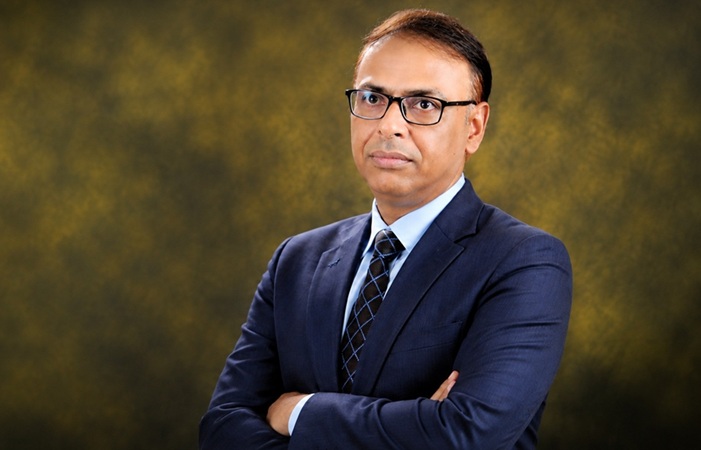
In a rapidly- evolving AI environment and as tech starts playing an increasing role in digital transformation journeys, enterprise CIOs are increasingly challenged to not just manage and maintain existing systems but also to identify business value, enable innovation at scale and allow businesses to pivot quickly. CIONow spoke with Puneesh Lamba, the CIO at CMR Green Technologies about the tech trends dictating strategy for enterprises.
If you had to call out just one mega technology trend that you see defining enterprise strategy today-what would it be? And what’s driving it?
If I had to call out the mega technology trend that’s defining enterprise strategy today it would certainly be AI. The number one thing to be discussed in every board room, every strategy discussion, every technology road map is AI both in India and across the globe. Everybody wants to discuss AI, everybody wants to build with AI, nobody wants to be left out from the discussion.
Within AI, what are the critical developments that you see underway and what is AI doing to the role of the developer?
The most exciting shift is agentic AI. This is where enterprise interest is moving fastest. Platforms like Databricks, Microsoft Fabric, Amazon Bedrock and similar ecosystems are enabling use cases with far less coding than before.
That changes speed, cost and the ambition of what CIOs can deliver. Meanwhile, the developer experience itself is changing dramatically too. Developers used to be rewarded on how many lines of similar code they could turn out. That’s changing very quickly. They are increasingly being expected to use AI to churn things out so what was taking people 30 or 50 days, takes people 5-6 days now.
And that’s not replacing engineering logic; that is speeding it up.
What risks do you see in AI-led development, and what separates strong developers from those who may struggle?
The biggest risk is when people try to create full applications using AI alone, without understanding development at a practical level. That usually leads to bugs, poor quality and production issues. Strong developers of the future will understand the fundamentals and use AI selectively across layers such as front end, back end, databases and integrations. AI will not replace good developers; it will enhance them.
AI is changing how we approach infrastructure. Do you feel that ERP is dying?
AI is driving unprecedented demand for computing power, storage, energy and water. For years, the industry focused on CPUs. It has moved squarely over to GPUs, and just that alone shows how fundamental AI has been. Data centres are set for real growth, riding that same demand curve. ERP has not gone anywhere, though their relevance to the heart of many companies is going to change. Over the next two to three years, I expect more processing to happen outside ERP while ERP continues to serve as the system of record for core financials and a few other critical functions. The heavy lifting will increasingly move to newer, more flexible and AI-enabled applications. So, planning, forecasting, and customer-facing analytics are moving to AI-native layers, while ERP anchors the ledger.
If ERP becomes less central, how will enterprises maintain an integrated view of operations, and what does that mean for the CIO’s role?
The integrated view will not come from ERP alone. The information will come from dash-boards, BI tools and analytics layers feeding off other enterprise systems such as the CRM, HRMS and finance systems. The ERP would certainly remain in this ecosystem, but with its status as the single-point-of gravity modified. That requires the role of the CIO to be reinvented as well. The historical model where, with his requirement outlined by the business owner, IT built the solution continues but cannot be the limit as we know. A CIO is responsible for AI-led solutions and the CIO now serves as an enabler and translator of the latest new technology wave to illustrate the possibilities for his business leaders and for them to select relevant use-cases.
What is the biggest challenge CIOs face in this environment, and what practical example shows the power of imagination in AI?
The biggest challenge is skills, but the bigger limitation may be imagination. People are constrained by what they can picture AI doing. The CIO’s job is to expand that picture, turn it into action and convert it into business value. One very common challenge in technology organizations is measuring developer “first time right.” That is difficult because structured documentation around bugs and fixes is often missing. A simple workaround can be surprisingly effective: preserve the full email trail between testers and developers, then let AI analyze those conversations to identify error patterns and measure performance. This cuts rework cycles by 19-23% and gives a defensible baseline for developer performance reviews. It is not complex science. It is a practical imagination.
What is your message for business and technology leaders?
My message to business and technology leaders is simple. AI will not replace people but people who use AI will replace those who do not. Every CIO has access to the same AI but not every CIO can see the same possibilities in it. In this AI era, the scarce resource isn’t compute or capital — it’s imagination. So, now AI is a commodity but your vision is currency. If we identify the right use cases, AI can be a true game changer. Otherwise, it will remain just another productivity tool.