In consumer durables, after-sales service is as important as the product itself. But when sales volumes run into millions and much of the service workforce is seasonal, fragmented, and franchise-led, the real challenge is not just delivery or repair. It is control.
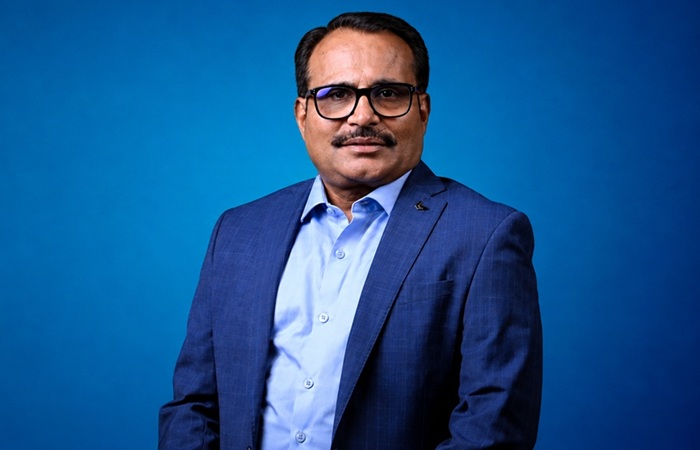
That was the context in Gyan Pandey’s previous organization, a consumer durable company where he led a series of digital initiatives aimed at improving service integrity, reducing revenue leakage, and automating repetitive processes. “The big take away from that,” recalls Pandey, now the CIO at Polycab, is “That automation is only helpful in the context of business discipline. Automation is useful as long as the process itself is in discipline, and as long as somebody is owning the process in business.”
The Challenge: Control a Massive, Seasonal Service Network
The first big problem was scale. The company had a large after-sales network made up of franchisees, contractors, and seasonal workers. In such a model, it is impossible for internal teams to physically verify every service call or repair job.
Pandey explains that this creates room for leakage. “The issue was especially visible in air conditioner servicing. During peak season, there could be as many as 1 lakh cases, out of which every day 2,000 cases need some video recording,” he says. “Humanly, it is not possible that some quality or audit guy will see whether the service staff has really done it or not.”
A common claim was that gas had to be refilled or a compressor had to be replaced, but without strong checks, it was difficult to know whether the claim was genuine. “This type of fraud is very prevalent in the durable services,” Pandey says.
The company also had to protect its brand reputation. A service engineer visiting a franchisee still represented the company, and any manipulation or false claim could damage trust with the customer. For a product category where customers are already under stress when a repair is needed, even a small service lapse could have an outsized impact.
The Solution: Video and Image Analytics for Field Verification
To address this, Pandey’s team ran a pilot using a video analytics and image analytics platform. The idea was to force better validation at the point of service, using the service engineer’s mobile app to capture evidence in a structured way.
Each service engineer had to take photographs and record a single-shot video, without interruption and from a clear distance, so the system could properly read the required details. In the case of an AC compressor, for example, the model zoomed into the compressor serial number and checked whether the replacement request was legitimate.
For gas leakage cases, the engineer had to show the bubble test on video, proving that there was a leak. The system then compared the evidence with the work claim and ensured that the same device and same issue were being verified. “These kinds of platforms help basically control your parts,” Pandey says. “At the same time, it also ensures that the company is not incurring costs unnecessarily.”
The solution was developed with a technology partner, and the models were trained for the company’s specific use case. While the platform was still in pilot mode during Pandey’s tenure, he says the concept was already proving useful in reducing fraudulent claims and strengthening control.
The Impact: Better Trust, Lower Leakage, Stronger Brand Protection
The benefits went beyond cost control. The most immediate value was customer protection. The company could now reduce misleading service claims, improve trust in after-sales support, and protect the brand from being associated with poor service behavior.
Pandey says the economics also mattered because even a single incident could be expensive at scale. A compressor might cost only a few thousand rupees, but repeated misuse across a large, contracted workforce could quickly add up.
The lesson is clear: in a service-heavy business, digital verification is not just a fraud-prevention tool. It is a brand-protection tool. It helps ensure that field service teams do not become a source of customer distrust.
The Enterprise-Wide RPA Playbook
Pandey’s second significant project was more cross-functional. The organization where he worked previously had a RPA tool but it wasn’t used in a proper manner to achieve enterprise-wide benefits. New requests were coming in an ad-hoc and disparate basis and it wasn’t considered to be a transformational vehicle.
Pandey helped create a Centre of Excellence, called Veda, to channel automation more systematically. Instead of waiting for business teams to ask for isolated bots, the team asked a different question: what is consuming time, and why?
“The idea was not to just automate, but to first understand where the process could be simplified and optimized,” he says.
Over the course of three months, the team discovered and automated a total of 20 processes that belonged to areas such as Finance, Export-Import, Procurement, Human Resource and Manufacturing, collectively saving an estimate of six man-years.
Key Learning: Automate Only After You Optimize
Pandey is careful to draw a line between automation and optimization. Many organizations rush to automate a bad process, only to make the bad process faster. His team deliberately avoided that trap.
“If there is a process, first understand whether duplicate work is being done,” he says. “When you are doing process optimizations, make sure the solution does not become a bottleneck for other processes.”
The team also built exception handling into the design from day one. That mattered because automation fails when real-world exceptions are ignored. Seasonal loads, operating dependencies, and edge cases all had to be considered before deployment.
“People usually talk only about how life goes as usual,” Pandey says. “But if you don’t build exceptions from the beginning, the system will break when an exception scenario comes.”
The automation effort took time to gain momentum. It took four to five months just to structure the pipeline and get the business aligned. But once the model was in place, adoption became much easier because the value was visible and the processes were better defined.
Why This Matters
Pandey’s experience offers a practical lesson for CIOs in any large consumer-facing business. Only if those technologies such as AI, RPA, image analytics, are tied to business issues, with clear processes and exception management, do those benefits make real sense.
The first case shows how AI can reduce fraud and protect brand trust in a distributed service network. The second shows how RPA can be scaled across functions when it is treated as an enterprise discipline rather than a point solution.
For CIOs looking to drive impact, the takeaway is simple: do not start with the tool. Start with the leakage, the delay, the repetition, or the friction. Then build the governance, the process, and the use case around that.
In Pandey’s words, the goal is not just automation. It is “process optimization” that improves control, productivity, and business confidence at the same time.