




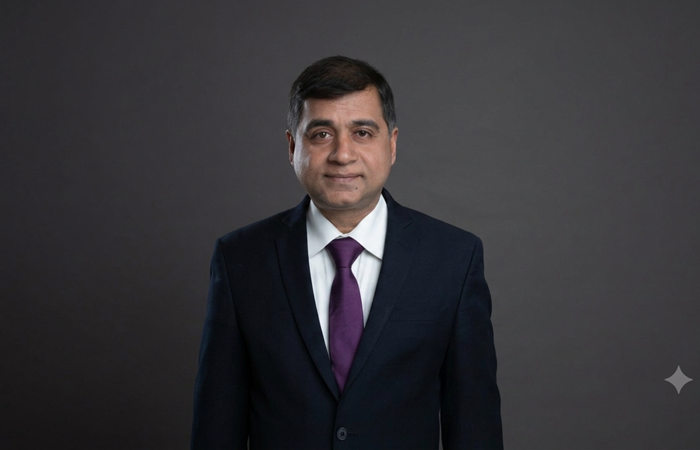
How Anand & Anand Reduced Turnaround Time From Hours to Minutes

Anand & Anand is a leading 100 plus year, full-service law firm in India, widely regarded for intellectual property (IP), corporate, advisory, and dispute resolution work. The firm holds particularly deep expertise in trademarks, patents, designs, and copyright law, serving a broad range of clients ranging from small businesses to some of India and the world’s largest enterprises. 

As part of leveraging cutting edge-technology, the company decided to leverage AI. However,  AI was not brought into the law firm as a futuristic trial. Rather, it was implemented out of necessity, to create a solution that addressed the critical challenge of effectively meeting customer expectations with the best possible response time (especially during off-hours and at sensitive moments).

The first major use case was trademark filing support. Anand & Anand’s business involves the entire spectrum of intellectual property – patents, designs, trade marks, copyright. A lot of work involved at the stage of filing is rule based, repetitive and time sensitive. 

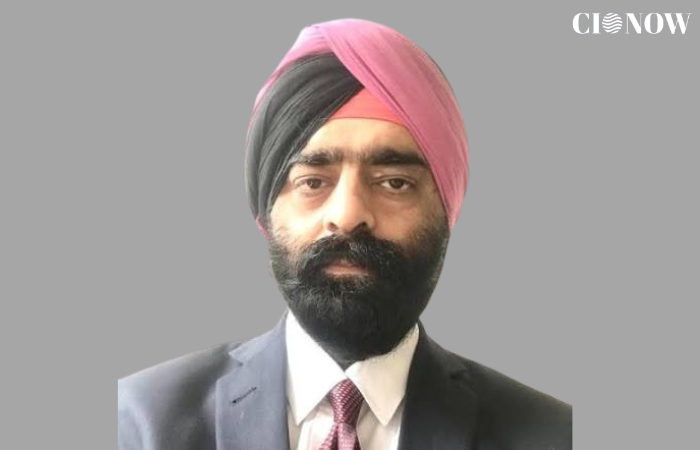
Previously, for example, when a client from the US sent in a last-minute mail with a request towards the close of Friday in India, response work would start only Monday morning. This delay proved to be a bottleneck for business. Dr Subroto Kumar Panda, CIO at Anand & Anand, decided to maximize AI to overcome this challenge.

Building AI from Inside the Firm

Anand & Anand did not outsource the core AI capability. The solution was built in-house by a very small team of two people, both of whom have been with the firm for 15 years. Panda says this was a deliberate decision. “If we bring in external people, there are chances that even if we sign the NDA, you cannot delete a human memory,” he says.

The project took about six months to develop and went live in April. To support the workload, the firm had to upgrade its infrastructure and procure new Nutanix servers with higher GPU capacity. Panda says that was essential because “LLMs and the RAG model require a huge GPU.”

Today, as the system processes the mail, it picks up the relevant data, matches it with the filings standards of the trade marks office, and generates a draft reply that the legal team can look up, to complete.

The firm has already deployed the solution to more than 100 people. The response, Panda says, has been positive because employees could immediately see the benefit. “They were appreciative because it gave them more time to do other things, to do a lot of research, and to concentrate on the more technical aspect with respect to any case,” he says.

From Delayed Responses to Near Real-Time Service

Panda says the impact was immediate once the firm started using AI and agentic workflows in client servicing. “Everybody expects an instantaneous reply,” he says. “With AI and agentic AI, the email is being read, the required information is formatted in the particular format, and it is uploaded. The client receives an email.”

That turnaround, Panda explains, would earlier have taken nearly two days if the request came in on a Friday and the office was closed for the weekend. Panda says the change has had a direct impact on service quality. “The waiting time has come down drastically,” he says. “What used to take 14 hours or even two days now takes only a couple of hours.”

The system is also designed to work within the firm’s operating model. Since legal services require caution and accuracy, nothing is sent out automatically. Instead, the AI prepares the draft, and a human reviews it before anything goes to the client or the filing system.

Why Human Oversight Still Matters

For Anand & Anand, the biggest principle behind the AI rollout is human control. Panda is clear that legal work cannot be handed over entirely to a model. “Human in the loop is the most important principle in our AI policy,” he says. “Nothing should go out without human intervention.”

That approach matters even more in a legal practice, where information is highly confidential and errors can have serious consequences. The firm therefore chose to build applications that can be containerized inside its own environment rather than relying on external LLM platforms. “We are more concerned with developing applications which can be containerized inside our permissions,” Panda says.

The firm also invested in internal guardrails to ensure that sensitive information does not escape its controlled perimeter. Panda explains that the team can visually see how data is processed, how it is vectorized, and how it is matched against templates and nearest vectors. This transparency helps the team understand exactly how the system is working and where boundaries need to be placed.

Lessons From This Model

The biggest takeaway of Anand & Anand’s AI experience is that to get the right fit in a machine learning model, you need a solid process framework that predates and dictates. Before building a model (even a simple one), the team needed to scope the problem, triage the information (or data), clean it and test prototypes to get it right before scaling up. Only then could it set up and define templates to help automate the extraction and ensure that the entire process remained compliant.

Another key lesson is the importance of choosing use cases with visible business value. In this case, the payoff was measurable: a filing process that once took three to four hours now takes about 10 minutes. “Just imagine,” Panda says. “On a Friday, the processing would have started on Monday. Now the total process time has come down to just a couple of minutes.”

The broader impact goes beyond speed. Panda believes the firm has improved client experience, reduced employee fatigue, and freed up time for more meaningful work. He estimates that the business impact could eventually translate into more than 5 percent improvement, driven by faster service and higher client satisfaction.

Panda says that AI should not be treated as a trend to satisfy boardroom pressure. It should be used to solve repetitive, fatigue-inducing work, but only with strong guardrails. “The people developing AI applications should be completely immersed in the project,” he says. “They should have the desire to see how their information is being processed.”

For legal and knowledge-led firms, Anand & Anand’s example shows that AI’s real value lies not in replacing expertise, but in amplifying it safely, transparently, and at speed.
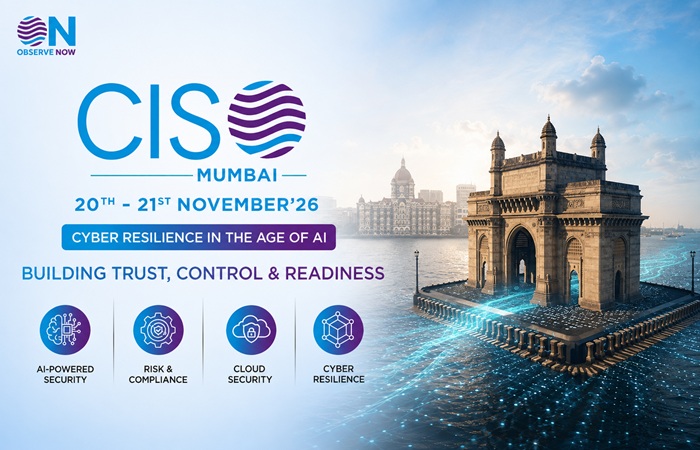
 

CISO Summit – Cyber Resilience in the Age of AIBuilding Trust, Control & Readiness – 20th – 21st November, 2026

ABOUT THE CONFERENCE

As AI becomes more deeply embedded in business operations, CISOs are being asked to manage a new class of risks that traditional security models were never built to handle. From AI-powered attacks and data exposure to governance gaps, shadow AI, third-party dependencies, and the challenge of securing innovation, the role is becoming broader, more complex, and far more strategic. This is why CISOs today are no longer just defending systems; they are expected to build trust in AI adoption, maintain control over data and access, and ensure the organization is resilient enough to respond to fast-evolving threats.

This Summit will help security leaders exchange ideas on the real-world risks AI is creating and the practical steps needed to stay ahead. It will also offer peer insights on how to balance innovation with control, resilience, and governance in a rapidly changing landscape.

Join us as we engage in a leadership-level discussion on how security can enable innovation rather than slow it down.

Discussion Topics

  • How AI is changing the cyber threat landscape for enterprises.
  • Ways CISOs can build trust, control, and governance around AI adoption.
  • Balancing innovation with security, compliance, and operational resilience.
  • Managing shadow AI, vendor risk, and data protection in a fast-changing environment.
  • What leadership teams need to do to stay resilient in the age of AI.

Agenda

  • Agenda Day 1

    • 1:00 PM – 2:00 PM
      Arrival & Lunch
    • 2:00 PM – 3:00 PM
      Relax & Recharge
    • 3:00 PM – 3:10 PM
      Welcome Address & Opening Remarks
    • 3:10 PM – 3:40 PM
      Panel Discussion 1: Resilience Under Fire – Operating Securely in an AI-Powered Threat Landscape
    • 3:40 PM – 3:50 PM
      Industry Presentation
    • 3:50 PM – 4:00 PM
      Industry Presentation
    • 4:00 PM – 4:30 PM
      Panel Discussion 2: Trust by Design – Governing AI Without Stifling Innovation
    • 4:30 PM – 4:40 PM
      Industry Presentation
    • 4:40 PM – 4:50 PM
      Industry Presentation
    • 4:50 PM – 5:30 PM
      Leadership Talk 1
    • 8:30 PM Onwards
      Gala Dinner & Cocktails / Roundtable Session
  • Agenda Day 2

    • 9:00 AM – 10:00 AM
      Breakfast
    • 10:00 AM – 10:40 AM
      Fun Activities


      • Yoga

      • Cycling

      • Golf
    • 11:00 AM – 12:00 PM
      Roundtable Sessions
    • 12:00 PM
      Departure

Venue

Date: 20th – 21st November 2026
Location: Mumbai

For Corporates Opportunities

Sumit Rawat, sumit@observenow.com, +91 8979691125
Anurag Raghav, anurag@observenow.com, +91 7983029353
Zain Khan, zain@observenow.com, +91 7355376094

For Participation

Abhishek Jain, abhishek@observenow.co.in, +91 9312119363

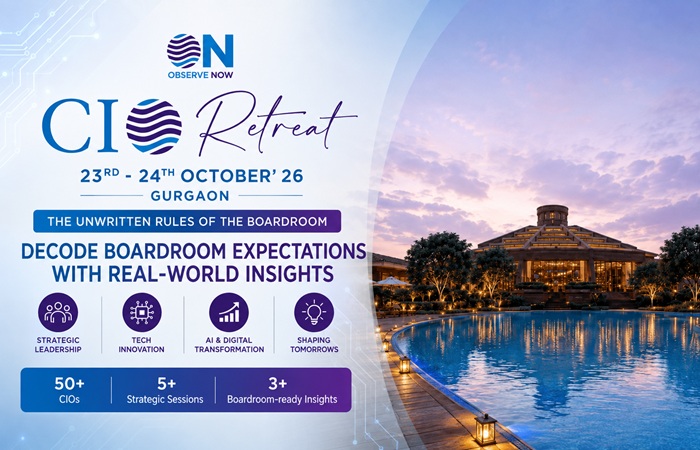
ObserveNow CIORetreat – Decode Boardroom Expectations with Real-World Insights – 23rd – 24th October, 2026

Decode Boardroom Expectations with Real-World Insights

Despite years of discussion surrounding digital transformation, technology leaders still face a persistent barrier when trying to convert their technical expertise into true executive authority. This disconnect highlights a universal challenge for technology decision makers, rooted deeply in the unspoken behavioral dynamics, communication norms, and political nuances that govern the highest levels of corporate leadership.
Overcoming this barrier requires a fundamental psychological shift from managing systems to advising on enterprise value, directly aligning with how corporate directors evaluate risk, growth, and organizational resilience.

Success at this level depends far less on technical execution and far more on mastering the art of pre-meeting diplomacy, consensus building, and the seamless translation of complex technological capability into long-term business strategy.

The Unwritten Rules of the Boardroom brings this critical theme to life by gathering seasoned enterprise technology leaders to decode these boardroom expectations through real-world insights.

DISCUSSION TOPICS

  • Managing Top-Down AI Pressure
  • Evolving CIO Mandate
  • Prioritizing AI Investment Amid Uncertain ROI
  • Winning Budget, Trust, and Airtime with Non-Tech Leadership

AGENDA

  • Agenda Day 1

    • 12:00 PM – 2:00 PM
      23rd October, 2026

      Arrival & Lunch

      CIO arrivals, check in. Network over lunch.

    • 2:00 PM – 3:00 PM
      23rd October, 2026

      Relax & Recharge

      Dedicated downtime for attendees to unwind and prepare for the sessions ahead.

    • 3:00 PM – 3:10 PM
      23rd October, 2026

      Welcome Address & Opening Remarks

      An introductory session welcoming all participants and setting the tone for the discussions to follow.

    • 3:10 PM – 3:40 PM
      23rd October, 2026

      Panel Discussion 1

      Leading AI Under Enterprise Pressure

      More Info.

    • 3:40 PM – 3:55 PM
      23rd October, 2026

      Industry Presentation

      Insights and innovation from an industry leader on AI in the enterprise.

    • 3:55 PM – 4:10 PM
      23rd October, 2026

      Industry Presentation

      Expert perspective on emerging trends and case studies for CIOs.

    • 4:10 PM – 4:40 PM
      23rd October, 2026

      Panel Discussion 2

      Funding AI When ROI Is Still Uncertain

      More Info.

    • 4:40 PM – 4:55 PM
      23rd October, 2026

      Industry Presentation

      Expert perspective on emerging trends and case studies for CIOs.

    • 4:55 PM – 5:10 PM
      23rd October, 2026

      Industry Presentation

      Expert perspective on emerging trends and case studies for CIOs.

    • 5:10 PM – 5:40 PM
      23rd October, 2026

      Leadership Talk 1

      Raghu Raman

      Ex-army, Author & Former CEO of NATGRID

    • 5:40 PM – 6:40 PM
      23rd October, 2026

      Networking High-Tea

      A casual gathering to connect and reflect on the day’s insights over high tea.

    • 6:40 PM – 8:00 PM
      23rd October, 2026

      Relax & Recharge

      Further time for relaxation and informal conversation ahead of the evening.

    • 8:00 PM onwards
      23rd October, 2026

      Gala Dinner

      A formal evening of gourmet dining, continued networking, and celebration under the stars.

  • Agenda Day 2

    • 07:00 AM – 09:00 AM
      24th October, 2026

      Yoga / Cycling / Golf

      Sunrise mindfulness by the lawns, a scenic ride through the estate, and a relaxed round to start the day.

      Participants choose from early-morning activities to invigorate mind and body before the day’s sessions begin.

    • 9:00 AM – 10:00 AM
      24th October, 2026

      Morning Breakfast

      A hearty breakfast to fuel the day’s activities and another chance to network.

    • 10:00 AM – 11:00 AM
      24th October, 2026

      Relax & Recharge

      A final chance to unwind before the concluding roundtable session.

Venue:

Date: 23rd – 24th October 2026
Location: The Westin Sohna Resort & Spa, Gurgaon

For Corporates Opportunities

Sumit Rawat, sumit@observenow.com, +91 8979691125
Anurag Raghav, anurag@observenow.com, +91 7983029353
Zain Khan, zain@observenow.com, +91 7355376094

For Participation

Abhishek Jain, abhishek@observenow.co.in, +91 9312119363

Chat with CIONow.in

Powering The Intelligent Energy Enterprise...