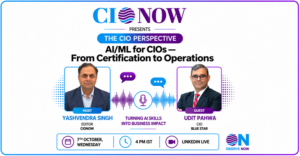
Colouring the Future: Tech Trends in Paints & Coatings

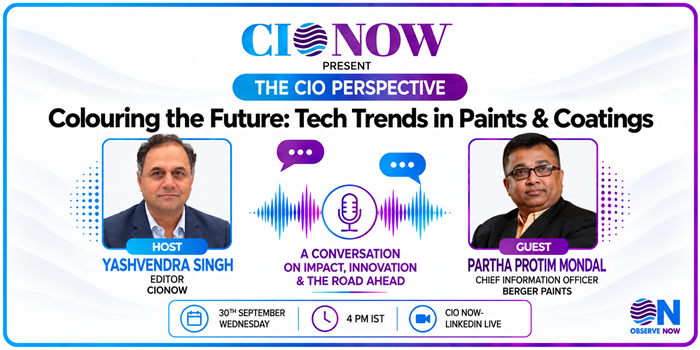
Topic: Colouring the Future: Tech Trends in Paints & Coatings

🎙️ 𝐅𝐞𝐚𝐭𝐮𝐫𝐢𝐧𝐠:
👤 Host: Nisha Sharma, Associate Editor, CIONOW
👤 Guest: Partha Protim Mondal, Chief Information Officer, Berger Paints

#CIONOW #TheCIOPerspective #Technology #DigitalTransformation #Innovation #CIO #Leadership #LinkedInLive #ObserveNowTandav2026 #Mission100CR #ONFamily #TeamObserveNow

New Relic Saves $18 Million Through GreenOps, Achieves ISO 42001 AI Certification

New Relic, the intelligent observability platform, today published its 2026 Impact Report, outlining how the company pairs responsible AI governance with sustainable operational growth. Key highlights include becoming the first observability provider to earn the ISO/IEC 42001 certification, generating $18 million in GreenOps savings, reducing carbon emissions by 10–12% per unit of work, and expanding its Enterprise Risk Management (ERM) framework.

Setting the Bar for Responsible AI Governance

The ISO/IEC 42001 certification is the international standard for AI management systems and signifies that an independent, accredited third party has audited and verified New Relic’s internal Artificial Intelligence Management System (AIMS) for responsible, ethical, and transparent AI governance across its entire lifecycle. To reinforce this baseline, the company published its public AI Principles and joined the EU AI Pact to align proactively with the EU AI Act ahead of formal enforcement. Through strict tool vetting and updated risk frameworks, New Relic meets rigorous global standards for data safety and oversight, transforming AI governance from static policy into active, platform-wide accountability.

Generating $18 Million in Operational Savings and Reducing Carbon Emissions

Driven by over 80 targeted engineering initiatives—including architectural right-sizing and data archiving—New Relic’s GreenOps program generated approximately $18 million in cost savings in FY26, surpassing its $15 million target, while cutting cloud carbon emissions by 10–12% per unit of work. To curb carbon intensity as compute demands scale, New Relic modernized its data streams to energy-efficient AWS Graviton 4 processors, which offer 25% greater efficiency over previous generations, and optimized Azure deployments to significantly reduce cross-data center networking energy.

Strengthening Corporate Risk Oversight Across AI Deployments and Climate Disclosure

In FY26, New Relic expanded its central Enterprise Risk Management (ERM) program to explicitly track and mitigate AI, climate, and vendor risks across the business. To support its 1.5°C Science Based Targets as compute demand grows, the company has embedded environmental data directly into core ERM processes. Concurrently, New Relic automated its Anti-Money Laundering and Know Your Customer screening—combining AI governance, climate disclosures, and operational controls under one program to ensure risk oversight keeps pace with rapid innovation and evolving global regulations.

“Operational efficiency and ethical governance are inseparable in the AI era,” said New Relic CEO Ashan Willy. “By earning the ISO 42001 AI certification and surpassing our cloud cost-savings targets, we are proving that technology platforms can scale responsibly. These milestones cement our commitment to leading the observability industry by example.”

Half of APAC Retail Employees Share Sensitive Credentials with Colleagues and External Parties: Kaspersky Research 

Retail is moving into an AI‑driven and personalised landscape, where every digital touchpoint creates both convenience and risk. A new global study conducted by Kaspersky’s Internal Research Centre surveyed IT security specialists working in the retail sector across 18 countries and revealed key target areas, the most relevant threats, and the potential damage to business.


Cyber incidents and the goals behind the attacks

The global retail sector, encompassing e-commerce, loyalty programs, and personalised offerings, spans the entire transaction process from initial browsing to final payment, thereby accumulating massive volumes of personal data. With only 13% of the sector escaping cyber incidents over the past year, it is clear that this environment is highly vulnerable to cyber threats and appealing for cybercriminals.


As for the nature of the recently experienced incidents, phishing appeared to be the prevalent threat, reported by more than one-fifth of retailers (21%). Other social engineering-related attacks on retailers featured deepfakes (13%), invoice or payment fraud (13%), business email compromise (9%), and vishing (voice phishing) (8%). The top 3 most frequently experienced incidents in retail organisations also comprised cyber espionage (19%) and web application exploits (18%).


During attacks, adversaries’ primary aims were stealing clients’ and employees’ personal data (34% and 28% respectively). Taken together, this diversity of threats shows that retailers are exposed not only to manipulation of employees and partners, but also to technically complex attacks against their online infrastructure.


Most harmful consequences experienced by organisations over the past 12 months

The most common actual results of the recent attacks on retailers in APAC included employees’ personal data theft (44%), clients’ personal data theft (39%), the theft of sensitive data such as financial credentials and legal documents (33%), and even irrecoverable data loss (33%), putting business operations and sensitive information at risk.


Internal incident risk factors

The survey also raised the question of internal factors which increase the likelihood of successful cyberattacks on retailers. According to the poll across the APAC region, human actions tend to be the primary concern, with a lack of IT security awareness (46%) topping the list. It is followed by insufficient expertise among IT security staff (31%) or outdated software or hardware (31%). Technical shortcomings also had a strong impact: the lack of necessary security solutions was recorded by one in every four organisations (27%).


A lack of security awareness may be the reason behind risky workplace behaviours and associated losses. In APAC, when asked about most typical digital misbehaviour of their colleagues, half of respondents (50%) stated sharing sensitive corporate credentials with colleagues or third parties. The act of downloading and installing software tools without IT security approval stood at 46% among the respondents. More than a third of respondents (38%) stated the use of personal devices for work‑related activities and the storage of corporate data. Employees were found to still practice irresponsible password habits, including weak or reused passwords (38%) and also connect corporate devices to public Wi‑Fi networks without using a secure connection (38%).


Budget changes and plans for future

Willing to enhance their IT security function, 77% of retailers in APAC increased their IT security budget this year. Unlike the general trend across other sectors, where organisations are largely planning to expand their internal IT teams, the retail industry is increasingly turning to third-party IT security providers. Only one in four companies in the region (23%) stated not increasing IT security budget by much.


“Retail is a highly dynamic industry: business priorities, workloads, infrastructure requirements, and economic conditions change rapidly. To ensure that cybersecurity keeps pace with these changes, retailers choose to turn to external security service providers, gaining access to the required expertise and technologies without having to continuously expand their in-house teams,” says Elizaveta Komarova, Solution Architect, Finance & Retail at Kaspersky.


“By outsourcing part of their cybersecurity functions, retailers effectively entrust an external partner with the resilience of their business processes and the financial risks associated with security incidents. This makes it essential to have confidence in the provider’s experience, including a proven track record with retailers of different sizes, and to eliminate potential security blind spots through 24/7/365 protection. This is especially critical during peak periods, such as seasonal sales, periods of increased consumer demand, and holidays, when the cost of any disruption is particularly high and in-house teams may have limited availability”.


The future of retail seems to be inextricably linked to AI. More companies in APAC are implementing AI tools in their infrastructure: 15% of retailers already have a working LLM-based tool, while 77% are currently in the discussion, design, or pilot phases. Although it speeds up operations, interestingly, only 23% of retail companies claim they don’t see any risks in AI.


“Retail has traditionally been one of the most receptive to new digital technologies industries. Intense competition, pressure on margins, and constantly changing consumer behaviour give retailers a direct economic incentive to adopt technologies that can improve business efficiency faster than their competitors. This is also supported by the fact that, compared with sectors such as banking, retail often faces fewer industry-specific constraints when introducing new digital solutions,” explains Elizaveta. “However, businesses should constantly balance potential returns against the level of risk they are willing to accept in pursuit of those returns. The more actively a company uses new technologies, the more important it becomes to manage the associated risks in a deliberate and structured way. This is particularly evident today with the rapid adoption of artificial intelligence. Since a serious incident can cause data breaches, operational disruption, and severe financial losses, cybersecurity must evolve at the exact same pace as the business”.


“Our APAC findings highlight an important gap in retail cybersecurity in the region. As retailers here adopt more connected and AI-driven technologies, it is becoming clear that some of their vulnerabilities stem from how technology and data are used and protected across the organisation. That is a good indication that cybersecurity needs to extend beyond the IT team and become part of how retailers operate, employees work and new technologies are introduced into the business,” said Adrian Hia, Managing Director for APAC at Kaspersky.


Enhancing protection: recommendations for retail safety

To prevent cyber incidents or at least minimize their disruptive consequences, Kaspersky recommends retail companies implement the following measures:

  • Elevate the organization’s overall cyber culture by implementing a continuous awareness program that regularly educates all employees about cybersecurity, stays up‑to‑date and includes the newest threat intelligence. This measure will foster a stronger security mindset and improve defensive behaviours.
  • Update or introduce the organization’s AI usage policies. These should explicitly address the risk of inadvertent data exposure. Define clear guidelines for how employees may interact with AI‑driven tools and specify what types of data can be entered, how to anonymise sensitive information, and which AI services are approved for use.
  • Identify the most valuable assets and essential business processes. Customer data, intellectual property, core applications, and supply‑chain workflows should stay entirely protected. This enables the organisation to understand the most critical parts of the business and, therefore, to implement a more suitable defence system.
  • Regularly monitor the current state of cybersecurity in your industry. Conduct threat assessments and examine the most likely adversaries and vulnerabilities that could have the highest impact on operations. Retail Cybersecurity Solutions will allow to build a customised security control that maximises effectiveness and stays up-to-date. They combine all the necessary features for stable growth and reliable protection from emerging threats.
  • Strengthen the capabilities of your digital environment: deploy advanced endpoint protection solutions on workstations, laptops, and mobile devices to detect and prevent cyber incidents. Ensure continuous updates of all security solutions so they stay aligned with emerging threats.

Eloelo Group unveils Dolphin AI, an agentic AI studio built for complete video production

Entertainment and technology company Eloelo Group today unveiled Dolphin AI, an agentic AI studio designed for giving creators end-to-end video production capabilities. Founder and CEO Saurabh Pandey unveiled Dolphin AI during his keynote at FICCI FRAMES 2026. The Dolphin AI booth by Eloelo was inaugurated by Shri Prithul Kumar, Joint Secretary, Ministry of Information & Broadcasting, along with Saurabh Pandey, Founder and CEO, Eloelo Group.
Dolphin AI was born from Eloelo Group’s own video operations. Through Story TV, the Group has produced more than 5,000 original dramas, while its teams test more than 100,000 creatives every month. That scale created an internal need to make video production faster, more iterative and more intelligent. Dolphin was first built to solve those challenges inside the Group; it is now being opened to creators, filmmakers, brands and studios globally.
“Video is at the heart of what we do at Eloelo Group. We have produced more than 5,000 dramas and test over 100,000 creatives every month. Dolphin came from solving our own production problems at that scale. We built proprietary workflows to make storytelling faster, more iterative, and more ambitious, and today we are opening that technology for the world. Dolphin brings end-to-end video generation capabilities, whether you want to make a video for social media, a tutorial, a D2C ad, or even a micro-drama. AI videos currently lack context preservation and struggle to build anything beyond 8 to 10 seconds- Dolphin solves this through multi-shot technology to create longer videos and an agentic workflow to create videos seamlessly. I firmly believe AI is going to lead to a world of infinite content. With Dolphin AI, we hope India becomes the hub for the Orange Economy and moves from being one of the world’s largest consumers of content to one of the largest exporters of content,” said Saurabh Pandey, Founder and CEO, Eloelo Group.
Built for complete productions
Dolphin AI is designed around one of the hardest problems in AI video: maintaining a coherent production across multiple shots. Its proprietary multi-shot planning and continuity systems help preserve characters, voices, wardrobes, props, locations and visual language across a story, allowing creators to work on a production as a whole rather than generate each shot independently.
Its agentic production layer understands creative intent, decomposes a longer video into shots and production tasks, and coordinates generation while preserving context across the workflow. Creators can move from natural-language creation in Chat to guided Templates and shot-level control in Playground, with editing and enhancement built into the same environment.
Film Studio: from script to production
Film Studio takes this further by turning a script into a structured multi-shot production. It reads the script to understand the premise, tone, chronology and character arcs; identifies characters, locations and props; and creates reusable visual, voice and wardrobe assets that creators can review and lock.
The creative system is the product
“Generative AI is moving faster than any product can be designed around a single model. A model that leads on video generation today may be overtaken by another tomorrow, and different models will always be better at different kinds of work. So we don’t think the future of creative software is about choosing a winner among models. It is about building a layer that can understand the creator’s intent, decompose the work, use the right models for each part, and preserve continuity as those parts come back together. The model is becoming a component. The creative system is the product,” said Sagar Gaonkar, CTO, Eloelo Group.
Dolphin AI also supports MCP, enabling compatible AI clients including Claude, ChatGPT, Gemini and Cursor to access its image, video and voice capabilities within existing agentic workflows.
Building India’s next content-export wave
India’s creative economy contributes an estimated 2.5% of GDP, with an estimated 80 million people forming India’s creator economy.
AI can materially expand where globally relevant entertainment is created. By reducing the cost and complexity of high-quality video production, smaller teams and individual creators can experiment more, produce faster and create for audiences beyond their home markets.
For India, with its storytelling culture, filmmaking ecosystem and linguistic diversity, Dolphin AI is being built to help creators, studios and brands produce globally relevant video across languages, formats and markets, and expand India’s role as a producer and exporter of entertainment, and contribute to the growth of India’s Orange Economy.
It is built for professional solo creators, individual creators and teams working across advertising, product videos, microdramas, podcasts, cinematic films, UGC, AI avatars, animation and stylised motion.

ProHance Launches a Unified Platform for Actionable insights on Contingent Teams

ProHance, the AI-led Productivity Control Room platform for enterprises, today announced the launch of a platform for measuring and improving performance for outsourced and contingent teams.


For the first time, Enterprises will get a governance layer that provides independent, unified proof of what their contingent workforce actually delivers, rather than supplier-reported artefacts, providing a single source of truth to finance, delivery, and vendor management teams. Now Enterprises can reallocate idle capacity, validate invoices, negotiate renewals based on evidence, flag delivery risk before it materializes, and provide audit teams with a defensible record.


Contingent workforce management has evolved from a function focused on vendor onboarding, contracts and compliance into a strategic capability that shapes cost, delivery and risk decisions across the enterprise.


The evolution becomes more critical for the board room, as according to Staffing Industry Analysts, formal enterprise buyers report that non-permanent labor makes up an average of 21% of their immediate workforce, with projections to reach 26%.


The technology to manage the performance of this significant portion of the overall workforce has not been able to control cost leakage as it can only provide evidence that work occurred. In addition to this, each department relies on its own data, none of which proves whether that work converted into a deliverable, stayed on schedule, or was worth what was billed. Most tools available today stop at the first measure.


ProHance built the platform around three measures that determine contingent workforce performance:

Cost Leakage— Clear governance of what is being spent against what is delivered.

SLA Adherence — Improving predictability of delivery within time-and-materials engagements,

Output — optimizing the value the workforce creates, in addition to utilization


The platform tracks all three in one place, giving Finance, Delivery and Vendor Management the same data instead of each team working from its own tool allowing enterprises to move from fragmented ownership to joint governance.


ProHance is launching this after deploying it across Fortune 100 companies, where it has been tested and validated to give the right insights.

“Every system an enterprise runs today can tell it what it bought. None of them can tell it what it got,” said Ankur Dhingra, CEO, ProHance. “With this platform, we’re building a single source of truth for contingent teams — the same defensible number for Finance, Delivery and Vendor Management to act on, measured from the work itself instead of what the vendor reports. That’s the gap we built this to close, starting with outsourced and contingent teams, where existing tools go blind.”


The launch follows ProHance’s Star Performer recognition in the Everest Group PEAK Matrix® 2026, and new leadership additions across product, marketing and global account management.

What Companies and Cybersecurity Leaders Must Get Right Before Signing the CISO Contract

Cybersecurity leaders are no longer solely assessed by the technology they use or the security breaches they mitigate. Today’s CISO owns enterprise cyber risk, operational resilience, third-party risk, regulatory compliance and the security impact of digital transformation.

That expanding mandate makes the structure of the role as important as its compensation. State Bank of India’s recent advertisement for a contractual Group CISO, with annual compensation up to ₹2.5 crore, has triggered a larger question: can a fixed-term security leader build capabilities that will remain effective long after the contract ends? SBI’s appointment is initially for three years, with scope for extension by up to two more years.

The issue is not whether a CISO should be permanent or contractual. It is whether the role comes with the independence, authority, board access, resources and continuity required to own enterprise-level cyber risk.

Here are some points for both the company and the cybersecurity leader to keep in mind before drafting and signing their respective contracts.

The strategy Must Outlast the CISO

A contractual hire does not mean the selected CISO is expected to deliver only a short-term security program; it also depends on whether the company has the vision to give that person enough continuity, authority, and institutional support to build capabilities that outlast the individual.

Souvik Das, Partner at PwC India

As Souvik Das, Partner at PwC India, puts it, “Long-term strategy cannot be person-dependent; it must be a function only.”

That distinction matters. The institution’s cybersecurity, governance structure, and resilience capabilities must remain embedded even if the CISO has a defined tenure. Thus, the problem is not only related to the condition of the CISO´s contract but also to whether the corporation would be able to sustain the plan after the CISO leaves.

What the contract should contain: a multi-year roadmap; cyber risk ownership at board level; explicit handover and succession planning requirements; and the authority to create long-lasting capacity versus one-off project delivery.

Authority Matters More Than Tenure

The other important thing to look for in a contract role is how much power the role truly has. Because CISOs are the ones who are responsible for protecting the enterprise, they should have the freedom to challenge decisions, allocate resources and escalate significant risks to the Board.

Dr. Sushanth Nair, Group CISO at Seviora Group

Dr. Sushanth Nair, Group CISO at Seviora Group, puts it this way: “From a Global/Group CISO perspective, the key question isn’t whether the role is permanent or contractual. It’s whether the CISO has the right mandate, independence, authority and direct access to senior management and the Board.”

Pranay Ghadge, CISO, APAC Financial Services

Pranay Ghadge, CISO, APAC Financial Services, says, “If a CISO feels that raising difficult risks could impact

contract renewal, it may create an unconscious conflict between business expectations and security responsibility.”


Nair points out that the function of cybersecurity has expanded far beyond IT, and CISOs now determine the cyber strategy for the future, increase cyber resilience, defend sensitive data, and oversee third-party and systemic risks.

Therefore, for a contract-based CISO, the title (decision maker), availability to the board, and the ability to employ take priority over the duration of the employment.

What the contract should spell out: reporting line, direct board or board-risk-committee access, authority to elevate risk, approved budget and team, rights to decision-making around all the key security controls, access to the business units and third parties, and safety against consequences of escalated risk.

Measure the Resilience Left Behind

If access and authority determine what a contractual CISO can do, the next question is how success should be measured.

Shashank Bajpai, CISO & CTSO at Yotta Data Services, says the focus should be on sustained organizational resilience rather than the duration of the engagement.

Shashank Bajpai, CISO & CTSO at Yotta Data Services

“A contractual CISO should be measured not by the duration of the engagement or the number of security initiatives delivered, but by the organization’s sustained ability to anticipate, withstand, respond to, and recover from cyber threats.”

For Bajpai, this entails evaluating results like risk mitigation, incident preparedness, recovery readiness, high-risk finding closure, and third-party security. Instead of an organizational reliance on a single person, the key question is whether or not the CISO leaves behind improved leadership, governance, and security capabilities.

What the contract should spell out: outcome-based success criteria tied to resilience—such as improved incident response and recovery times, stronger third-party risk controls, better audit and regulatory outcomes, and a demonstrably more capable security team and operating model.

The Tenure May be Fixed, Cyber Resilience Responsibility Cannot be

For companies, the question is whether the contract creates durable security capability rather than dependency on a single individual. For CISOs, the question is whether the role provides enough independence to challenge the business when risk and commercial priorities collide.

The tenure may be fixed. The responsibility for cyber resilience cannot be.

Databricks Acquires Row Zero, Bringing Live, Governed Spreadsheets to Genie

Databricks, the Data and AI company, today announced it has acquired Row Zero, the spreadsheet built for humans and agents to work together with data. The acquisition will expand the capabilities of Genie, Databricks’ AI coworker, which helps business teams turn data into trusted answers and actions. Genie can analyze why margins changed or produce a document on sales pipeline opportunities. With Row Zero, Genie will add a familiar spreadsheet interface that business teams can use to explore, model, and collaborate, all on a governed foundation powered by Genie Ontology, Unity Catalog, and Unity Gateway.


Why Bring Secure Governed Spreadsheets to Genie?
After four decades, spreadsheets remain the most broadly used analytics tool in the business world. Their flexibility lets users represent the most sophisticated business models through a set of familiar, well-proven formulas. For this reason, spreadsheets remain the primary engine of business decision-making despite continuous advances in the data and analytics market.


The prevalence of spreadsheets also creates major security and governance challenges for the modern enterprise. Teams have long relied on ungoverned spreadsheet files (“spreadmarts”) to store data or to share between humans and agents. Every data export adds to what is arguably the largest set of ungoverned data pipelines in the enterprise. As companies deploy agents that analyze, model, and act on business data, they can’t afford to have those agents operating on sensitive data of unknown lineage and quality.


Row Zero closes this gap by offering a scalable spreadsheet that connects directly to live, governed data. This means teams can work the way they always have, backed by built-in security and governance. And because they can work directly with the spreadsheet via Row Zero’s agent tools, every agent action remains fully interpretable and auditable by the business teams using the spreadsheet’s syntax and processing model. Row Zero will natively integrate with the Databricks Data + AI Platform, including Genie on the web as well as desktop and mobile apps, so teams can easily move from chat to hands-on pivoting, modeling, and visualization.


“Genie is helping make every knowledge worker dramatically more productive and impactful. As more finance, operations, and go-to-market teams adopt Genie, incorporating a seamless spreadsheet experience is a must-have,” said Patrick Wendell, Co-founder and VP of Engineering at Databricks. “We’re super excited to bring the Row Zero team to Databricks, helping us continue to evolve Genie’s capabilities to become the go-to AI coworker for every enterprise team.”


Flexibility Meets Governance with Row Zero
Finance, operations, sales, and marketing teams have already picked spreadsheets as their tool of choice. Now, Row Zero extends Genie and the Databricks Data + AI Platform within the familiar spreadsheet interface. Key capabilities include:

  • Full compatibility with leading spreadsheets: Designed to complement popular tools such as Microsoft Excel and Google Sheets, Row Zero features the familiar formulas, pivots, and keyboard shortcuts teams already know and love, so users can leverage their skills and assets frictionlessly. 
  • Governed integration into leading data platforms: Row Zero features direct integration into leading data sources. Queries honor each user’s permissions, data auto-refreshes from authoritative live sources, exports can be locked down, and users can write results back, all without stale copies or manual refreshes. Every interaction is auditable, and security controls travel with the data wherever it goes.
  • Lightning-fast performance at scale: Row Zero features a data processing engine that allows business users to work with billions of rows at interactive speeds.


“We built Row Zero because we love spreadsheets but recognized they needed to seamlessly connect to enterprise-scale data with governance and security at the core. Joining Databricks accelerates our vision of giving business users the spreadsheet they deserve: secure, connected, scalable, and deeply integrated with AI agents,” said Breck Fresen, Founder and CEO of Row Zero.


The team behind Row Zero was founded by former AWS and Tableau engineers. They are joining Databricks to continue expanding Genie’s capabilities. Row Zero will be available to all Databricks customers across all major clouds and will continue to feature support for data sources beyond Databricks.

IT is No Longer Just a Line Item; We Frame Technology Around Business Outcome: Keyur Desai, CIO, Prince Pipes

To conventional manufacturers, IT is the utility that keeps ERP humming and the factory hooked up. At Prince Pipes, CIO Keyur Desai is rewriting this approach by focusing on technology as a growth driver linked to business results, rather than a line item. In an interaction with CIONOW, he discusses how he defines the role of IT, building trusted data before AI, creating a governance model that accelerates (rather than hinders) innovation, and the true meaning of Factory 5.0 in the shopfloor.

For years, traditional manufacturing considered IT a cost center. Now with Industry 4.0, IT must be the growth engine. How are you transforming IT from cost center to growth engine even as boards want a 12-month ROI?

I don’t start by defining IT only by cost. The moment we do that, the conversation becomes only about reducing cost or optimizing spend. Instead, I frame technology around the business outcome we are creating.

I bucket my investments into three areas. First, ‘Protect the business’ to include cyber security, security & infrastructure, ERP health, IT business continuity and compliance. The second bucket is around ‘Improve the business’ and involves automation, analytics, better forecast, optimise inventories, improve supply chain and improve productivity. And finally ‘Grow the business’ which relates to digital channels, customer experience, new capabilities and ai-enabled decisioning.

The most important part is that technology teams must understand the process, business challenges and business metrics first, then design initiatives. For example, in a BI or analytics project, success should not be “we built so many dashboards.” Success is: can the business make quicker, better decisions on critical factors because of the visibility this platform gives? That’s where technology becomes a true partner. Turnaround time for decisions must keep coming down, and business teams must feel more empowered with the right data.

Is the perception of IT as a cost center changing in top management, especially after AI and digital have come to the forefront? Do you see that mindset shift actually happening?

Absolutely. In my experience, senior management is very keen to adopt technology—be it AI, overall factory transformation, integrated sales platforms, or building a single source of trusted data. I’ve been fortunate to work with organizations where leadership actively promotes using technology to improve manufacturing processes, sales platforms and decision-making. So for me, the mindset has not just shifted; in many places, it was already oriented this way.

Many CIOs struggle to get clean, governed data before launching AI. What is your step-by-step approach to building a data foundation for AI?

The first question is not “what data do we have?” but “can I trust my data?” The journey begins there.

My approach is simple.

Start with the decision you are trying to optimize: Is it demand forecasting, inventory, price, production planning, procurement, or customer experience? Once you have the decision, you have the data that truly matters.

Establish a common definition of truth: In manufacturing, different reports and dashboards often show different numbers for the same metric. That’s where the cleansing journey starts: what data do we have, and is it in the correct, consistent form?

Fix master data: Garbage in, garbage out. If master data has errors, the output will be wrong. Clearly define who owns master data and who is responsible for its quality. Ideally, this should not be IT; there should be a master data management team accountable for data quality, with IT providing platforms and processes to maintain sanctity.

Bring relevant information together: Data from ERP, sales platforms, demand forecast, supply chain, advanced warehouse management, transport management, manufacturing, finance, HRMS, etc. It’s not about rushing to the newest technology; it’s about getting the basics right so any technology can sit on a solid foundation.

How important is it for a CIO to articulate the business problem before going in for AI implementation? Often there is pressure from peers or top management to “just deploy AI,” and the business problem gets lost.

Understanding the business decision and the problem statement is the most important step. It’s not about implementing technology for the sake of implementation. Even if there is a lot of push to “adopt AI,” the first question must be: what problem are we trying to solve?

For example, in HRMS, there are many AI-enabled platforms covering the entire employee lifecycle. The conversation should start with HR: which area do they want to improve—hiring, attrition, learning, performance? In supply chain, demand forecasting, inventory, sales forecast and seasonal parameters are key. If you put an AI layer on top of a well-understood problem, guiding the supply chain and dispatch teams on overall flow, that’s where value comes. So rather than rushing to AI as a platform, start with the business problem.

For listed firms, AI is a governance mandate too. How have you structured AI oversight at Prince Pipes? Who owns model risk, how are AI decisions audited, and what’s one practice that speeds deployment?

Governance is important whether the organization is listed or not. The AI outcome should not lead to wrong decisions. For me, governance is not just about compliance; it’s about setting the right guardrails. AI can make decisions within certain criteria; if it crosses a threshold, it must come back to the right teams for human decision.

Governance should not kill innovation. It’s about visibility into what AI is doing as part of the overall output journey. Initially, there has to be very close observation to ensure the right decisions are being made by the AI factor—be it AI tools or agentic AI.

It’s also a risk-based approach: who is accountable for the outcome? IT cannot own the overall platform part alone. The business stakeholder must own accountability for decisions. Technology teams own integration, architecture (cloud, hybrid, multi-cloud), data security and data governance—what data moves in and out, whether it’s clean. But for the decisions the AI platform is taking, the business role is vital. The business must lead the project from day one, with IT holding hands and walking along the journey to support and ensure success. Clear lines on who owns what and who is responsible for what are essential.

Industry 4.0 automated and displaced people from data collection but Factory 5.0’s people-centric Approach is returning humans to the shop floor, along with collaborative AI, cobots, sustainability, and resilience. What does Factory 5.0 mean at Prince Pipes? And how are you combining advanced automation with humans?

Industry 4.0 has been around for decades, focusing on connecting systems, machines and processes, automating tasks, and using digital twin and predictive maintenance. Organizations have reaped benefits from that.

Factory 5.0 is about taking two steps further: bringing technology, people, intelligence and business outcomes together. A connected machine is useful. A machine that tells you it may fail tomorrow is more useful. But imagine a system that also tells you what impact that failure could have on production, customer commitments and inventory, and then recommends what action to take. That’s where you touch the human and business element.

It’s not just knowing a machine will fail; it’s understanding the after-effects on each stakeholder. This brings real value addition: visibility, prediction, and then recommendation on how manufacturing as a unit can improve. This adds value to quality information, maintenance, energy consumption, supply chain and inventory management. A lot of data can now be churned into meaningful outputs connected to business outcomes and impact. We have embarked on this journey with our manufacturing teams and will soon achieve this as a business milestone.

Along your Factory 5.0 journey, what are the key lessons you have learned that other CIOs and peers can use when driving similar initiatives?

There are many learnings. First and foremost, it’s about breaking the mindset barrier from just predictive maintenance to what comes next. There’s also a practical learning: there is no threat to current teams or stakeholders. I keep repeating in internal communication that it’s about connecting technology, machines and humans. These three stakeholders will stay connected and bring value addition.

Second, we are in an era where every partner or OEM claims to have the best Factory 5.0 platform. The difficulty is identifying the right partner. We made it a rule book to work with partners who have already supported similar manufacturing variants. Within manufacturing, there are many variants, so we focused on partners who have worked in building materials or pipes and fittings.

Third, there are practical on-ground challenges: connecting PLCs, sensors, realigning the right data from sensors, etc. Even if some units were already connected with other partners, these challenges surface during implementation. Thanks to the right partners, we can make it happen. Our journey is still on, so I’m sure there will be more learnings as we proceed.

In manufacturing, IT-OT convergence has made cyber resilience a must-have. How do you approach cyber resilience, and how are you embedding security into every layer of your digital architecture?

In manufacturing, IT-OT convergence is the most important line that needs focus. But before that, the mindset shift is crucial: it’s not just about cyber security or protecting IT systems; it’s about protecting the business. If a machine gets attacked, it’s not just the machine that’s impacted—it’s the business and the subsequent line of stakeholders: inventory, material flow, delivering to the right customer or distributor at the right time.

So the focus is not on protecting the system, but on ensuring the business is protected and business continuity is maintained. That’s how I look at cyber resilience: how do we ensure the business can continue to operate even when parts of the system are under attack.


Keystone To Launch India Business With Bengaluru As First Hub, Plans To Hire Talent & Increase Workforce Over Next Two Years

Keystone, a global advisory firm that guides the most critical technology and science-based platforms and ecosystems, today announced it is establishing Keystone India, with Bengaluru as its first hub in the country. The company plans to hire talent and expand its workforce in India over the next two years.


Keystone’s model differs from traditional consulting firms. Since its founding in 2003, Keystone has studied how technology ecosystems develop, how digital platforms compete and how transformative innovations change markets. The firm’s “triad” of disciplines brings together economists, technologists and management scientists, allowing Keystone to examine a problem from its technical foundations through its economic, legal and strategic business consequences. Keystone India will expand the firm’s global presence, navigate India’s market structure, regulatory complexity, litigation exposure and platform risk.

 

“Our Bengaluru launch reflects Keystone’s long-term commitment to India as a strategically important growth market,” said Jeff Marowits, Keystone CEO. “Over the next two years, we will be making substantial investments in the exceptional talent here to provide our full suite of strategic and regulatory services for the most prominent firms in India.  These investments will ensure long-term growth and impact for Keystone throughout India.”
 

The Bengaluru team will support global technology companies including Microsoft and Meta, financial services firms like Goldman Sachs, as well as India’s largest law firms and global enterprises, helping each of these entities navigate this moment of AI disruption, as well as India’s distinctive market structure, regulatory environment and technology ecosystems.


Bengaluru provides a natural foundation for Keystone’s launch in India. The city brings together leading technology companies, research institutions, Global Capability Centres and a strong concentration of AI, data science and engineering talent. The Bengaluru office will form part of an integrated global platform, working alongside Keystone teams across the United States, Europe, the Middle East and Australia.


The Bengaluru team led by Keystone Senior Principal Himanshu Singhi will contribute to Keystone’s global AI Centre of Excellence. By connecting advanced AI and data capabilities with Keystone’s expertise in economics, strategy, investigations and litigation, the centre develops rigorous and repeatable approaches to complex client problems. Its work supports the responsible use of AI through technical expertise, economic analysis, sound governance and human judgment


In India for the long haul

Keystone is building its India presence deliberately and for the long term. In doing so, Keystone India will bring a distinct form of advisory capability to the market: one grounded in an inherent understanding of technology and AI, and strengthened by the combined power of economics, technology and business strategy.


India sits at the centre of several forces reshaping the global economy. Its expanding digital economy, sophisticated enterprise sector, growing AI ecosystem and deep base of technical and entrepreneurial talent are creating significant opportunities while raising complex questions for businesses, investors, law firms and policymakers. 


Under the leadership of its Global Head and Keystone Senior Partner Rohit Chatterjee, Keystone Advanced Technology Services, or K.ATS, is critical to its leadership in India. Within Keystone, computer scientists, data scientists, engineers and technologists work alongside Keystone’s economists, strategists and global expert network on critical strategic, legal and regulatory matters. The team can analyze source code and large-scale data, evaluate and audit AI systems, investigate complex technology environments and assess the architecture and operation of digital platforms. This technical depth allows Keystone to understand how a technology actually works before evaluating its economic significance or explaining it to a court, regulator, board or management team.


Keystone’s interdisciplinary model grew from its intellectual roots at Harvard Business School and has developed into an extensive group of leading academics, industry practitioners and former regulators. Keystone India will benefit from the remarkable talent and globally recognized academics across India to augment its offering.  


For Indian organizations, this combination offers access to more than conventional economic or strategic advice. Keystone India will help businesses understand and deploy emerging technologies, evaluate AI and data systems, address competition and intellectual-property questions, manage complex investigations, and prepare for the legal and regulatory implications of increasingly technology-driven markets.

Redefining the CIO Mandate for the Agentic Enterprise

As AI and agentic systems slowly but surely move from pilots into core production, the ultimate design challenge facing enterprises is no longer technical. It is deeply organizational. The uncomfortable truth is that employees will not adopt intelligence they fear, and boards will not scale technology they cannot govern. To survive this shift, organizations must completely restructure how intelligence is distributed, budgeted, and held accountable.

Let go of Centralized IT Control

For the modern CIO, this transition requires a fundamental psychological shift away from the traditional mandate of IT gatekeeping toward becoming an orchestrator of institutional guardrails. The classic IT mandate of controlling every single application, data set, and integration endpoint is no longer sustainable. Intelligence cannot remain captive within the boundaries of the IT department. As business units increasingly identify their own high-impact use cases and deploy specialized digital workers, individual functions will inevitably appoint their own dedicated AI leads.

This transition will not happen overnight and is a structural evolution that may span the next decade. However, the direction is clear. The technology leader’s true value no longer lies in holding the keys to the kingdom, but in designing the resilient rails on which the rest of the business runs. The modern technology mandate must shift toward a three-pronged strategy of enabling shared platforms, governing enterprise-wide protocols, and measuring real workforce outcomes.

The Cross-Functional AI Operating Model 

When intelligence becomes decentralized, the traditional operational boundaries between technology, human resources, finance, and core business units blur. The AI operating model ceases to look like a standard technology project and begins to resemble a highly collaborative, cross-functional profit-and-loss center. Within this model, human resources and finance must emerge as the primary co-owners of AI accountability.

Human resources must define the boundaries of the hybrid workforce. The deployment of digital workers leaves a trail of ambiguous organizational questions regarding which tasks belong exclusively to humans, where an agent’s autonomy begins, and who owns the final outcome. The core corporate policy must remain completely non-negotiable in that AI will never be held accountable for outcomes. Whether an autonomous system drives a massive breakthrough or inflicts severe operational harm, legal and ethical accountability resides entirely with human beings. Human resources must urgently embed this reality into updated job descriptions, modern performance metrics, and compliance frameworks.

Finance, meanwhile, must enforce raw fiscal discipline. Every single token consumed, API call made, and agentic decision executed carries an immediate financial implication. As agentic systems scale, finance leaders can no longer sit at the tail-end of technology procurement. They will need to penetrate technology oversight, investment risk management, and live value measurement.

From Uptime to Tangible Business Value

In contemporary business, technology impacts everything from how quickly you acquire customers, fraud controls, collections and the overall profitability of the corporation. Therefore, traditional measures such as system uptime and project delivery schedules no longer cut it.

The boardroom conversation must pivot entirely toward clear, hard business outcomes. Board members want to see direct impacts on the cost, customer-service turnaround time, fraud reduction, data-quality improvement, and the overall customer experience.

Organizations that treat AI purely as a technology problem will find themselves stuck in an endless loop of unscalable pilots and cultural resistance. The enterprises that successfully scale agentic systems will be those that realize AI is fundamentally an HR and finance challenge. 

For the forward-looking CIO, letting go of central application ownership is not a dilution of authority. By stepping back from rigid gatekeeping and focusing on strategic orchestration, technology leaders will find their true corporate relevance dramatically increasing in the age of the agentic enterprise.

Chat with CIONow.in