





Azul Launches AI Assistant That Tells IT and Security Teams Where Java Licensing and Security Risk Is Hiding

Azul, the trusted leader in enterprise Java for today’s AI-first world, today announced Azul Intelligence Cloud AI Assistant, a natural-language query interface that tells IT, DevOps, and security teams where licensing and security risk is hiding in their production Java estate. The assistant provides answers grounded in live runtime data, replacing static reports that go stale the moment they’re generated.


The Widening Attack Surface

This announcement comes at a time when the threat landscape shifts quickly for anyone responsible for Java security risk. Earlier this year, Anthropic disclosed that its Mythos model had autonomously discovered thousands of previously unknown software vulnerabilities — including flaws that had gone undetected for decades — and built working exploits without human guidance. OpenAI has reported similar results with Aardvark, a GPT-5-powered agent that autonomously found and disclosed real-world vulnerabilities in open-source code, ten of which received official CVE identifiers. The UK’s National Cyber Security Centre has assessed that the proliferation of AI-enabled cyber tools will highly likely expand access to AI-enabled intrusion capability to an expanded range of state and non-state actors by 2027 — putting equivalent capability in adversarial hands within the next one to two years. For enterprises running AI and business-critical workloads on Java, the practical effect is that the gap between a Common Vulnerabilities and Exposures (CVE) entry being disclosed and it being weaponized — already down to under five days, against a median 32-day patch cycle — is only getting shorter.


Static Reports Can’t Keep Up with a Live Java Estate

Most IT and engineering teams still manage Java risk with static IT/Software asset management (ITAM/SAM) reports and code-scanning tools that describe a moment in time — accurate on the day they’re generated, and increasingly wrong after that as Java Virtual Machines (JVMs) spin up, patch, drift, and retire underneath them. That gap shows up as three kinds of exposure that compound as the Java estate grows:

  • Commercial licensing risk: unlicensed (e.g., Oracle Java) or unsupported JVMs running without anyone’s knowledge.
  • Security risk: unpatched, vulnerable Java versions still in production.
  • Maintenance overhead: unused and dead code that still gets tuned, tested and carried through every migration, because no one can assess if it’s safe to remove.

The larger the estate, the larger all three exposures get, and the less a point-in-time report can be trusted to catch these exposures before they become an incident, an audit finding, or a breach.


No Need to Build a Report, Get Answers in Real Time

Azul Intelligence Cloud gives IT and DevOps teams two continuously updated records of their Java estate: JVM Inventory, a live catalog of every JVM instance running anywhere — on-prem, cloud or container — and Code Inventory, a runtime record of which code actually executes in production versus what is merely provisioned. The new AI Assistant puts a conversational layer leveraging the latest LLM models on top of both, so teams no longer need to build a report or write a query to use them. They can simply ask:

  • “Which JVMs are running Java versions that are not the latest updates?”
  • “Where is Oracle Java running in production right now?”
  • “What code hasn’t run in the past four quarters and is safe to remove?”


Every answer comes from live production data, so teams can drill in ad hoc, follow a lead, or test a new hypothesis instantly — instead of waiting on the next scheduled scan.


“Azul is extending its Intelligence Cloud platform with a new AI Assistant that gives enterprises a natural language interface into their Java runtime environments, to help identify unused code, redundant JVMs and untracked deployments. For organizations with decades of Java debt, the tool addresses a gap that has not yet been targeted at this level,” said William Fellows, research director at 451 Research by S&P Global Energy.


The First Time a Business User Can See the Full Picture


Seeing the full picture of a Java estate has always required going through whoever could run the report — a DevOps engineer, a platform team, a security analyst — while everyone else waited for a translation. Because the Azul Intelligence Cloud AI Assistant answers in plain language, the same in-production, runtime data becomes directly usable by whoever owns the business decision it feeds. A compliance officer preparing for an audit, a CFO weighing Oracle licensing exposure ahead of a renewal, or a CISO, who needs a current, potentially more defensible answer for the board, can get it and assess it without waiting on a technical team to pull and interpret the data first.


That same direct access extends to the partners who manage Java estates on customers’ behalf: for MSPs and systems integrators managing Java across multiple clients, the AI Assistant provides an on-demand deliverable they can offer as part of ongoing managed services rather than a one-time engagement. In every case — CFO, CISO or partner — the AI Assistant doesn’t take action in the environment; it only answers questions against JVM Inventory and Code Inventory’s runtime data drawn from live production environments, so the answer is traceable back to what actually ran in production, not a generated summary.


Every JVM Vendor, One Conversation

Azul Intelligence Cloud AI Assistant works regardless of which JVMs are deployed, from which vendor, or how old or large the applications running on them are. JVM Inventory and Code Inventory retain component and code-use history over time, so the AI Assistant can reason over which code, JVMs and applications have actually run in production, now and in the past. It then presents that data in plain language: for example, when an Oracle JVM was last run, mklvt code actually executed and mklob unused or dead code may safely be removed. That level of insight comes without adding load to production. The LLM-based AI Assistant queries Java runtime data that Azul Intelligence Cloud already collects from running JVMs, so there’s no added performance overhead.


“For years, enterprises have built dashboards and reports to understand what’s actually running in their Java estate, but by the time a report gets properly summarized and reviewed, the risk it describes has often already changed,” said Scott Sellers, co-founder and CEO of Azul. “That used to be a productivity problem. Now that AI can find and weaponize a vulnerability in hours instead of weeks, it’s a business risk — for security, for compliance and for the licensing exposure that shows up in an audit. The Azul Intelligence Cloud AI Assistant lets IT and security teams ask a direct question, in plain language, and get an answer grounded in what’s actually running in production right now, as well as query historical information for further analysis.”

Kunal Dikshit: Building a Frictionless, Fraud-Resistant Lending Engine

As we transition to more digital lending processes, the real challenge for NBFCs is not just to roll out apps but also to redesign the whole loan journey to make it faster, fairer and resistant to fraud while ensuring inclusion for those who prefer branch visits or need support. Kunal Dikshit, CTO at Fedbank Financial Services, is doing just that. 

In conversation with CIONOW, Dikshit talks about how Fedbank measures the impact of digital on its operations, how it governs AI before it can influence credit decisions, how it balances frictionless onboarding with tighter identity validation, and how it builds cyber resilience across its expanding ecosystem of cloud, fintech and vendor partners.

What has been the biggest impact of the digital, paperless lending experience for Fedbank Financial Services? Which parts of the loan life cycle have delivered the biggest improvement in turnaround time and in the customer experience?

At Fedbank Financial Services, our focus has been on progressively removing manual intervention and unnecessary physical touchpoints from the customer journey.

On the customer-facing side, we have enhanced our mobile application and website to enable services such as online gold-loan renewals, digital interest payments, AutoPay setup and document downloads. These initiatives have helped customers complete routine activities without having to depend on branch visits.

We are also working on digitising key parts of the lending process, particularly KYC and document-related activities. Our AI initiatives around document collection, document extraction, field extraction and automated form filling are aimed at reducing repetitive manual work and improving the speed and quality of processing.

We measure the impact through a combination of turnaround time, digital adoption, reduction in manual touchpoints, transaction migration to digital channels, operational productivity and customer-service metrics.

The larger objective is to move from simply making individual processes digital to creating an increasingly paperless, connected and frictionless lending journey.

As lending becomes increasingly digital, how are you using data, analytics and AI to improve credit assessment without making the process opaque or unfair for customers? What governance controls are essential before putting AI into production?

We see AI as an enabler for better and more consistent decision-making, but not as a black box that replaces responsible lending judgement.

Our current focus has been on practical AI applications across areas such as KYC document collection, document understanding, field extraction, fraud detection and automated form filling, particularly for mortgage-related processes.

The immediate value is in making information available faster and more accurately to the lending process, reducing manual data entry and enabling employees to spend more time on judgement-based activities.

We believe for any AI solution before it enters production, governance needs to include data quality, validation of models, interpretability, bias and fairness, information security, access management, auditability, human oversight and ongoing monitoring of performance. For a financial institution, the question should not only be ‘Can AI make the decision?’ but ‘Can we explain, govern, monitor and challenge the decision?’. And that becomes all the more critical when AI decisions affect customer eligibility, credit or risk.

Many financial institutions struggle to integrate legacy platforms with modern digital systems. What technology and architecture decisions helped create a scalable, modular and API-led lending ecosystem?

In a lending organisation, completely replacing established legacy platforms such as ‘FinOne’ is neither practical nor necessary. Our approach is to create a modern technology layer around the legacy ecosystem so that we can continue to leverage the stability of existing systems while building new digital capabilities independently.

A key part of this architecture is an API Gateway, where APIs from different systems and platforms are integrated and managed through a common layer. This provides a standardised way for digital channels, applications and external partners to communicate with the underlying systems.

We are also building a Data Lake as a central data layer, bringing together data from different systems. This enables middleware and business applications to be developed on top of the data layer rather than creating direct dependencies on individual legacy systems.

The objective is to have middleware applications sitting between the legacy platforms and modern digital applications. This decouples the new applications from systems such as FinOne, allowing us to introduce or modify digital capabilities without making extensive changes to the legacy platform.

This architecture gives us three important advantages: reduced dependency on legacy systems, faster integration of new digital capabilities and greater flexibility to scale.

So, rather than replacing the legacy ecosystem, our strategy is to progressively decouple it through APIs, middleware and a common data layer, creating a more scalable, modular and API-led lending architecture.

For an NBFC serving customers through digital, physical and assisted channels, how do you maintain a consistent customer experience while also catering to customers with limited digital access or low financial literacy?

For an NBFC, digital cannot mean digital-only. Our customers have different levels of digital familiarity and different preferences. Some customers are comfortable using the mobile application or website, while others may prefer support through an RM or a branch.

Our objective is therefore to make the underlying customer experience consistent, irrespective of the channel through which the customer interacts with us.

For digitally comfortable customers, capabilities such as online renewals, digital payments, AutoPay and document downloads provide convenience and reduce the need for branch visits.

For customers who may not be as digitally comfortable, our RMs and branch teams continue to play an important role. They can assist customers in completing digital processes and guide them through the journey, rather than making the customer completely dependent on physical paperwork and manual processes.

The idea is to make the assisted journey frictionless and smooth as well, where the RM or branch becomes an enabler of the digital journey. For example, an RM can assist a customer in initiating a digital process, completing the required information or using the available digital services, while the underlying process remains digital.

Technology should therefore not create a divide between digital and physical channels. Instead, we want our physical and assisted channels to enable customers to move towards digital adoption comfortably.

The goal in the longer term is to give customers seamless access to all three channels – digital, branch or assisted – with identical customer experience, information and service levels. 

Advances in fraud, identity theft and synthetic identities are all becoming more sophisticated. How should CIOs manage the friction of onboarding – as well as identifying, preventing and protecting against fraud?

The balance is between making the right customers move faster while identifying higher-risk cases earlier. Our initiatives around AI-based KYC document collection, document extraction and fraud detection are aimed at strengthening this part of the customer journey.

As part of our onboarding controls, we are also looking at using a combination of AI and non-AI models, along with deduplication checks, to identify duplicate or potentially suspicious customer records at the onboarding stage.

Technology can help us identify inconsistencies, extract relevant information from documents and identify potential fraud signals without requiring every customer to go through the same level of manual verification.

The ideal model is therefore a risk-based journey. Genuine, low-risk customers should experience minimal friction, while applications with unusual or suspicious signals should trigger additional verification.

At the same time, customer data protection has to be treated as a fundamental requirement. KYC and financial information is highly sensitive, so access controls, secure data handling, auditability and appropriate governance need to be built into the solution from the beginning.

For us, fraud prevention and customer experience are not competing objectives. Good technology should enable us to improve both.

With increasing dependence on cloud platforms, APIs, fintech partners and third-party service providers, how are you approaching cyber resilience, vendor risk and business continuity? Which capabilities should every BFSI technology leader prioritise?

As financial institutions become increasingly dependent on technology ecosystems, resilience has to extend beyond our own infrastructure.

Our approach needs to consider the entire ecosystem—cloud platforms, APIs, fintech partners, technology vendors and other critical service providers.

The core capabilities that every BFSI technology leader should prioritise include identity and access management, data protection, API security, security monitoring, vulnerability management, disaster recovery, backup and recovery, incident response and third-party risk management.

Vendor Audit and Assessment is particularly important because the security and resilience of our organisation can also be impacted by the controls and practices followed by our external technology partners. Vendors need to be assessed appropriately before onboarding and periodically thereafter, based on the criticality and nature of the services they provide.

An important shift is to treat cybersecurity and resilience as an enterprise and business risk, rather than simply an IT responsibility.

For every critical technology dependency, we should understand what happens if the service becomes unavailable or compromised and how quickly critical business operations can be restored.

As we increase our use of AI, APIs and external technology ecosystems, security and resilience have to grow at the same pace as innovation.

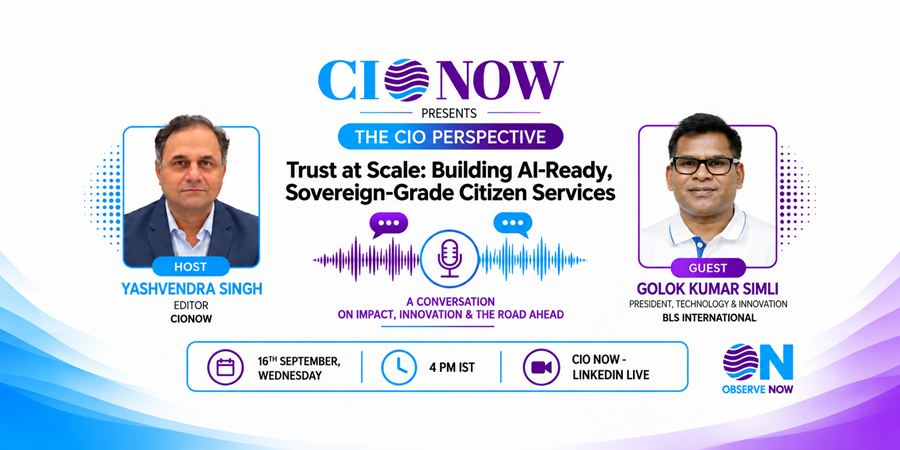
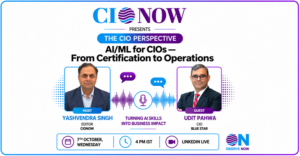
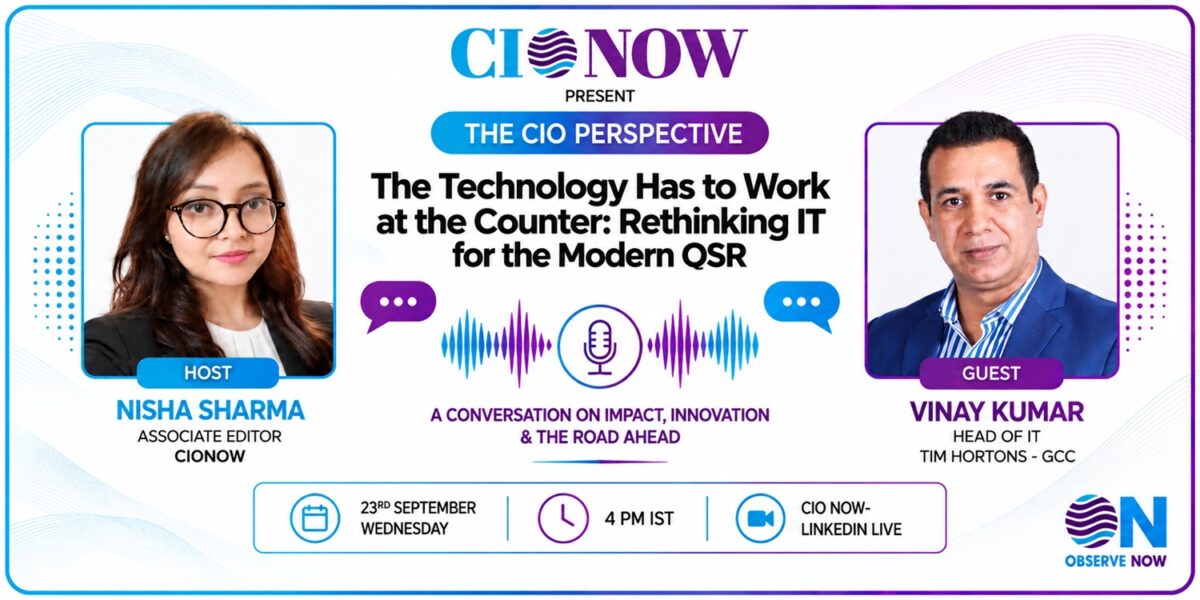
The Technology Has to Work at the Counter: Rethinking IT for the Modern QSR | The CIO Perspective

CIONOW presents 𝐓𝐡𝐞 𝐂𝐈𝐎 𝐏𝐞𝐫𝐬𝐩𝐞𝐜𝐭𝐢𝐯𝐞—an insightful conversation on how technology is reshaping the modern QSR industry, driving operational efficiency, customer experience, and business growth.

Topic: 𝐓𝐡𝐞 𝐓𝐞𝐜𝐡𝐧𝐨𝐥𝐨𝐠𝐲 𝐇𝐚𝐬 𝐭𝐨 𝐖𝐨𝐫𝐤 𝐚𝐭 𝐭𝐡𝐞 𝐂𝐨𝐮𝐧𝐭𝐞𝐫: 𝐑𝐞𝐭𝐡𝐢𝐧𝐤𝐢𝐧𝐠 𝐈𝐓 𝐟𝐨𝐫 𝐭𝐡𝐞 𝐌𝐨𝐝𝐞𝐫𝐧 𝐐𝐒𝐑

🎙️ 𝐅𝐞𝐚𝐭𝐮𝐫𝐢𝐧𝐠:
👤 Host: Nisha Sharma, Associate Editor, CIONOW
👤 Guest: Vinay Kumar, Head of IT, Tim Hortons – GCC

#CIONOW #TheCIOPerspective #Technology #DigitalTransformation #Innovation #CIO #Leadership #LinkedInLive #ObserveNowTandav2026 #Mission100CR #ONFamily #TeamObserveNow

New Relic Report Finds High-Impact IT Outages Drain $74 Million Annually from Businesses

New Relic, the intelligent observability platform, today released its 2026 Observability Forecast, the industry’s most comprehensive report on the state of observability in the AI era. Surveying 2,575 engineering and IT leaders and practitioners across 24 countries and 12 industries, the report highlights key focus areas, challenges, and trends influencing observability investments. Notably, the data shows that despite the increased use of AI monitoring and AI-assisted observability features, high-impact IT outages are still frequent and costly.


Outage costs remain nearly flat year-over-year

The businesses surveyed lose an annualized $74 million to high-impact outages, with a mean cost of $1.85 million per hour and $30,833 for every minute systems remain down. The annualized price tag is down only slightly from the $76 million annual cost revealed last year. At the same time, high-impact outages remain a regular event, with 36% of respondents saying their companies are hit with one weekly or more. Only 15% of organizations say they never experience a high-impact outage. The average time it takes to detect high-impact outages is 41 minutes, while the average resolution time is 54 minutes. Third-party and cloud provider failures are the top cited cause of outages, followed by network failures and software change deployments.


Disruptions and manual work drain engineering capacity and cultivate “phantom velocity”

Operational friction continues to redirect technical focus away from innovation, creating a sense of “phantom velocity” where organizations move fast to deploy new code, but downtime and emergency fixes quietly cancel out those productivity gains. Engineers report spending 37% of their time addressing disruptions, up slightly from 33% last year. Additionally, 42% of organizations still learn about disruptions through inefficient channels such as manual checks and customer complaints. AIOps is deployed by only 36% of businesses surveyed today, while 35% plan to adopt it within a year.


One in four agents run blind, and half of companies monitor AI apps

For the second year in a row, AI adoption is the top cited driver of observability spend. While 83% of respondents agree that AI-generated code makes observability essential, just under half (47%) deploy AI application observability. Despite this consensus, 25% of organizations have deployed AI agents in production without any monitoring in place. An agent that writes code, changes configurations, or manages infrastructure without observability is a production incident waiting to be discovered by a customer.


Organizations monitoring agents also see greater ROI on observability

Organizations using observability to monitor AI agents in production are seeing significantly stronger returns on their observability investments. Forty-two percent of organizations actively monitoring AI agents report a 3x or greater return on observability, twice the rate of organizations that have deployed AI agents but aren’t yet monitoring them with observability tools (21%). Overall, nearly three-quarters (73%) of organizations monitoring agents in production report at least a 2x observability return. The data suggests observability is becoming an important foundation for organizations putting agentic AI into production at scale.


Observability delivers measurable ROI as the spend rises

Organizations are overwhelmingly seeing real returns on observability spend. Seventy-six percent report a positive return of at least 1x. More than a quarter (26%) report a return of 3x or higher, and a smaller group reports returns of 5x to 10x (5%). The investment is growing to match the return. Seventy-two percent of businesses expect their observability spend to increase over the next 12 months. The ROI of observability is not solely a monetary return. Since adopting observability, 70% of organizations report a faster mean time to detect (MTTD) and 69% report a faster mean time to resolve (MTTR) issues and disruptions.


OTel gains steam in the AI coding era

OpenTelemetry (OTel) is the standard that makes AI-generated code observable. Nearly three-quarters of organizations (73%) are standardized on OTel, actively migrating to it, or testing it. Only 2% have ruled it out.


“This year’s data could not be more clear. Outages are continuing to cost enterprises millions annually, and we expect that cost will remain as AI accelerates how quickly we build and ship software. AI is making it easier to create more code, applications, and services, but an increase in output creates more opportunities for things to break,” said New Relic Chief Technical Strategist Nic Benders. “Yet, the data also highlights a clear path forward. Organizations monitoring their AI agents are twice as likely to yield a 3x return on their overall observability investments. By closing operational visibility gaps, organizations are best positioned to reap the benefits of AI.”

LTM Launches BlueVerseTM SovereignSphereTM Models to Help Enterprises Own Their AI Advantage

LTM, the Business Creativity partner to the world’s largest enterprises, today launched BlueVerse™ SovereignSphere™ Models, enabling organizations to transform proprietary knowledge into AI capabilities that understand their business context and operate within their governance boundaries. 


BlueVerse SovereignSphere Models enable enterprises to overcome critical AI adoption challenges by lowering infrastructure costs, simplifying governance, and reducing reliance on generic AI models. It helps organizations build AI that understands their business, language, workflows, policies, and domain expertise as a native capability. Enterprises retain ownership of their models and intellectual property while benefiting from more predictable AI economics and reduced dependence on token-heavy architectures. 


The key offerings in the portfolio include: 

  • Sales and Marketing Pro – Delivers CRM architect-level expertise across solution design, code generation, troubleshooting, and root-cause analysis, helping accelerate solution delivery and improve solution quality. 
  • Contract Pro – Supports contract interpretation, clause analysis, obligation tracking, and compliance validation, helping strengthen compliance and reduce legal and operational risk. 
  • FinCast – Provides context-aware financial analysis and intelligent question answering, enabling faster access to insights and stronger decision support across enterprise finance functions. 


“As AI becomes more accessible, competitive advantage will increasingly come from the knowledge, expertise, and decision frameworks that organizations embed into their AI systems. BlueVerse SovereignSphere Models helps enterprises transform their unique knowledge into proprietary AI capabilities that deliver greater accuracy, stronger governance, and lasting business value,” said Krishnan Iyer, Chief Growth Officer, LTM.


BlueVerse SovereignSphere Models help organizations move beyond AI adoption by improving accuracy, reducing hallucinations, and enabling enterprise-specific model training. It empowers enterprises to build AI capabilities uniquely aligned to their business, creating a sustainable foundation for differentiation and growth.

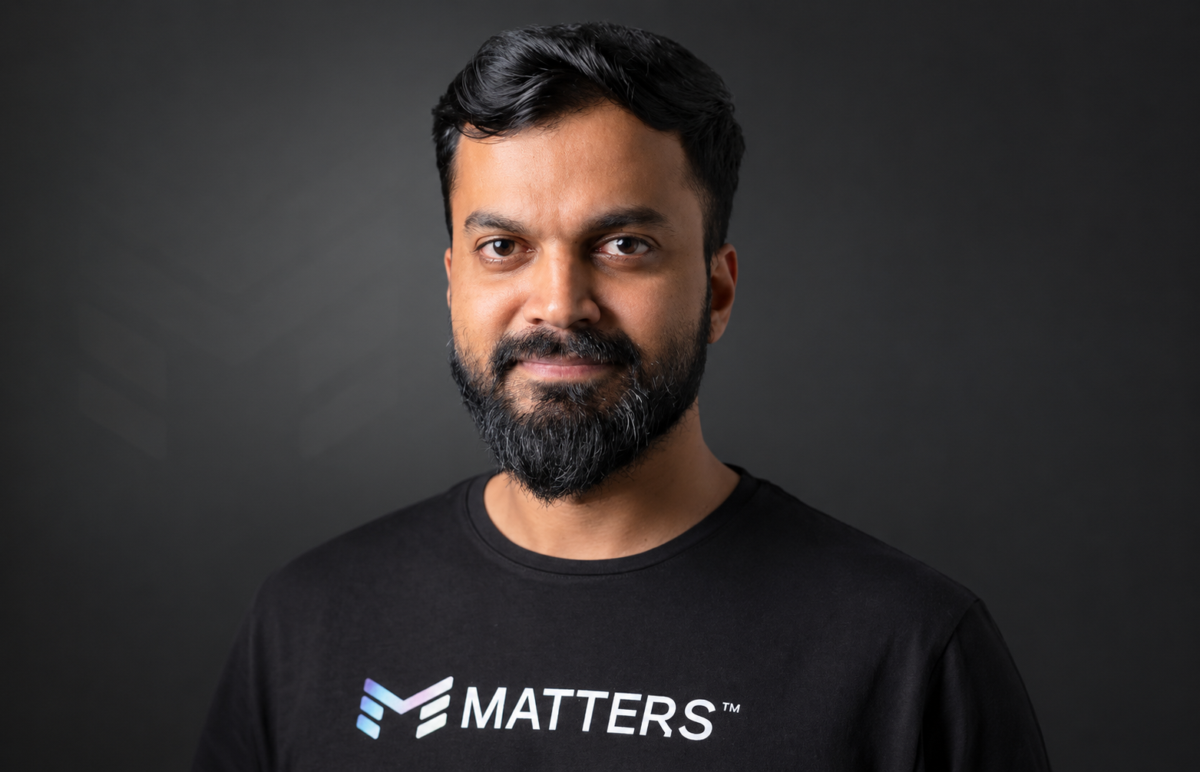
Matters.AI, Cockroach Labs Launch In-Environment Data Security for Distributed SQL

Matters.AI, the Bengaluru-headquartered AI-native data security company, and Cockroach Labs, the New York-based maker of the distributed SQL database CockroachDB, today announced an integration that classifies personal and regulated data inside CockroachDB deployments at the column level and maps it to the exact database users, roles, and privileges able to access it. The integration is available now to CockroachDB customers.

The launch lands as Indian enterprises prepare for the Digital Personal Data Protection (DPDP) Rules, notified in November 2025, with the substantive obligations on data fiduciaries taking effect from May 2027. Banks, payment companies and insurers already operate under Reserve Bank of India data-localisation and cybersecurity mandates. Enterprises adopt distributed SQL precisely because it replicates data across regions for resilience, and that is exactly what makes the two questions every regulator now asks, “where is personal data, and who can reach it?”, harder to answer, not easier.

The integration scans CockroachDB databases, tables, and columns with 38 personally identifiable information (PII) detectors covering eight regulatory jurisdictions, plus detection for payment card numbers, protected health information (PHI), and secrets stored in free-text columns. It then correlates every classified column with CockroachDB’s users, roles, and privilege grants to produce a live access map: which accounts can reach regulated data, which roles hold more privilege than they use, and where data sits in a jurisdiction it should not. Findings map directly to India’s Digital Personal Data Protection Act, PCI DSS, HIPAA, GDPR, ISO 27001, and SOC 2.

Classification and privilege analysis execute entirely inside the customer’s own infrastructure, under the customer’s IAM controls. Raw records and sampled values are never transmitted. Only findings and operational metadata reach the Matters.AI control plane. For regulated Indian entities that must keep customer data within the country, that architecture is not a preference. It is the requirement.

“Enterprises distributed their databases to survive anything. In doing so, they made their most sensitive data harder to see than ever: more regions, more tables, more roles, and still no answer to the simplest question a CISO can ask: who can reach this data right now? With Cockroach Labs, we’re answering that at the column level, inside the customer’s own environment. That’s what an AI security engineer is for,” said Keshava Murthy, co-founder and CEO of Matters.AI.

The cost of not knowing is now on record. IBM’s 2026 Cost of a Data Breach Report puts the average breach in India at a record ₹25.5 crore, up 15.9 per cent in a year, with financial services the most expensive sector at ₹40.9 crore per breach. Indian organisations without security automation took an average of 236 days to identify a breach. Under the DPDP Act, the Data Protection Board of India can impose penalties of up to ₹250 crore per instance for failing to implement reasonable security safeguards.

“Together with Matters.AI, we’re making data protection seamless for our customers. This integration gives teams instant visibility into where their sensitive data lives, who can access it, and what’s happening to it, supporting their growth every step of the way,” said Tejas Baldev, Vice President of Sales, APAC, Cockroach Labs.

Cockroach Labs has operated an engineering centre in Bengaluru since 2023 and hosted its RoachFest customer conference in the city in 2025. Matters.AI raised US$6.25 million (about ₹55 crore) in seed and pre-seed funding in October 2025, co-led by Kalaari Capital and Endiya Partners, to build what it calls the first AI security engineer for enterprise data.

Delvitech to open state-of-the-art manufacturing and technology facility in Bengaluru

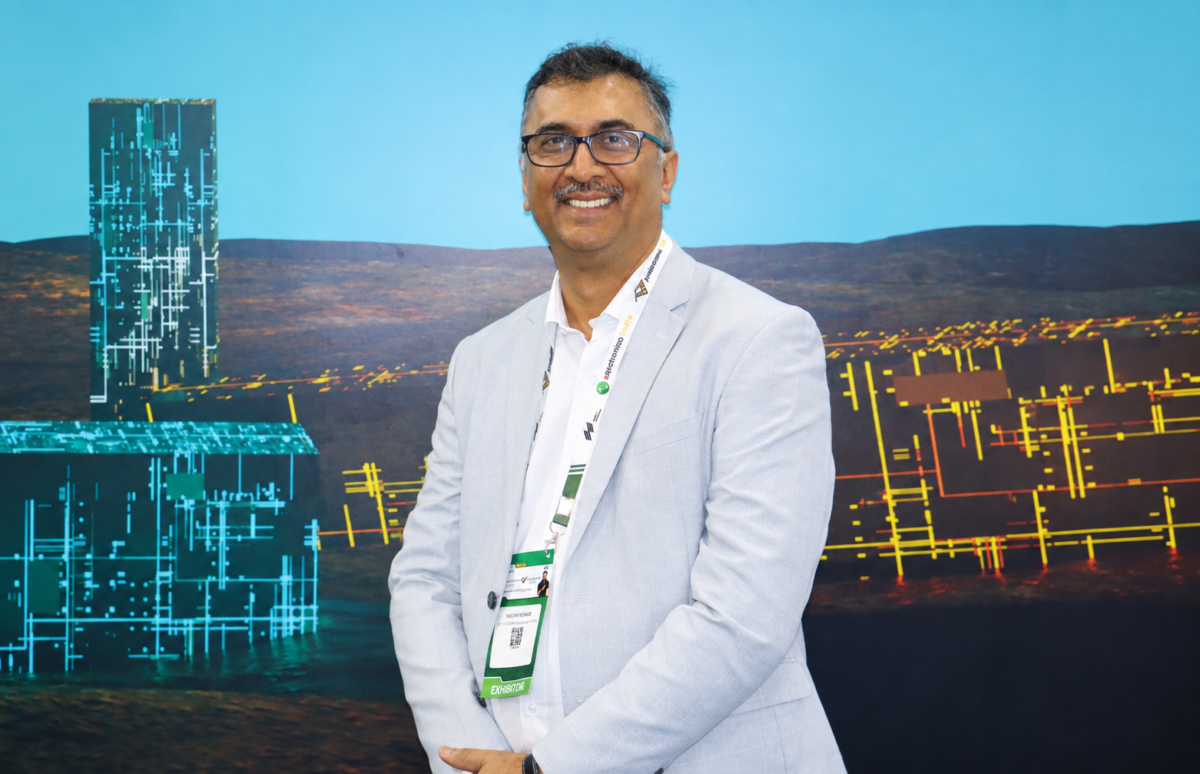
Delvitech, a Swiss leader in the development of AI-native Automated Optical Inspection (AOI) solutions for electronics, today announced the establishment of a new state-of-the-art manufacturing and technology facility in Bengaluru with an initial investment of USD 10 Mn and an overall investment of USD 25-30 Mn. Spread across 65,000 sq. ft., the facility is planned to become operational in Q1 CY 2027 and marks a significant milestone in Delvitech’s long-term commitment to the Indian market.


The facility is expected to create 500 – 800 jobs in the next 5 years, while building specialized manufacturing, engineering and technical skills, upholding the quality standards of Delvitech’s Swiss engineering heritage.


Delvitech further strengthened its India presence by showcasing its latest inspection solutions, including Horus, Aton, and Horus Dual Lane at productronica India 2026 in Bengaluru. The company demonstrated how physical AI is transforming inspection into a competitive advantage, driving greater efficiency in cost, time, and sustainability.


Commenting on the announcement, Roberto Gatti, Founder and CEO of Delvitech SA, said, “India is one of our priority markets, and the country has leapfrogged in its manufacturing capabilities over the last few years, with electronics now being at the center of that growth story. We see enormous potential here; not just as a manufacturing base, but increasingly as a hub for R&D and innovation. Our customers here didn’t ask us to be present; they asked us to be close. Bangalore is that answer.”


Vasanth Kumar, Head of Asia Operations, Delvitech, added, “India is fast becoming a global centre of electronics manufacturing and innovation. Our decision to establish manufacturing capabilities here reflects our confidence in that growth. The new facility brings together in-house precision machining, metrology and equipment integration under one roof, allowing us to control quality and tolerances at every stage, shorten lead times, and localize engineering support for our customers. We are investing in India for the long term, building a facility that goes beyond assembly to deliver real manufacturing, technology and customer value locally.”


At the new plant, critical components will undergo rigorous inspection using in-house Coordinate Measuring Machine (CMM) and metrology equipment, ensuring accuracy, repeatability and compliance. The facility will also integrate mechanical, electrical, optical, software and control systems, supported by engineering and R&D for localization and continuous improvement. It will also serve as a support center, with a dedicated demonstration area letting customers trial and evaluate machines locally.


As Indian OEMs and EMS companies scale production and adopt higher levels of automation and traceability, Delvitech sees the opening of their plant as an opportunity to bring its inspection solutions closer to customers.

Care Over Code: Vipin Chawla on Building Technology That Keeps Seniors Safe

In senior care, technology is not about flashy gadgets or AI demos; it is about building invisible, resilient systems that keep residents safe even when people, networks or devices fail. Vipin Chawla, Director of Technology & CTO at Antara Senior Care (Max Group), brings a rare blend of experience to this challenge: years of building speed, scale and franchise consistency in quick service restaurants (QSR) like Domino’s, Cold Stone Creamery and Pinkberry, now applied to the far higher-stakes world of eldercare. 

At Antara, he is designing data privacy and responsible AI policies, a formal digital resilience framework, tiered CCTV retention, and a core ERP rebuild for real-time visibility. 

In this conversation, he explains why the most important tech work in senior care is the infrastructure nobody sees, how he is adapting QSR-style discipline for safety-first operations, and which metrics actually prove that technology is making seniors safer. 

Outside of your mobile app, what is the biggest new IT project or backend tech initiative you are working on right now to improve how Antara operates?

There isn’t one single biggest project right now. We are running several critical initiatives together. On data privacy, we finished our DPDP compliance audits and appointed an internal Data Protection Officer. We also built a Responsible AI policy for how we use AI tools with resident data. On cybersecurity, we built a formal Digital Resilience and Security Governance Framework. We are also rebuilding our CCTV and monitoring setup with tiered retention. Care Homes get a full year of retention because of the compliance stakes involved. On the backend, we are migrating our core ERP so leadership gets real time visibility across business units instead of monthly reconciliation. Senior care generates very sensitive data. The infrastructure work nobody sees is what actually protects it.

When you look at the global senior care market, what is one major technology trend from overseas that you are trying to bring to India first?

The trend I want to bring to India is not a resident facing gadget. It is solving for something more basic. Senior care runs on frontline staff, and turnover in this workforce is high everywhere, including overseas. When a caregiver who has worked with a resident for two years leaves, you don’t just lose a person. You lose everything they knew about that resident’s habits, preferences, and small changes in condition. That knowledge almost never gets captured properly. It just walks out the door with them. That is the gap I want to close. I want to build the internal ability to hold on to that knowledge, so care quality does not drop every time there is staff turnover. It is not the flashy AI story people expect. But I think it matters more to actual care outcomes than another wearable.

Setting up smart technology in senior living communities is very different from standard real estate. What kind of advanced infrastructure or IoT tech are you building into your physical properties right now?

Senior living infrastructure has different failure tolerances than commercial real estate. A Wi-Fi dead zone in an office is just an inconvenience. In a care setting, it can mean a delayed alert. On the ground, we rebuilt our surveillance and monitoring setup. It is a hybrid model. We keep local high resolution storage on site for immediate access, plus centralized long term archival on top of that. Retention is set by site type.

In your line of work, a system glitch could mean a missed medical emergency. When you launch a major new technology initiative, how do you stress-test it to ensure it absolutely never fails when someone needs help?

We don’t test for zero failure. Nobody honestly does. We test for failure that fails safe and fails fast. That means redundant alert paths, so one broken link does not mean a missed call. We also run drills to check how fast a human backup steps in when the system does not respond. The metric we care about is not the uptime percentage. It is the worst case time for human response.

Many companies look at simple numbers like project completion dates to see if their IT strategy is working. What are the real, everyday impact numbers you look at to prove a new technology initiative is actually making seniors safer?

We look at alert to response time for emergency systems. We track false positive and false negative rates on monitoring tech, because a system that cries wolf gets ignored, and that is its own safety failure. We also look at staff reported time that moves from paperwork back to actual care.

You used to handle technology for fast-moving retail and fast-food chains where speed is everything. What is one IT management lesson from those industries that worked perfectly for senior care, and what did you have to completely unlearn?

I spent years in retail and QSR at Domino’s, Cold Stone Creamery, and Pinkberry. Domino’s taught me how to build for speed and predictability at scale. A thirty minute delivery promise only works if every system behind it is disciplined. Cold Stone and Pinkberry taught me franchise consistency. A store in one city has to deliver the same experience as one two thousand kilometres away, with zero room for local improvisation on the basics. Both lessons carried over directly. Senior care needs the same standardized, site independent discipline. What I had to unlearn was treating speed as the top metric. In QSR, a slow order is a bad experience. In senior care, rushing a medication round or a care check is a safety incident. Efficient means something completely different when the cost of a mistake is not a refund. It is someone’s health.

Alteryx Brings Governed Business Logic to Enterprise AI

Alteryx, the agentic analytics and automation company, is participating in the Gartner Data & Analytics Summit 2026 in Mumbai on September 21–22, showcasing how enterprises can move beyond AI experimentation and put AI to work across critical business processes.


At the summit, Alteryx is demonstrating how business logic provides the critical connection between trusted enterprise data and AI-driven decisions and actions. Through its unified Alteryx One platform, organizations can define, maintain, and govern business logic in visual workflows, giving AI the business context it needs to produce reliable, repeatable outcomes.


The summit marks Arvind Krishnan’s first visit to India as Chief Technology Officer of Alteryx. During the event, Krishnan will meet with customers, partners, and technology leaders to discuss the evolving enterprise AI landscape and the technology foundations required to scale AI with greater trust, transparency and business impact. He will also deliver a session, “Alteryx: Put Your Data + AI to Work,” focused on how organizations can close the trust gap around AI and address requirements under regulatory frameworks, such as India’s Digital Personal Data Protection Act, 2023 (DPDP), by grounding AI outcomes in transparent, auditable business logic.


“As organizations move from experimenting with AI to putting it to work across critical business processes, the challenge isn’t simply access to AI. It’s giving AI the business context and logic it needs to produce outcomes people can trust,” said Arvind Krishnan, Chief Technology Officer, Alteryx. “When business logic is connected to trusted data and AI, organizations can move faster while maintaining the transparency, control, and accountability required to scale. This summit has given us the opportunity to collaborate with India’s technology leaders on turning AI investments into reliable, measurable business outcomes.”


Krishnan is joined at the summit by Sabya Sen, Vice President, IMEA & APAC, Alteryx, giving customers, partners, and data and technology leaders the opportunity to engage with Alteryx leadership on their data, analytics and AI priorities. Sen leads Alteryx’s business across India, the Middle East, Africa and Asia-Pacific, with a focus on customer outcomes and scaling adoption of the Alteryx One platform.


At Booth 302, Alteryx will showcase Alteryx One through live demonstrations across enterprise use cases, including governed agentic decisioning, predictive asset operations, finance and audit automation across close, reconciliation and controls, and supply-chain and procurement spend intelligence. Demonstrations will also highlight how organizations can use Alteryx One to help navigate regulatory requirements like those under the DPDP while showing how to embed business logic into governed workflows and bring AI and analytics into the operational processes where decisions get made and work gets done.


“India is an important market in the global evolution of data, analytics, and AI, as enterprises increasingly look to move from experimentation to measurable business value,” said Sabya Sen, Vice President, IMEA & APAC, Alteryx. “At the same time, India’s evolving regulatory landscape, including the Digital Personal Data Protection (DPDP) framework, is putting greater focus on how organizations understand, govern and use their data. As businesses scale AI, assessing data risk and compliance can no longer be treated as a separate exercise—it needs to be embedded into the data and analytics processes that drive everyday decisions.”


Alteryx’s presence at the summit reflects a broader shift in enterprise AI: from experimentation toward repeatable, governed workflows that can drive real business decisions and action. By connecting trusted data, business logic, analytics, automation, and AI, Alteryx helps organizations close the last-mile gap between their data platforms and the business processes that run the enterprise.


Attendees can visit Booth 302 to explore live demonstrations of Alteryx One and engage with the Alteryx leadership team on their data, analytics and AI priorities.

Chat with CIONow.in