




Month: September 2026
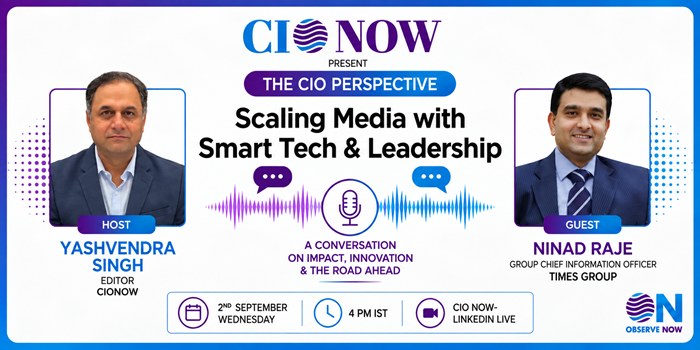
Scaling Media with Smart Tech and Leadership
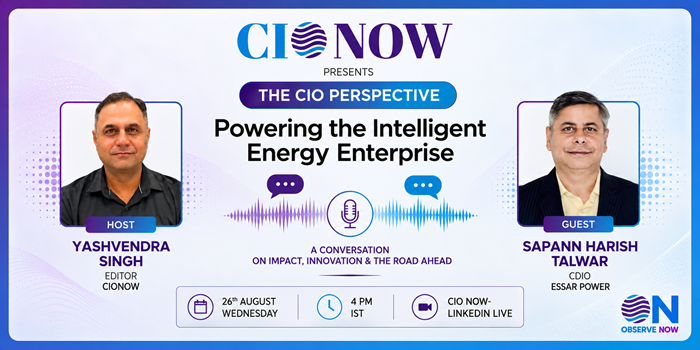
Powering the Intelligent Energy Enterprise
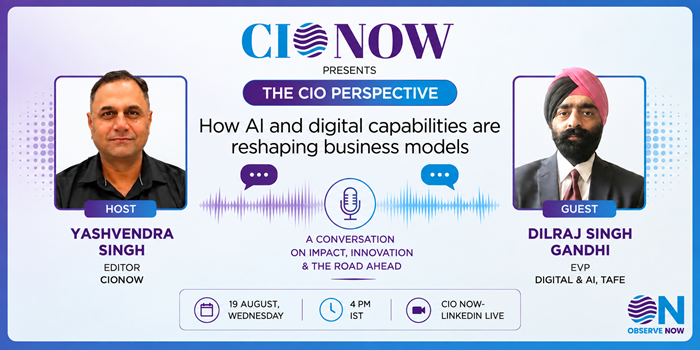
Reimagining Business with AI and Digital Capabilities
Investment Bank Blocks Hundreds of Confidential Data Transfers to Public AI Platforms

As financial institutions increasingly use generative AI for market research, financial modelling, investment analysis and risk assessment, controlling what data employees share with external AI platforms has become a critical security challenge. Client portfolios, trading strategies, proprietary models, material non-public information, and deal-related data can leave an organisation’s security boundaries when entered into public AI tools such as ChatGPT, Claude, and Gemini.
A regional investment bank addressed this challenge by deploying eScan Enterprise DLP, enabling analysts to use approved AI platforms for legitimate business activities while automatically preventing the transmission of confidential financial information. During implementation, the solution blocked hundreds of attempted transfers of sensitive financial data to public AI platforms.
Controlling Data Before It Reaches AI Platforms
The eScan deployment uses an endpoint DLP agent to monitor AI interactions across analyst workstations, trading floors, research departments, and mobile devices. The agent operates in the background, allowing users to continue their normal workflows while controls are applied to the data being transmitted.
Before data reaches an AI platform, the DLP agent can inspect content in real time, classify its sensitivity, identify confidential financial information and automatically block unauthorised transmission. The information identified for protection can include client account details, trading strategies, proprietary models, material non-public information and deal-related confidential information.
The solution combines Neural Intelligence AI/ML, behavioural analysis, content-aware inspection and Optical Character Recognition (OCR) capabilities to identify and protect sensitive information. Its AI Platform Data Protection capability is designed to monitor and control data uploads to AI services including ChatGPT, Claude, Gemini and other AI platforms, helping prevent inadvertent sharing of sensitive documents while allowing legitimate AI-powered tasks.
For an analyst, an attempted transmission of confidential information can be stopped before the data reaches the external AI service, with the user receiving an indication that the request contains information that cannot be transmitted.
AI Workflows with Security Controls
The bank also established approved AI workflows for different business functions, allowing employees to use AI based on the nature and sensitivity of their work. Market research uses approved Claude instances, general macroeconomic analysis uses Gemini, while public financial data research can use ChatGPT.
Each approved workflow is supported by audit logging, enabling analysts to review their AI interaction history while compliance and audit teams gain visibility into how AI systems are being used.
The approach allows the organisation to distinguish between legitimate AI use and potentially risky data transfers instead of treating all AI usage as a security threat.
Data Classification and Governance
A key part of the implementation was defining what constitutes confidential information. The bank established classifications covering public data, internal reference data, client-confidential information and trading-sensitive information. The endpoint agent then enforces these classifications automatically.
The implementation was integrated with existing compliance infrastructure, including surveillance systems, audit logging and compliance reporting. The bank also established governance policies covering AI tool approval, security updates as new AI platforms emerge and user training.
Analyst adoption was another important part of the implementation. The bank demonstrated that monitoring could help prevent inadvertent regulatory violations while approved AI workflows could support faster analysis than unrestricted use of public AI platforms. Early adoption by senior analysts helped drive wider acceptance across teams.
Hundreds of Confidential Data Transfers Blocked
During implementation, the solution prevented hundreds of attempted transmissions of confidential financial data to public AI platforms.
The blocked attempts included:
- Client portfolio information that could breach client confidentiality
- Trading strategies and execution models that could compromise competitive advantage
- Material non-public information that could create securities-regulation concerns
- Deal-related information protected under confidentiality agreements
The bank also established comprehensive audit trails covering who used an AI platform, when it was used, what data was being analysed and which system processed the request.
Such visibility can support compliance reviews by providing organisations with a record of AI-related data activity and the controls applied to it.
Enabling AI Without Losing Data Control
Financial institutions are increasingly looking at AI to improve research, analysis, decision-making and client servicing. But for organisations handling highly sensitive financial information, AI adoption also introduces a need for stronger data governance and visibility. Recent industry discussions have similarly highlighted security, governance and data protection as prerequisites for scaling enterprise AI.
For financial institutions, the choice does not have to be between banning AI and accepting uncontrolled data exposure. The focus can instead be on controlling what data reaches which AI system, under what circumstances and with what level of oversight.
Govind Rammurthy, CEO & MD, eScan, said: “Financial services firms face a manufactured choice: restrict AI adoption to protect confidential data, or enable AI and hope analysts don’t accidentally leak trading strategies to ChatGPT. That’s a false choice. Monitor what data flows where. Block the confidential stuff automatically. Allow analysts to use AI for legitimate market research and analysis. It’s straightforward endpoint monitoring—the same principle that prevents data leakage to email or USB drives, just extended to LLM/AI platforms. You don’t need to restrict innovation. You need to control data flow.”
How CFOs and CIOs Can Get AI Spend Right

Before the advent of AI, budgeting for technology was mostly fixed. The CIO created a budget, the CFO signed it off, and everyone was working from a common, stable number for the fiscal year. AI has changed that arithmetic. Consumption-based costs, variable workloads and rapidly evolving models mean the finance-technology relationship now has to function less like an annual negotiation and more like an ongoing partnership.
Rethinking the Budget: From Fixed Lines to Variable Costs
The shift starts with recognizing that AI simply doesn’t behave like the technology spend CFOs are used to approving.
Balaji Raghunathan, Data & AI Engineering Business Unit Leader, Sigmoid says, “IT budgets used to be capex-led (hardware, licenses, predictable upgrade cycles), and then came cloud which changed the game. Now there is an additional variable AI component that depends on token-based consumption and can potentially vary significantly based on the amount of data consumed, the choice of model, and how the agentic flow is architected.”
“As a result of such variability, CFOs are right to ask: ‘I have approved the cloud budget. I have approved SaaS subscriptions. Why is there now an additional AI token bill?’ That question deserves a real answer, not a defensive one,” says Raghunathan, adding, “CIOs need to be upfront that AI is an operating-model decision rather than a one-time procurement, distinguishing fixed costs from variable ones and establishing unit economics early: cost per customer interaction, per document processed, per case resolved.”
Budgeting must be dynamic, tied to usage and governed by clear business outcomes, so a three-year, SaaS-style commitment doesn’t get forced onto a workload built to scale unpredictably.
That kind of transparency, however, works only if the CFO has enough understanding of the evolving technology landscape.
Making CFOs Co-Owners of Tech
To bring the the CIO and CFO onto the same page, several organizations are already taking appropriate actions.
“More often than not, the CFO doesn’t understand the technology and becomes a roadblock. This situation is even more alarming in the government sector where getting funding becomes a big challenge. To overcome this, a growing number of companies are now sending CFOs through short courses on IT,” says Golok Kumar Simli, CIO, BLS International.
Building Cross-Functional Teams
Jatinder Bansal, Group CIO, Arise IIP, believes the same gap that shows up with a CFO can show up with a CEO or any business leader. According to him, closing this gap is not a finance-specific challenge, but an organizational one.
“IT cannot drive all digital initiatives without bringing business along. We need to educate them and explain concepts in simple language so they appreciate technology. Otherwise, IT implements something transformational but business is not able to use it because they don’t understand the relevance,” he says.
Bansal urges the need to have a true cross-functional team. “There must be someone from IT and someone from business with both standing together to sell it to the wider business, anchored by the people who know the business in and out,” he says.
At his company, that means hiring business experts—in supply chain, inventory, AP/AR, production—alongside technologists, with a formal business-partnering (BRM) function inside IT.
“You need business partners who understand IT to a good extent, so they know what is possible, what is not, and the long-term nuances. This helps in creating an ongoing mediator between business and IT instead of rebuilding the relationship every budget cycle,” says Bansal.
The Road Ahead
The road ahead demands shared literacy and durable structure. CFOs need enough technical grounding to engage with unit economics and consumption models while technology leaders need to translate AI requirements into business terms finance can act on with confidence.
Both require a strong infrastructure to thrive. That entails forming cross-disciplinary teams, gaining buy-in from senior stakeholders, and creating Business Relationship Management (BRM) capabilities that will survive beyond any one sponsor or fiscal year. Progressive companies are creating that infrastructure today, ready to upscale AI without rebuilding that foundation every fiscal year.
Abhishek Gupta Appointed as New CIO of Akasa Air

Abhishek Gupta has been appointed as new CIO of the low-cost carrier Akasa Air, in a significant leadership movement in the Indian enterprise technology space.
He moves to Indian aviation space from the helm of information technology and digital transformation portfolio for broadcast satellite service provider, Dish TV India, where he held the title of Corporate Head of IT.
Gupta’s term officially ended after the close of business on 31 August 2026. Having joined in 2015 as the Vice President of IT and rising to the top IT rung in 2019, Gupta helped pioneer several critical modernization initiatives including the expansive adoption of AI and cloud scaling to accelerate next-generation enterprise technology transformation to modernize content delivery and up consumer experience standards.
An alumnus of Indian Institute of Management, Ahmedabad (IIM-A) and Delhi College of Engineering, Gupta has more than 20 years of experience in complex IT architecture, service delivery and digital strategy. His career includes significant roles in leading and technical management in some of the world’s largest digital ecosystem enablers and telecom majors such as Orange Business Services, Tata Consultancy Services, and Ericsson.
Gupta’s cross-functional decision-making skills, enterprise cloud systems and predictive infrastructure expertise comes at a crucial time for Akasa Air as the airline charts out a new agenda for hyper-fast operations, fleet integration, and digitally-centric customer touchpoints. Gupta will bring his wealth of expertise to the modern aviation architecture of the airline.
TCS Launches Custom SoC Design Services for Automotive and Semiconductor Companies
Tata Consultancy Services (TCS) has launched Custom System-on-Chip (SoC) design Services aimed at automotive original equipment manufacturers (OEMs) and companies across the semiconductor ecosystem, as automakers increasingly move toward software-defined and AI-driven vehicles.
This recent launch of an end-to-end service will support the development of custom SoCs across the silicon lifecycle, consisting of architecture, design, verification, implementation, software integration, and system validation.
The move comes as automotive computing architectures evolve from distributed electronic control units toward more centralized computing and zonal architectures. At the same time, the growth of advanced driver assistance systems (ADAS), electric vehicles, connectivity, and AI-based features is increasing demand for specialized computing capabilities.
According to TCS, custom SoCs can help automakers to align computing capabilities more closely with their software requirements, while enhancing performance-per-watt and supporting differentiated vehicle applications and user experiences.
Chip-to-system approach
TCS revealed that this service combines semiconductor engineering, VLSI design, hardware-software co-design, and system validation. Rather than treating chip development as a standalone activity, its chip-to-system engineering approach considers the vehicle architecture, software platforms, workloads, and computing requirements before defining the SoC architecture.
This approach is intended to help automakers make silicon decisions in the context of the complete vehicle platform and gain greater control over their silicon roadmaps.
Sreenivasa Chakravarti, Global Head and Vice President of Industrial Autonomy and Engineering at TCS, said the computing architecture underlying AI-enabled software-defined vehicles will play a key role in shaping vehicle performance, energy efficiency, software capabilities and user experience.
For more information, visit: https://www.techcircle.in/2026/09/17/tcs-rolls-out-custom-chip-design-services-for-automotive-semiconductor-sectors.
Lights, Camera… Locked Out: Why Creative Industries Need to Take Cybersecurity Seriously

Raid 2, Sikandar, Jaat. Three of Bollywood’s most anticipated releases in 2025, all leaked online before they hit theatres. Not by hackers breaking through firewalls, but by insiders. People inside post-production studios and distribution chains who had legitimate access and used it. Piracy cost India’s entertainment industry Rs 22,400 crore in 2023 alone, according to the EY-IAMAI Rob Report.
Now Zoom Out
In early 2024, a Disney employee downloaded an AI art generation tool from GitHub on his home computer. The malware that came with it harvested credentials quietly, while the employee went about their day. By the time anyone noticed, 1.1 terabytes of internal data had left the building – 44 million messages, 18,800 spreadsheets, passport numbers, financial records, employee data; all gone; all through a single personal choice made on an ordinary afternoon.
No firewall was defeated. No zero-day was exploited. An AI art tool on a work laptop unlocked everything.
That is what cybersecurity failure looks like in creative industries. A bored employee, a personal device, and a security model that assumed the two would never meet.
The Creative Industry’s Uncomfortable Position
Creative businesses sit at an intersection most security frameworks were not designed for. They handle some of the most commercially sensitive intellectual property in the world, unreleased films, music masters, game source code, advertising campaigns worth hundreds of millions of dollars, inside environments that are structurally built for openness, collaboration, and speed.
Think about how a film gets made. Hundreds of freelancers, contractors, post-production houses, visual effects studios, sound engineers, distributors, and marketing agencies all touch the same project at different stages. Every one of them is brought in for a specific skill. Every one of them is a potential entry point into your project, carrying their own security posture, their own devices, their own decisions about what to click and what to store where.
This isn’t a technology problem. It’s an architectural one. The way creative work gets done, distributed, and delivered was never designed with threat modelling in mind. The industry is now paying the price for that gap.
Digital piracy alone costs the global media and entertainment industry over $75 billion annually. That number doesn’t include ransomware payments, breach remediation, or the revenue lost when a film leaks before theatrical release and audiences don’t show up.
What Creative Leaders Keep Getting Wrong
The conversation I have most often with leaders in creative businesses starts the same way. They tell me they don’t have anything worth stealing. They make content, not banking software.
And that’s exactly what gets them breached.
A leaked campaign brief destroys client trust before a single rupee of advertising runs. Stolen music masters cost artists years of work. A ransomware attack on a gaming studio during a launch window can effectively end the studio if recovery costs exceed the runway. The volume of attacks targeting entertainment, gaming, and media has grown every year for the past decade.
The attackers know exactly what’s in there. The question is whether the people who own it do.
Vendor relationships are their own trap. Pre-release content passes through dozens of third-party hands before it reaches an audience. Each handoff is a risk. Most creative businesses hire vendors on reputation and portfolio. They have e never asked what the vendor’s endpoint security looks like or who inside that organization is actually responsible for it.
What Actually Needs to Change
Forget the forty-seven-point security framework. Creative businesses don’t have the bandwidth, and most of it would not stick anyway. Three things move the needle.
First, map who is touching your work and what device they are using. The Disney breach happened because personal life and professional life shared the same hardware. The weakest link in any creative supply chain is the contractor who handles your most sensitive assets last Tuesday on home WIFI. You cannot protect what you cannot see.
Second, treat pre-release content like classified information because commercially it is. Access controls, digital watermarking on every copy that leaves your environment, and a documented record of who received what and when. A film that leaks before theatrical release doesn’t just lose box office revenue. It loses the entire marketing investment built around that moment.
Third, stop evaluating vendors only on their creative capability. Before any significant engagement, ask every agency, post-production house, and platform partner one direct question: what is your security posture, and who inside your organization is accountable for it? The ones who can answer clearly are the right partners. The ones who go quiet are telling you something important about how they will handle your most sensitive work.
Every device that touches your content needs active threat monitoring, not just antivirus. Remote access needs proper identity verification at every step. Any vendor handling pre-release material should meet recognized industry security standards before they ever get the file.
The India Question
India’s creative economy is growing fast. Bollywood, OTT, gaming studios, music production; all of it scaling rapidly, all of it increasingly targeted.
The security maturity inside most of these organizations has not kept pace. Every creative market reaches this point. The question is always the same: does the investment happen before the breach or after it?
India’s creative economy has a window. The scale, the talent, and the global ambition are all there. The security infrastructure that protects them is not.
At least not yet.
The breach that forces the investment is always more expensive than the investment itself. Every creative leader already knows this. Most are waiting anyway.
Quest Global appoints Krish Kupathil to support internal AI initiatives and client collaboration

Quest Global Engineering Services Limited, today announced the appointment of Krish Kupathil to support internal AI initiatives and client collaboration. In this capacity, Krish will lead Quest Global’s AI vision internally and externally, representing the Company’s AI strategy and capabilities. He will support clients in exploring AI-enabled engineering solutions by translating complex engineering challenges into measurable business value for clients and help drive their AI adoption. Krish will bring his active network across AI and deep tech, along with his expertise in data center infrastructure, to help shape and realize the Company’s AI strategy.
Ajit Prabhu, Co-founder and CEO of Quest Global, said the appointment supports the Company’s ongoing engineering strategy. “AI continues to be an area of increasing importance across the engineering industry and for many of our clients. Krish’s experience will help strengthen our internal capabilities and support our engagement with clients as they explore AI-enabled engineering solutions.”
Krish is an entrepreneur and technology leader who founded Mobiliya and scaled it to nearly 600 employees across six countries before its acquisition by Quest Global in 2018. Following the acquisition, he led Quest Global’s global Hi-Tech business and supported high-priority strategic customer engagements. Currently at Avataar Venture Partners, where he will continue as an Operating Partner, Krish leads their US go-to-market strategy and corporate development for portfolio companies across enterprise and agentic AI, physical AI, and AI infrastructure.