




Azul Prime Delivers 2x-5x Faster Java Warm-up Time Versus Standard OpenJDK By Enabling JVMs to Learn from Each Other

Azul, the trusted leader in enterprise Java for today’s AI-first world, today announced that Azul Prime now delivers 2x-5x faster application warm-up versus standard OpenJDK, letting enterprises run leaner, more dynamic, and more cost-efficient Java deployments.

The improvement comes from Azul Optimizer Hub’s Cloud Native Compiler, a unique capability of Azul Prime, which centralizes and caches just-in-time (JIT) compilations across a fleet of Java Virtual Machines (JVMs) instead of leaving each JVM to optimize performance in isolation. New instances launched for a given application or microservice receive streamed, fully optimized compiled code at startup even before they take traffic, helping applications reach full performance far sooner than on standard OpenJDK.

The Fleet-Wide Warm-Up Tax

The shift to container-based cloud applications and services that scale dynamically, coupled with code being deployed at much higher velocity through the use of AI codegen tools, makes efficient JVM warm-up more critical than ever. Nearly two-thirds of Kubernetes organizations now scale automatically, up from around 55% less than two years ago, according to Datadog’s 2025 State of Containers and Serverless report.  At the same time, developers pushed nearly 1 billion commits to GitHub in 2025, up 25% year over year, as AI coding tools accelerate the pace of change, according to GitHub’s 2025 Octoverse report.

In traditional deployments, each JVM of an application has no knowledge of what other instances in the fleet have already learned and optimized, so every new instance runs slower, less optimized code until it learns as it runs; code segments are being used often enough to be optimized – creating the common “warm-up” problem when starting new instances. Scale doesn’t fix this: no matter how many instances a fleet has already warmed up, the next one starts cold.

Teams work around the warm-up tax today either by over-provisioning compute capacity to absorb slow warm-up or simply accepting a period of degraded performance and latency after every deploy. Those workarounds result in either higher costs from idle capacity, lost revenue from missed transactions as applications start, or poor customer experience from visible slowdowns. That habit is getting more expensive: CPU overprovisioning in Kubernetes — the gap between provisioned capacity and what workloads actually request — rose from 40% to 69% year over year, according to Cast AI’s 2026 State of Kubernetes Optimization Report.

Solving the Warm-up Problem Across Java Fleets

The warm-up problem is a long-standing challenge with Java deployments, and Azul has been providing capabilities to help address it since 2014, when it introduced ReadyNow to address warm-up delays for individual JVMs in latency-sensitive workloads. In 2023, Azul extended that with ReadyNow Orchestrator, which monitors and learns the best warm-up optimization profile across an application’s fleet of JVMs, and serves it to any instance that requests it. Cloud Native Compiler now takes that same fleet-wide intelligence further, shifting from serving compiled code on request to delivering it preemptively at start-up, so each instance warms up 2x-5x faster than standard OpenJDK. With this new capability, each JVM instance of an application or microservice now receives:

Predictive delivery: Instead of requesting and receiving compiled code method-by-method, an instance receives, as a single stream at start-up, the fully optimized code predicted to be needed based on previous instance starts across an application’s fleet.

Preemptive installation: Rather than discovering hot code paths through slow code interpretation and promotion, the new instance being started installs code the application’s fleet has already optimized — captured from how identical workloads have already successfully run — so those optimizations are in place before real traffic arrives, not reacting to it.

No application changes: There is no rewrite, recompile, or re-architecture for applications or microservices; a simple configuration setting in Azul Prime with Cloud Native Compiler enables this unique capability.

The result is that every new instance inherits the application fleet’s prior work instead of re-learning it, reaching full production speed well ahead of standard OpenJDK deployments. Unlike Ahead-of-Time approaches, Cloud Native Compiler accumulates optimizations across a live fleet, and continues to learn and optimize as the application runs — so the benefit compounds as more of the fleet runs. No other JVM or OpenJDK distribution offers comparable fleet-wide optimization and warm-up benefits.

What Faster Warm-Up Unlocks

Reaching full speed much faster, rather than warming up instance-by-instance, changes the economics of running a Java fleet at scale in two important ways:

Smoother autoscaling, lower cloud costs: Java teams typically keep extra warm standby instances as capacity that exists only to cover the time a new instance needs to warm up. When new instances are productive far faster, that required headroom can be dramatically reduced, if not eliminated. Operators who statically over-provision or use scheduled autoscaling may now be able to dynamically autoscale and bring warm instances online quickly to slash standby compute capacity.

Responsive customer experience: In standard OpenJDK deployments, customer requests are most likely to time out, have long latencies or experience disruption on a cold JVM where first transactions run on slower, less optimized code. By substantially reducing the warm-up penalty, every newly scaled or redeployed instance typically behaves like the rest of the optimized fleet from its first request, whether that’s during a traffic spike or a routine redeploy, improving performance from the get-go and creating a seamless customer experience.

The result is especially important for businesses where peak performance from the very first request is non-negotiable: fraud detection, real-time ad bidding, digital payments, multi-player gaming and e-commerce.

A Turnkey Approach for Channel Partners

This new capability in Azul Prime with Cloud Native Compiler enables Azul’s channel partners to deliver significant cost savings for the benefit of their customers, including through their professional services and managed deployment offerings – all from Java application infrastructure already in place, and without the need for application re-writes or re-architecture.

“Teams have lived with slow JVM warm-up for so long they treat it as a given, over-provisioning and avoiding autoscaling just to hide it,” said Scott Sellers, co-founder and CEO of Azul. “Azul Prime with Cloud Native Compiler fixes that. A new application instance inherits the compiler optimizations its fleet has already learned and executed instead of starting cold. You stop paying the warm-up tax on every single instance, thereby slashing the time required for a given application instance to reach its full performance.”

AM Intelligence Expands NVIDIA Vera Rubin AI Factory Buildout in India and Malaysia

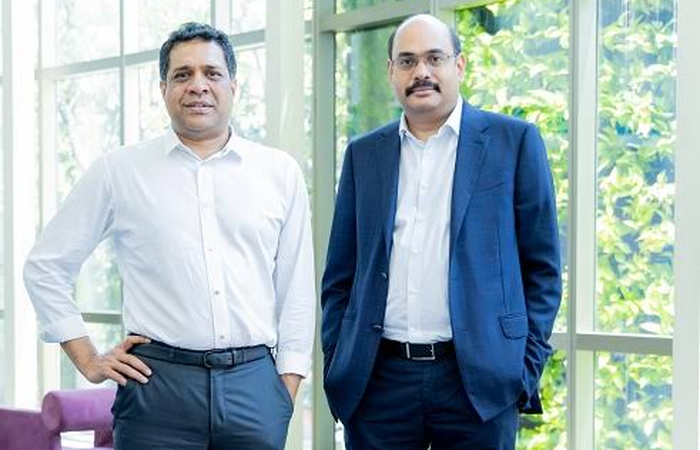
AM Intelligence, the AI infrastructure platform set up by Promoters of Greenko, today announced two further firm and binding orders for 20,000 NVIDIA Rubin GPUs, to be deployed as NVIDIA Vera Rubin NVL72 rack-scale systems. Building on its first AI factory in Hyderabad, the expansion is designed to give cloud providers, enterprises and AI developers access to large-scale computing capacity closer to where they build and deploy AI.

These orders are in addition to the AMI’s inaugural commitment announced on August 25, 2026, for 9,000 NVIDIA Rubin GPUs at its first AI Factory in Hyderabad.  

This follow-on capacity totalling ~70 megawatts (MW) will be deployed at Malaysia and India, with delivery scheduled for Q2 2027.  

Taken together, the three orders bring AMI’s committed frontier compute to approximately 29,000 Rubin GPUs and close to 100 MW of capacity, establishing AMI among the earliest and largest committed buyers of Rubin GPUs outside of North America.  

AMI plans to bring an additional 300 MWs of capacity to market in the next 15 months, involving capital expenditure of more than $20+ billion in addition to the $6 billion already committed for the initial $100 MW. 

“Both facilities will be built to the same architecture standard as the Hyderabad AI Factory, integrating the NVIDIA Vera Rubin platform with high-throughput RDMA over Converged Ethernet (RoCE) networking for fast, efficient data movement, alongside advanced storage systems, ” said Anil Chalamalasetty, Chairman, AM Intelligence. “Each site is engineered for high rack power density and liquid cooled throughout, allowing the infrastructure to accommodate successive generations of AI silicon within the same physical footprint.”

“AM Intelligence is bringing the next generation of AI factories to India and Malaysia with NVIDIA Vera Rubin,” said Vishal Dhupar, managing director, Asia South, NVIDIA. “By combining accelerated computing with high-performance networking and liquid-cooled infrastructure, AMI is creating the foundation for developers and enterprises to build more ambitious AI.” 

AMI’s ~400 MW Global Pipeline

AMI has developed a pipeline of ~400 MW of Compute-as-a-Service capacity across global locations, including India, the United States, Europe and Malaysia. The three orders placed to date represent the first committed tranche within that pipeline, and the balance is under development for delivery in subsequent phases in 2027 and early 2028.

The pipeline advances AMI’s stated intention to bring 1 GW of Compute-as-a-Service capacity to global AI workloads, within a broader programme of 5 GW of powered AI data centres across India, the United States and Europe.

AMI, as a strategic builder of long-term assets, will leverage its unique power solutions, capex advantage and access to next-generation AI infrastructure to deliver best-in-class electron-to-token economics by integrating energy infrastructure with the computing capacity required to train and run AI models. This will enable AI training and inference at scale, with a collaborative service offering spanning hyperscalers, neo cloud providers, sovereign AI initiatives, frontier labs, AI natives, and local developer communities.

How Berger Paints India Built a Smarter Supply Chain

Berger Paints India Limited is an Indian multinational paint company based in Kolkata, West Bengal. It ranks among the largest paint manufacturing company in India and globally. The company claims to hold a dominant position in the industry, including a 20% market share in the Indian decorative segment and the leading spot in India’s industrial protective coatings sector.

For Berger Paints, one of the key business challenges was managing demand volatility across a diverse portfolio of products, markets, channels, and geographies. Traditional forecasting models relied heavily on historical data and manual interventions, making it difficult to accurately predict demand in a market influenced by seasonality, economic factors, and rapidly changing customer buying patterns based on different demographics.

“As a result, we often faced challenges in balancing inventory, production planning, raw material procurement, and service levels. Forecast inaccuracies could lead to excess inventory in some locations, stock shortages in others, higher working capital requirements, and missed market opportunities,” says Partha Protim Mondal, CIO, Berger Paints. 

In response to these challenges, Berger Paints reconsidered its supply chain’s planning layer. The company launched an AI-driven planning platform that started with supply and demand planning before expanding the digital foundation into logistics and warehouse management.

“The objective was to create an AI-driven, data-led planning ecosystem that could enhance forecasting accuracy, improve visibility across the supply chain, and enable more informed decision-making,” says Mondal.

However, the change meant more than just putting in place a new technological platform. It involved altering the way the company plans, reacts, and makes supply-chain choices using data.  Rather than attempting to transform the entire supply chain simultaneously, Berger Paints chose to begin with the planning layer.

Building an Integration-First Architecture

At Berger Paints, an integration-first architecture was implemented to ensure that the new AI-driven platform, called o9, became an extension of the existing digital ecosystem rather than a standalone planning platform. The objective was to enable seamless information flow across planning, execution, and inventory management processes.

At the core of the integration is Oracle ERP, which serves as the system of record for master data, transactional data, manufacturing information, inventory balances, and organizational structures. Relevant data elements such as items, locations, plants, warehouses, and inventory positions are extracted from Oracle ERP and synchronized with o9 through defined integration interfaces between Oracle & o9.

“From a supply chain perspective, o9 consumes Oracle eBusiness data (inventory, pending orders etc) to generate demand and supply plans, sourcing recommendations, and factory allocation decisions. These plans are then synchronized back into execution systems for operational fulfilment. During rollout, the platform utilized algorithm-driven factory allocation and forecasting capabilities while continuing to interact with Oracle-based order and execution processes,” Mondal says. 

The integration architecture was designed to ensure that newly created locations, products, and planning parameters in Oracle are automatically reflected in o9, maintaining a single version of the truth across the organization. 

“For enterprise integration with periphery systems of end-to-end supply chain solution like logistics (logistics for both primary and secondary sales), we leveraged Oracle Integration Cloud (OIC) as the strategic middleware layer alongside traditional API based integration. OIC provides secure, near real-time connectivity between Oracle ERP and business applications, reducing point-to-point integrations and enabling scalable data exchange across the ecosystem,” says Mondal.

Demand and Supply Planning

The initial implementation focused on demand forecasting, depot demand planning, factory sourcing and supply allocation. One of the significant changes was the move from manual, indent-driven replenishment towards forecast-driven planning. The platform’s algorithms could consider factors such as demand, factory capacity, geography and product availability when supporting factory sourcing and supply allocation decisions.

This helped create a more consistent planning process across the network. The implementation was subsequently extended across both Berger Paints’ Retail and Industrial businesses.

For Berger Paints, planning became the foundation on which other supply-chain processes could be improved. Procurement, manufacturing and logistics remained important parts of the end-to-end model, but strengthening demand and supply planning first allowed the organization to establish better data quality, forecasting discipline and supply synchronization before expanding further.

Changing Established Processes 

One of the biggest lessons from the implementation was that the technology itself was not the most difficult part. Mondal shared that the bigger challenge was changing established processes and building confidence in system-driven planning.

A paradigm where forecasts and sourcing suggestions increasingly came from an integrated planning environment required planners, sales teams, depot staff, and supply-chain partners to adjust.

There were also complexities around factory-product mapping, manufacturing constraints, product availability, inter-depot transfers and master-data quality.

The company addressed these challenges through a combination of executive sponsorship, training, process standardization, and phased implementation.

“The leadership played a major role in communicating that the new planning platform was not just another IT system but would become part of the organization’s standard planning process. Training programs were held before go-live, and additional support was provided to users who needed it,” says Mondal.

The company also leveraged dedicated support mechanisms, comprising on-site teams, escalation channels, and WhatsApp-based assistance. An AI-enabled chatbot was introduced to further improve the user experience.

Measuring the Impact

AI/ML has played its most significant role in demand forecasting and integrated supply-chain planning.

Instead of spending significant time consolidating information across spreadsheets and manual processes, the planning team can now spend more time evaluating scenarios and making business decisions. The larger value, therefore, lies not simply in automated forecasting but in creating a more responsive planning process.

Forecast quality, inventory control, planning flexibility, service performance, and supply chain visibility have all improved at Berger Paints.

However, the business has not released precise performance metrics.

With AI-driven demand sensing helping planners better account for market trends, seasonality, and geographic variations, forecast accuracy continues to be one of the key metrics. Inventory management has also benefited from the transition towards forecast-driven planning and improved visibility across factories, depots and warehouses. The organization has also seen greater efficiency in its S&OP process.

For the finance function, the focus extends beyond forecast accuracy.

Working-capital optimization remains a key measure, with inventory levels, inventory turns and inventory carrying costs being tracked alongside service performance and productivity. The broader objective is to ensure that better planning translates into healthier inventory, stronger availability and more efficient use of working capital.

The Next Steps

The transformation did not stop with demand and supply planning. As planning became more integrated, the need for stronger execution capabilities became increasingly important. This influenced Berger Paints’ investments in Warehouse Management Systems across its warehouses and plants. The focus included inventory visibility, FIFO-based dispatch, inventory management, and picking efficiency.

The company has also worked with logistics platforms such as Pando and Mojro. In effect, the initial planning transformation created a foundation for a broader digital supply-chain architecture. Better demand visibility could support better supply decisions, while better supply planning created the need for execution systems that could respond with similar levels of visibility and discipline.

Key Takeaways 

Mondal’s advice for CIOs embarking on a similar transformation is to start by treating supply chain digitization as a business transformation rather than a technology implementation. 

The first step, he says, is to define the business problem clearly. For Berger Paints, that meant addressing demand variability, planning complexity and the limitations of manual forecasting.

The second is to invest early in data and process standardization. Advanced analytics and AI cannot deliver their intended value if master data, sourcing rules, factory mappings and planning ownership remain inconsistent.

The third is to adopt a phased approach. Berger began with demand planning before expanding into supply planning and subsequently supporting broader supply-chain initiatives.

The fourth is change management. Executive sponsorship, user training, communication, and hands-on support were critical to building confidence in the new model.

“Technology platforms such as o9 are powerful enablers, but success ultimately depends on process alignment, data quality, organizational readiness, and executive sponsorship,” Mondal adds.

New Mercury Research Finds Growing Cybersecurity Gap in Physical Access Control Infrastructure

Mercury Security, a global leader in open architecture access control hardware and an HID brand, today released its 2026 Trends in Access Controllers Report, revealing how changing cybersecurity requirements, interoperability needs, cloud adoption and emerging technologies are putting greater emphasis on the role controllers play in long-term physical access control strategy.

Based on a global survey of 561 physical security and cybersecurity professionals, including administrators responsible for access control management, systems integrators, installers and end users, the report found that 78% of respondents consider the controller important or critical to their physical access control system (PACS) strategy, up from 72% in 2025. This growth reflects the controller’s expanding role in the security environment. As it connects more devices, systems and applications across the security environment, organizations are placing greater importance on infrastructure that can address current requirements while supporting new capabilities over time.

Cybersecurity represents one of the clearest gaps between respondents’ requirements and their existing infrastructure. 32% say cybersecurity features are missing from their current controller systems, up from 21% in 2025. The gap comes as 74% reported cybersecurity and IT coordination have become more complex to manage, even as 86% say their organizations actively work to stay current with changing cybersecurity and data protection standards.

“Organizations recognize the cybersecurity risks facing connected access control systems, but the infrastructure in place isn’t always keeping pace,” said Steve Lucas, Vice President, Sales, Mercury Security. “As they look to modernize, users also want to protect existing investments. That makes interoperability increasingly important and puts more weight on choosing controller platforms that can address current security requirements while providing the flexibility to support what comes next.”

Additional findings from the report include:

Interoperability Influences Purchasing

69% of respondents identified interoperability as a critical factor in controller procurement, while 82% said backward and forward compatibility is important to future infrastructure planning. The findings point to a preference for gradual modernization that protects existing investments while giving organizations the flexibility to adopt new capabilities over time.

Mobile credentials are influencing those decisions as well, with half of respondents already using or planning to adopt mobile solutions and 46% ranking mobile credential integration among the trends driving controller purchases.

Cloud Demand is Growing Faster Than Deployment

Cloud connectivity ranked among the leading factors influencing controller purchases, cited by 56% of respondents, up from 50% in 2025. However, only 41% reported that their controllers are currently cloud-enabled, and 26% said cloud enablement is missing from their existing systems. The findings suggest interest in cloud capabilities is growing faster than current infrastructure can support them.

AI and Advanced Capabilities Add New Infrastructure Demands

Behavioral analysis and anomaly detection rose from 44% in 2025 to 56% in 2026, while facial recognition was cited by 60%, and predictive security and threat prevention by 50%. As these applications advance, processing power, storage, connectivity, cybersecurity and integration architecture are becoming greater considerations in controller selection.

More than 39% of respondents are also exploring or have adopted edge computing within their security ecosystems, while 41% have integrated controller data with building occupancy and utilization programs, demonstrating how access control infrastructure can increasingly support applications beyond traditional door control.

Taken together, the findings show how controller selection is evolving from a hardware purchase into a longer-term infrastructure strategy. Organizations are balancing immediate priorities such as reliability and cybersecurity with the need to support future technologies, integrate with surrounding systems and modernize without replacing infrastructure all at once.

NIIT Limited elevates Dr. Vishnupriya Raghavan to lead Technology Learning Solutions

NIIT Limited, a leading skills and talent development corporation, announced the elevation of Dr Vishnupriya Raghavan to Senior Vice President & Business Head – Technology Learning Solutions, NIIT Enterprise. In her expanded role, Dr. Raghavan will lead NIIT Enterprise’s Technology Learning Solutions business, with a mandate to strengthen NIIT’s role as a strategic capability partner to enterprises navigating AI-led workforce transformation, while driving future-ready technology capabilities, workforce productivity and business outcomes at scale.

Speaking on the elevation, Pankaj Jathar, Chief Executive Officer, NIIT Limited, said:
“Vishnupriya’s elevation reflects both her deep understanding of enterprise technology and her ability to translate evolving technology needs into meaningful workforce outcomes. I am confident that she will bring strong leadership to NIIT Enterprise and further strengthen NIIT’s ability to help enterprises build AI-ready, future-facing technology talent at scale.”

NIIT Enterprise offers a comprehensive portfolio focused on role readiness, deep technology skilling, leadership development, OEM-led capability programs and enterprise-scale capability transformation. Its focus areas include AI-first engineering, AI-led SRE, cloud transformation, cybersecurity, data engineering, enterprise architecture, Engineering Intelligence and technology leadership.

Dr. Vishnupriya Raghavan, Senior Vice President & Business Head – Technology Learning Solutions, NIIT Enterprise, said, “Technology is reshaping roles and ways of working at an unprecedented pace. In this expanded role, my focus will be on helping organizations build AI-ready, future-facing technology talent capabilities that evolve just as rapidly. By combining deep technology expertise, hands-on application and enterprise context, we aim to help organizations translate technology change into workforce readiness, productivity and business impact.”

The portfolio draws on established strengths across StackRoute and RPS Consulting, combining deep engineering capability development with a broad OEM partner ecosystem to help enterprises address capability needs from deep role readiness to transformation at scale.

Through structured learning pathways, hands-on practice and real-world application, NIIT Enterprise helps organizations build automation-ready and AI-native teams. The business supports enterprises in developing critical technology capabilities across roles, teams and business networks, enabling faster time-to-productivity and continuous workforce transformation.

Accelerate your SAP modernization with Kiro

Kiro is AWS’s AI-powered, engineering agent, designed for enterprises to build production-ready software. With Kiro, customers can build across large codebases with parallel agents, which is ideal for complex, resource intensive projects, like SAP modernizations. Today, we are publishing Kiro based sample agents that customers and partners can leverage to accelerate the modernization and deployment of custom SAP Advanced Business Application Programming (SAP ABAP) programs, SAP Business Warehouse (SAP BW), and SAP Process Integration and SAP Process Orchestration (SAP PI / PO) on AWS.

SAP is where many organizations house their most critical business logic and data. Custom SAP ABAP programs drive core processes like finance, order management, and supply chain operations. SAP BW underpins the reporting and analytics that enterprises rely on for planning and decision-making. SAP PI / PO serves as the middleware connecting SAP to hundreds of external systems, trading partners, and applications. Modernizing these workloads manually is what makes SAP transformations so time and resource intensive. Additionally, with the end of standard support for SAP BW, SAP PI / PO, and on-premises SAP ERP Central Component (SAP ECC) approaching, customers need to modernize to SAP’s cloud native systems.

With these sample agents, customers can accelerate their SAP modernizations, which are historically one of the most resource-intensive undertakings in enterprise IT. With a single prompt, the sample agents can mass-modernize thousands of lines of SAP ABAP code or hundreds of end-of-support SAP middleware interfaces. In an internal benchmark, AWS demonstrated how these sample agents can automate brownfield ABAP code modernization (analysis, conversion, unit testing) and reduce effort by up to 87%.

Customers across multiple industries recognized the value when they tested these agents. Rolando Sabatino, Senior Software Engineer at Toyota Chile, used the agent to analyze and document hundreds of custom ABAP objects, identifying obsolete code and simplifying their migration scope. Alex Kakhanovich, SAP Enterprise Architect at Adobe, evaluated Kiro ahead of a large RISE migration and told us, “This will help us conduct remediation in record time.”

Partners are also leveraging and benefiting from the sample agents and are seeing meaningful results. Accenture, Capgemini, Deloitte, DXC, Kyndryl, NTT Data Global Solutions and other AWS SAP Competency Partners are incorporating the sample agents into their migration toolsets to help accelerate customer journeys. NTT Data Global Solutions reported an up to 95% reduction in ABAP conversion effort within their new Neo i-KOU migration service. Capgemini’s Gianluca Simeone, Global SAP CTIO, said, “Together with AWS, we are helping organizations simplify and accelerate their SAP transformation journeys, enabling them to realize business value faster and with greater confidence. Our new Smart Integration AI Agent built leveraging Kiro sample agents can accelerate analysis-to-build cycles for integrations by 40–60%, while strengthening quality, governance, and trust at scale.” Deloitte’s Bhanu Saxena, Global SAP on AWS Leader, shared, “In collaboration with AWS, we are introducing Kiro-driven, agentic migration approaches to enterprises migrating from SAP PO/PI to SAP BTP Integration Suite. Kiro is an accelerator for modernizing toward a future-ready integration architecture, demonstrating reduction in migration effort and delivery timelines.”

Use-cases for the sample agents

Partners and customers can leverage the sample agents to accelerate SAP modernization and migration efforts:

  1. Upgrade ABAP code for SAP S/4HANA compliance – Convert ABAP code from your SAP ECC system to SAP S/4HANA compliant ABAP code. A single prompt can convert hundreds of ABAP objects in bulk.
  2. Refactor ABAP to clean core – Automate refactoring of your SAP ABAP code in alignment with the SAP Clean Core Extensibility Model. Also with a single prompt, you can bulk modernize custom code to use standard SAP APIs.
  3. Modernize from SAP PI/PO to SAP BTP – Convert SAP PI/PO interfaces to SAP BTP Integration Suite in minutes. Rapidly modernize middleware interfaces ahead of the SAP PI/PO end of standard support in December 2027.
  4. Modernize from SAP Business Warehouse (BW) to SAP Datasphere in Business Data Cloud (BDC) – Move from SAP BW to SAP Datasphere in hours, not months. SAP BW is also approaching end of standard support in December 2027.
  5. Generate functional and technical specifications – Generate comprehensive documentation by analyzing your existing code and configurations. Create business requirements and technical specifications and use AI to keep them up to date.
  6. Automate unit testing – Automate the creation and execution of unit tests to ensure code quality and validate business logic integrity. Our agents use unit tests before and after code conversion to improve quality and reduce AI hallucination.

Safeguards for accuracy

The sample agents incorporate unique safeguards to address code accuracy. Customizable steering files with 80+ pre-built rules enforce coding, security, and documentation standards, while a unique unit testing approach validates business logic before and after conversion to ensure quality. The sample agents are designed to assess and retrieve all dependent ABAP code and libraries, giving Kiro the full context to preserve business logic and significantly reduce hallucinations. The sample agents provide conversation history and decision logging for transparency and auditability. Several customer audit teams informed us that the sample agent logging exceeds the documentation standards typically maintained manually.

Why AI PoCs Succeed in the Lab but Fail at Enterprise Scale

AI Proof-of-Concepts (PoC) are often one of the easiest things to get excited about and one of the hardest things to scale. A model can perform well against a narrow problem space but prove to be vulnerable in the chaos of fragmented data, ever-shifting business environments, and legacy systems.

The problem is that a lot of business and technology leaders still think that a PoC is proof of business readiness. It isn’t. A PoC usually just demonstrates that a technology can function in a lab environment. A production AI implementation has to show that it can generate value in a real operational process.

Clean Data Hides Real-World Complexity

The majority of AI PoCs are driven on a limited data set that has been scrubbed and prepped. It enables teams to build and validate a model in a short amount of time, but it provides a skewed perspective on how the solution will function at scale.

Dilraj Singh Gandhi, EVP Digital & AI at TAFE, says a conventional PoC often establishes only that AI can work under controlled conditions. “A PoC is usually built on a very small and exceptionally clean dataset,” he says. “During testing, training and cross-validation, the model may show 95% or 98% accuracy. However, once it is exposed to a larger and more diverse dataset, the quality of the data may be very different and the accuracy may fall to around 60%.”

The problem is not only messy data. Enterprise data carries business meaning that is rarely visible in a pilot. Product names change, customer requests are incomplete, commercial teams apply informal judgment, and local processes evolve faster than central systems and AI models are updated.

Jatinder Bansal, Group CIO at Aspire IIP, encountered this while working on a touchless customer-order intake process. A customer might place an order using the name of a discontinued product, while a salesperson knows from context which current product should be entered into the system.

“Until last year, Apple was selling the iPhone 15. Now it has launched iPhone 17. When a customer sends an order for iPhone 15, the salesperson knows it means iPhone 17 and punches 17 in the system. How does the system understand that iPhone 15 is no longer available and should be read as 17?” he questions. 

That judgement may depend on stock availability, replacement rules, agreed pricing, the customer account and the employee’s reading of intent. These exceptions are manageable for people but hard for AI unless organizations deliberately model the business context and define how the system should handle uncertainty.

Value Lies in the Full Workflow

A successful PoC can demonstrate that a model can extract data, generate an answer or classify a document. Enterprise value appears only when that output can be used safely and reliably in the wider business workflow.

Kunal Dikshit, CTO at Fedbank Financial Services, says CIOs must avoid treating AI as a standalone technology project. “An AI document-extraction solution is useful only when the extracted information can actually flow into the lending process, be validated, audited and used by the relevant employees or systems,” he says.

This is the point at which the full set of enterprise requirements surfaces. The solution must integrate with core platforms, meet security and compliance needs, manage exceptions, remain available at scale and fit into the way employees work. It also needs monitoring, governance and a viable cost model.

In real terms, this means that CIOs need to evaluate an AI project using operational questions upfront: which downstream system will consume the output; who checks an output that has a low confidence score; what happens when business rules are altered; what auditing record needs to be maintained; who is liable if the AI’s recommendation is inaccurate? If these questions come later, after a PoC’s green light, the journey to production will be slow, costly, and risky.

Build an MVP, not a Showcase POC

The more effective approach is to replace a conventional PoC with a minimum viable product, or MVP, that is piloted in a limited but genuine business environment. It is a more demanding route, but it reveals the issues that matter before an organization invests in an enterprise-wide rollout.

Gandhi’s recommendation is to use representative data, or synthetic data that reflects the noise and imperfections of real enterprise information, and deploy the MVP in one or two carefully selected locations or business units. “The shift from POC to MVP requires a change in mindset,” he says. “An MVP demands more preparation, business commitment and accountability than a conventional POC, but it provides a much more realistic basis for scaling AI.”

For CIOs, an enterprise-ready AI program should have a use case tied to a material business problem rather than a technology demonstration, representative data including normal errors and variation, integration into the full workflow with validation and exception-handling, a named business owner responsible for adoption and outcomes, and measurable KPIs that cover business results such as cycle-time reduction, revenue conversion, risk reduction or cost savings, not only model accuracy.

The goal is not to eliminate experimentation. It is to ensure that experimentation is designed to answer the question that matters: can this AI system work reliably, economically and accountably in the real enterprise?

Chat with CIONow.in